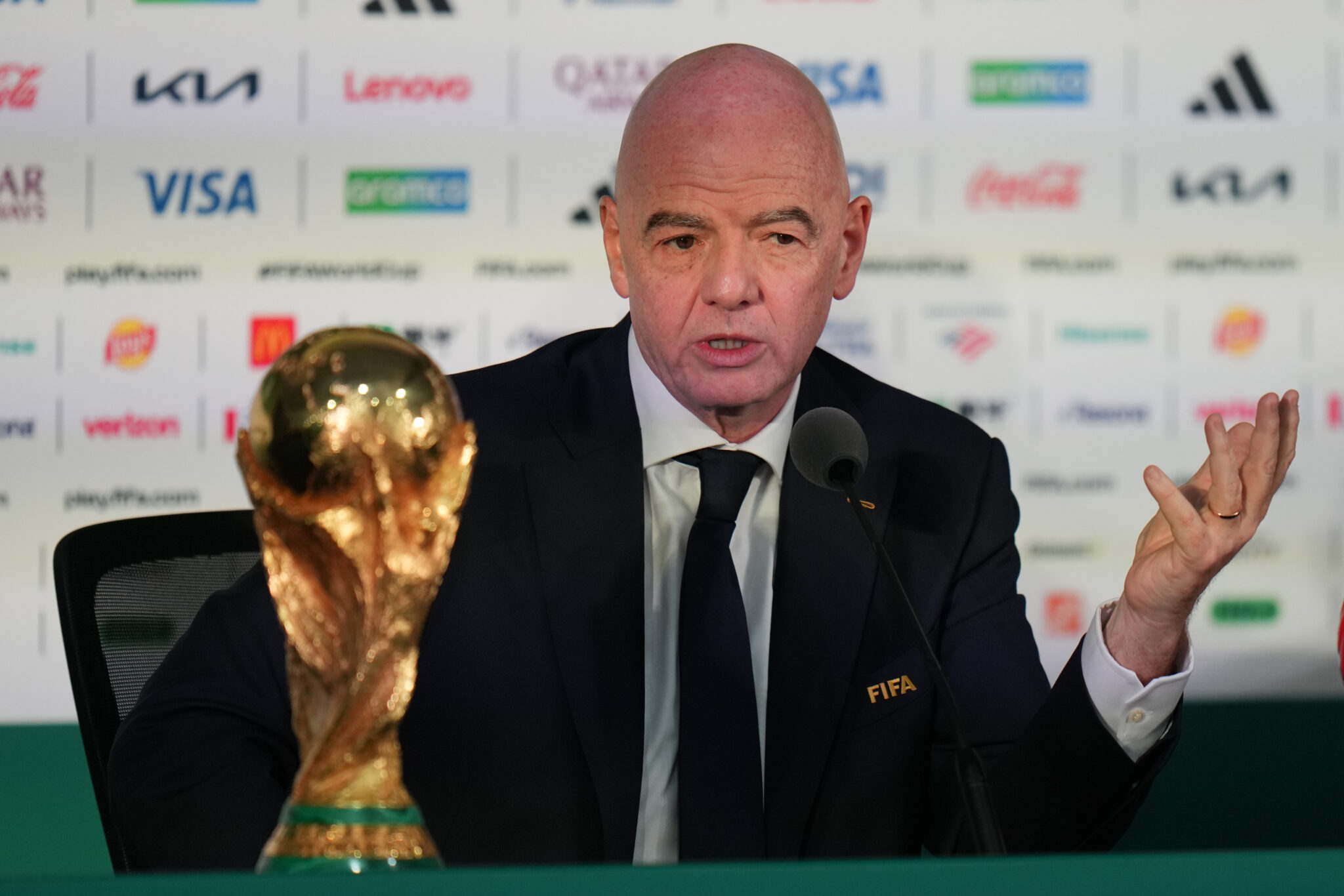
FIFA Adviser Carlos Cordeiro Resigns Over Infantino’s $20 Billion World Cup Sell-Off/ TezzBuzz/ WASHINGTON/ J. Mansour/ Carlos Cordeiro resigned as a FIFA presidential adviser in protest against Gianni Infantino’s plan to sell a stake in World Cup commercial operations. FIFA operating chief Kevin Lamour accused Infantino of deceiving staff and said the private investor proposal must be stopped. The plan would place FIFA’s major competitions in a $20 billion subsidiary, with private investors owning 20%.
Quick Look
- Carlos Cordeiro resigned as an adviser to Infantino.
- He represented FIFA on the White House World Cup Task Force.
- Cordeiro previously served as U.S. Soccer president.
- He also worked as a Goldman Sachs banker.
- FIFA operating chief Kevin Lamour also criticized the proposal.
- Lamour said FIFA employees were “deceived.”
- He has not resigned but said he could lose his job.
- The proposed commercial subsidiary is valued at $20 billion.
- Private investors would receive a 20% ownership stake.
- FIFA would reportedly raise approximately $4.2 billion.
- The subsidiary would include men’s and women’s World Cups.
- Club World Cup competitions would also be included.
- The proposed anchor investor is a firm created by Joshua Kushner.
- Cordeiro said FIFA already has billions in reserves and no debt.
- FIFA generated $15 billion over the previous four years.
- Infantino has led FIFA for more than 10 years.
- Potential presidential challengers face a Nov. 18 deadline.

Deep Look
FIFA adviser resigns over investment plan
GENEVA — Two senior FIFA officials publicly rebelled against President Gianni Infantino’s proposed World Cup investment plan Friday, with one resigning and another accusing the organization’s leadership of deceiving employees.
Carlos Cordeiro resigned as an adviser to Infantino in protest against the proposal to sell a permanent stake in FIFA’s most valuable commercial competitions to private investors.
FIFA Chief Operating Officer Kevin Lamour separately condemned the project and said it must not proceed.
Their criticism represents the strongest known internal opposition to a plan already facing resistance from UEFA and European national federations.
Cordeiro says he cannot support sale
Cordeiro represented FIFA on the White House Task Force responsible for preparations surrounding the World Cup.
He previously led the U.S. Soccer Federation and spent decades working in banking, including at Goldman Sachs.
“I cannot stand by while FIFA considers selling a stake in the World Cup,” Cordeiro said in a statement resigning as adviser to FIFA President Gianni Infantino that urged other senior FIFA staff to speak out.
His resignation removes a senior official with extensive ties to American soccer, finance and the planning of FIFA events in the United States.
Lamour says FIFA staff were deceived
Lamour said in a statement to The Associated Press that FIFA employees were “deceived” because Infantino developed the investor proposal without sufficient openness.
He said staff members “deserve better than contempt and intimidation.”
Lamour has worked with Infantino for years at both FIFA and UEFA.
“It is the project of one person,” Lamour wrote. “Not only must this project not go ahead … but the time has now come for football political leaders to ask themselves the right questions and make the right decisions.”
His statement directly attributed ownership of the controversial proposal to Infantino rather than FIFA’s wider leadership structure.
Operating chief risks his position
Lamour has served as FIFA’s chief operating officer since 2024.
He did not resign Friday but acknowledged that his criticism might cost him the position.
Lamour said he felt obligated to speak on behalf of colleagues who were unable or unwilling to challenge FIFA leadership publicly.
“And if that means I lose my job, then so be it” the French official said. “I will understand and respect that decision. At least I’ll sleep well tonight.”
His remarks raised questions about whether FIFA would discipline or dismiss one of its highest-ranking administrators.
Internal criticism expands crisis
Opposition to the private investment proposal had already come from outside FIFA’s headquarters.
UEFA and its 55 member associations agreed to boycott FIFA competitions if the plan proceeds.
The criticism from Cordeiro and Lamour demonstrates that resistance also exists within FIFA’s senior professional staff.
Their statements focused on secrecy, governance, financial logic and the permanent transfer of football assets.
The internal revolt could make it more difficult for Infantino to persuade national federations to approve the arrangement.
Cordeiro frequently accompanied Infantino
Cordeiro regularly joined Infantino during visits to the White House.
The two met President Donald Trump on multiple occasions while discussing World Cup planning and other soccer matters.
Cordeiro’s proximity to Infantino makes his resignation particularly significant.
He said he had played no role in developing the proposal.
“Let me be clear. I had no involvement in this proposal, and I oppose it unequivocally,” Cordeiro, the former U.S. Soccer Federation president said, calling the $20 billion commercial subsidiary “a bad deal for football.”
Banking experience shapes objection
Cordeiro emphasized his professional background in finance when evaluating the investment plan.
“Football has been central to my life, and after more than 35 years in banking, I understand both the value of this asset and the consequences of giving part of it away” he said. “That is why this proposal should be rejected.”
His argument is that FIFA would surrender permanent ownership in competitions capable of generating substantial long-term revenue.
A one-time capital payment may be less valuable than retaining full control over decades of future earnings.
FIFA proposes commercial subsidiary
Infantino wants to transfer FIFA’s commercial businesses into a new subsidiary valued at approximately $20 billion.
The company would manage the commercial rights connected to FIFA’s primary tournaments.
Those assets include the men’s and women’s World Cups and Club World Cups.
Private investors would purchase a 20% stake in the subsidiary.
FIFA would retain majority ownership while giving outside investors a permanent share in revenues and potentially some influence over commercial strategy.
Private stake valued above $4 billion
Selling 20% of a $20 billion subsidiary would theoretically value the private stake at about $4 billion.
Cordeiro referred to FIFA raising $4.2 billion through the transaction.
The supplied report did not explain the difference between the subsidiary’s approximate valuation and the more precise proposed proceeds.
Investor rights, voting authority and expected returns also were not detailed.
Those unanswered questions have contributed to demands for greater transparency before FIFA’s members make a decision.
Joshua Kushner firm named anchor investor
FIFA has described a New York investment company created by Joshua Kushner as the proposed “anchor investor.”
Joshua Kushner is the younger brother of Jared Kushner.
Jared Kushner is Trump’s son-in-law and served as a senior White House adviser during Trump’s first term.
The supplied report did not identify the investment firm by name or provide the full terms it had been offered.
The political and family relationships involved could intensify scrutiny of FIFA’s investor-selection process.
Cordeiro says FIFA does not need money
Cordeiro disputed the argument that FIFA requires outside capital.
“FIFA already has access to extraordinary financial resources. The organization sits on billions of dollars in reserves and no debt,” Cordeiro said, noting FIFA’s revenue of $15 billion over the last four years tied to the men’s Wold Cup just ended.
An organization with strong reserves, no debt and substantial recurring revenue may have less reason to sell permanent equity.
Cordeiro argued that FIFA had not provided a compelling financial justification for the proposal.
Recent World Cup generated billions
FIFA generated approximately $15 billion in revenue over the last four years, largely connected to the recently completed men’s World Cup cycle.
Broadcasting rights, sponsorship agreements, ticketing, licensing and hospitality packages make the World Cup one of the most valuable properties in global sports.
Future tournaments could generate even larger sums as FIFA expands competitions and reaches new media markets.
A private investor purchasing a permanent stake could receive a share of those increasing revenues.
Critics argue that the proposed price may undervalue the asset’s long-term growth.
Cordeiro calls plan mortgage on future
Cordeiro said the transaction would sacrifice future soccer revenue for an immediate payment.
“Against that backdrop, selling a permanent stake in football’s most valuable asset to raise $4.2 billion makes little sense. It is mortgaging football’s future without any compelling justification,” he said.
His criticism challenges both the valuation and the strategic purpose of the deal.
FIFA would need to explain why receiving capital now is more beneficial than preserving full ownership.
It would also need to specify how the $4.2 billion would be used.
Officials urge colleagues to speak
Cordeiro said he had worked for five years alongside many FIFA employees committed to protecting international soccer.
He described them as “dedicated, principled people who care deeply about the game.”
He encouraged other officials to express their views rather than remain silent.
“I hope they, too, will speak up,” he wrote, “because decisions of this magnitude should be made in the interests of football, not those who stand to profit from it.”
The appeal could lead to additional resignations or public criticism from inside the organization.
UEFA already threatens boycott
The internal dissent follows UEFA’s decision to oppose the plan collectively.
Europe’s 55 national associations agreed to withdraw from FIFA competitions if the private ownership proposal is approved.
The threatened boycott would cover the men’s and women’s World Cups, youth competitions and Club World Cups.
European teams and clubs provide many of FIFA’s most commercially valuable participants.
Their absence would dramatically reduce the subsidiary’s value and could make the investment proposal impossible to execute.
Governance questions intensify
Lamour’s allegation that staff were misled adds a governance crisis to the financial dispute.
Senior employees typically help evaluate major commercial projects, operational consequences and risks.
If key executives were excluded, critics may question who developed the terms and approved negotiations with investors.
The proposal’s scale makes transparency especially important because it would reshape ownership of FIFA’s core assets.
FIFA had not provided a response to the officials’ allegations in the supplied account.
Infantino approaching reelection deadline
Infantino has served as FIFA president for more than a decade.
Before the investor controversy, he appeared likely to secure another term without opposition next March.
Potential challengers have until Nov. 18 to enter the presidential race.
The growing backlash could encourage a federation leader or senior soccer official to oppose him.
It remains unclear whether criticism of the investment plan will translate into enough political support for a credible challenger.
Resignation threatens Infantino’s authority
Cordeiro’s departure and Lamour’s public defiance place direct pressure on Infantino’s leadership.
Both officials held positions requiring trust and close cooperation with FIFA’s president.
Their criticism suggests that objections are not limited to rival confederations or outside commentators.
The controversy now involves FIFA’s governance, workplace culture and financial strategy.
How Infantino responds may determine whether the crisis subsides or develops into a broader leadership challenge.
More on Sports