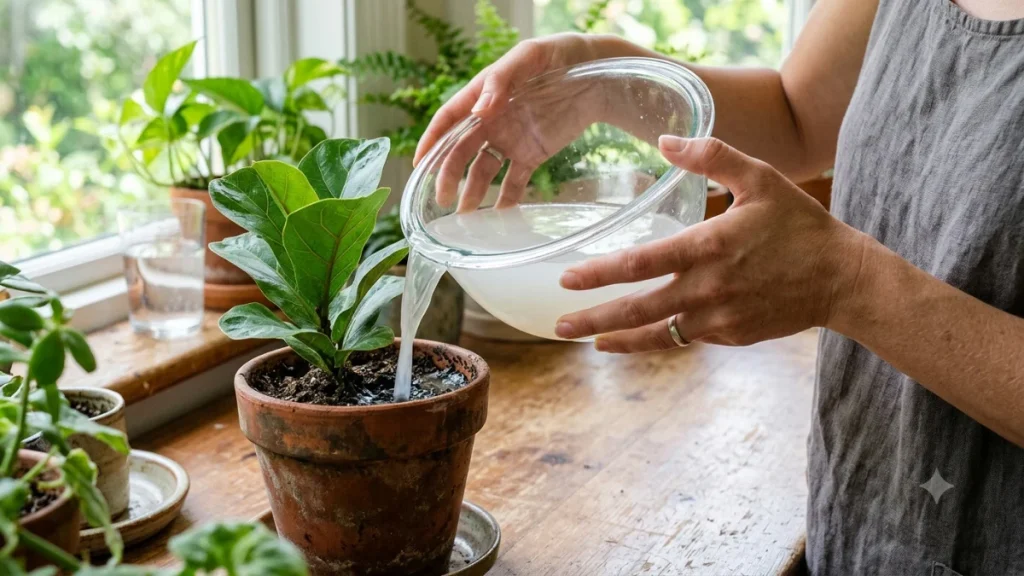
Stunted growth and yellowing leaves of potted plants often trouble gardening enthusiasts. To save their plants, people purchase expensive chemical fertilizers from the market, but the most effective remedy is readily available in the kitchen. Rice water, often discarded as waste, serves as an excellent natural fertilizer for plants.
Home remedy for plants: Rice water will bring life to drying plants, learn the correct way to use it and precautions
Rice water is a treasure trove of nutrients
The white water produced during rice washing and the starch from boiled rice contain minerals essential for plant growth. These primarily contain starch, nitrogen, phosphorus, potassium, calcium, iron, and zinc.
Once in the soil, the starch increases the number of “good bacteria” (beneficial microorganisms). This process naturally improves soil fertility, strengthening plant roots and encouraging the growth of new buds and flowers.
Three ways to prepare water and their correct amounts
According to gardening experts, rice water can be used in three different ways:
- Plain rinse water: Collect the white water left over from the first and second rinses of raw rice in a container. This is quite light, so it can be poured directly onto the roots of the plants.
- Boiled water (Manda): The thick starch left after boiling rice is rich in nutrients. However, due to its consistency, it should not be applied directly to plants. Cool the starch completely and dilute it with an equal amount of plain water before using it.
- Fermented Rice Water: After rinsing the rice, fill it with water and leave it in a shady place for 24 to 48 hours. This fertilizer is ready when it begins to smell slightly sour. Mix it with twice the amount of plain water and apply it to your plants. This helps balance the soil’s pH level.
Foliar spraying and insect protection
This plain rice water can be applied not only to the roots but also to the leaves of plants by filling it in a spray bottle. This will clean the leaves of dust, restore their natural shine, and reduce the infestation of small insects (pests).
Don’t make these mistakes: plants may be harmed
“If even a little salt or oil has been added to the water used for boiling rice, do not accidentally pour that water onto your plants. Salt absorbs moisture from the soil and can permanently damage the roots and cause the plant to die.”
— Gardening expert and local nursery consultant
Additionally, always use boiled water only after it has cooled completely to room temperature. Using hot water can scald the roots. This natural fertilizer should only be used once or twice a week. Excess starch can accumulate on the top surface of the soil, causing fungus or attracting ants.