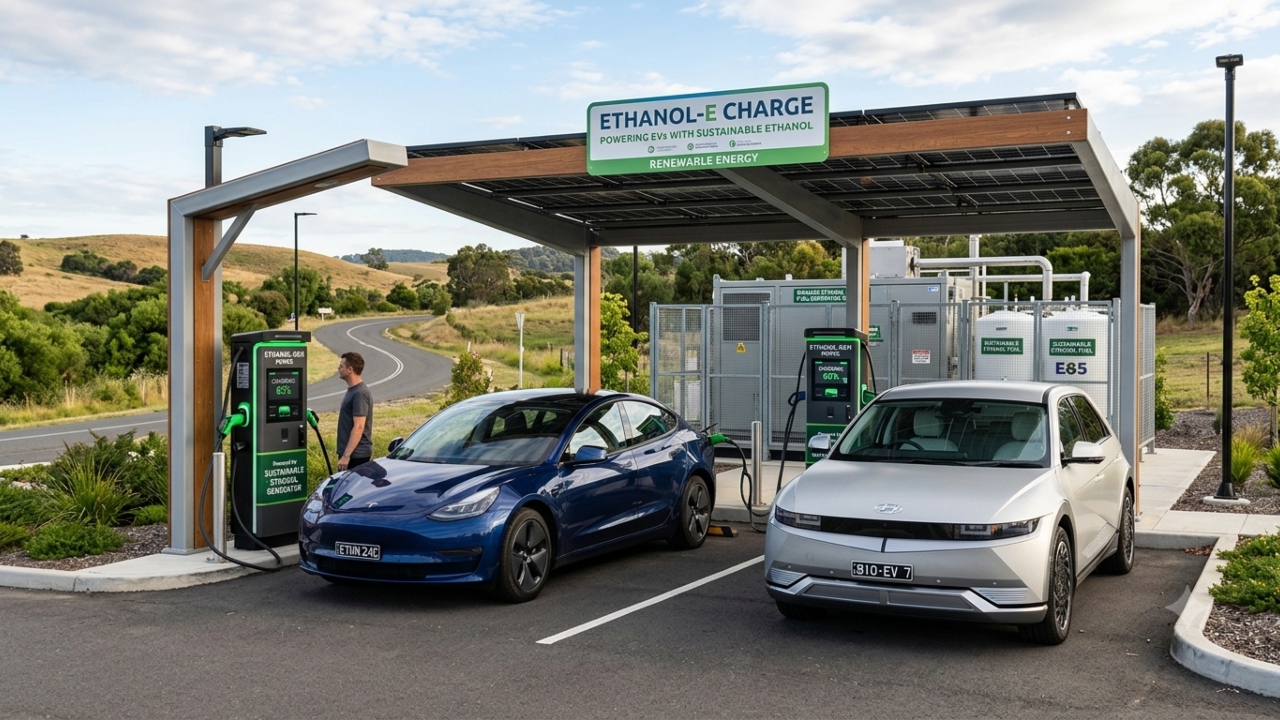
Introduced in the presence of Union Minister G. Kishan Reddy, this technology will charge electric vehicles using energy generated from ethanol instead of electricity. Experts say this could be considered a major step in India’s green mobility journey.
How does an ethanol-powered EV charger work?
Typically, fast EV charging stations require a high-voltage power connection and a strong power grid. However, this new 150kW fast EV charger works differently. This system involves a special machine that generates electricity from ethanol on the spot. This electricity is then used to rapidly charge the electric vehicle’s battery. This significantly reduces the dependence on the grid for charging. This can also make charging available in areas without a robust power network.
Charging station to be ready in just 72 hours
The biggest advantage of this technology is its fast installation process. Installing a typical EV charging station takes months due to transmission lines, transformers, and various government approvals. However, the company claims that the ethanol-based mobile charging unit can be operational in just 72 hours. Consequently, the company states that this could reduce the initial cost and time required to set up a charging station by approximately 50 percent. This will help rapidly expand the charging network along highways and in rural areas.
Benefits to both farmers and the environment
It is being said that the impact of this technology will not be limited to the EV sector. Ethanol is primarily produced from sugarcane, corn, and agricultural residues. Increasing demand for it will provide additional income opportunities for farmers and strengthen the agriculture-based economy. Furthermore, reducing dependence on foreign crude oil will also bring economic benefits to the country.
This technology is also considered important from an environmental perspective. While diesel generators are currently used for EV charging in many places, this new system could provide a clean alternative. According to available data, this technology can reduce carbon emissions by approximately 80 percent compared to diesel generators. Furthermore, it can be transported as a mobile unit, providing immediate charging assistance even in the event of a battery failure on the highway.