
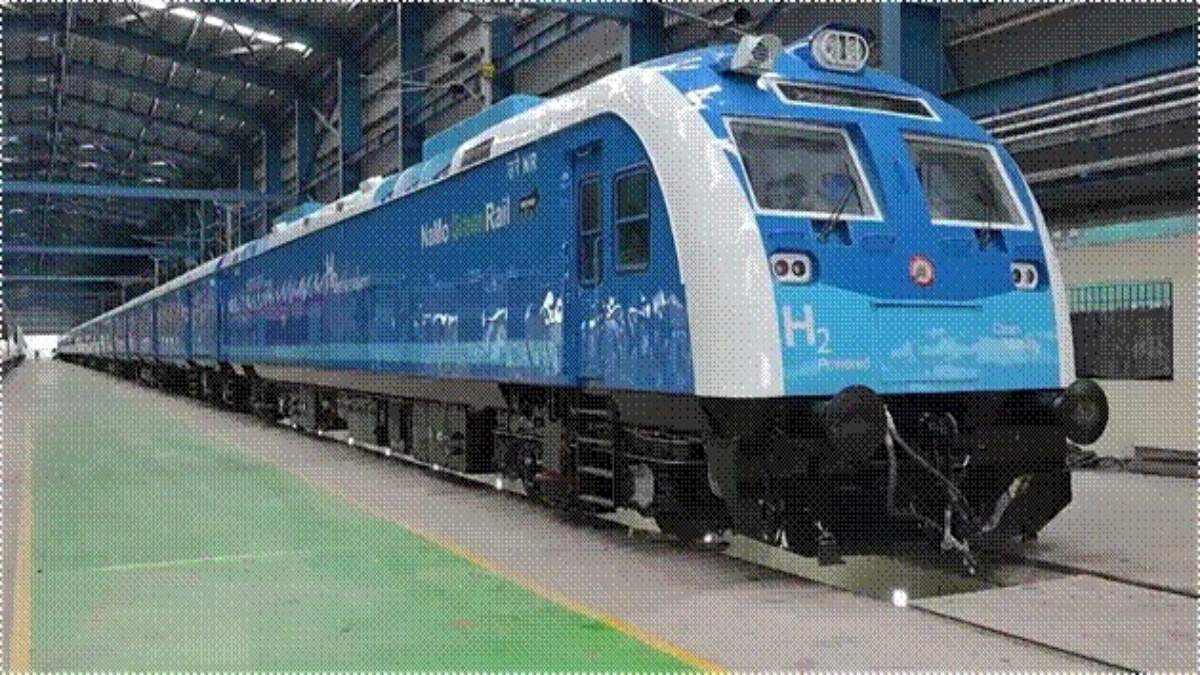
India’s first hydrogen fuel cell train launched, equipped with multi-layer safety system, know its specialty

Hydrogen Train: Indian Railways has planned to launch the country’s first hydrogen fuel cell train on 17 July 2026. This train generates its own electricity using hydrogen, the cleanest fuel. It produces almost zero emissions during use. This milestone marks a new chapter in the evolution of the way Indian Railways runs its trains, reflecting India’s broader journey away from coal and steam towards cleaner, more sustainable energy sources.
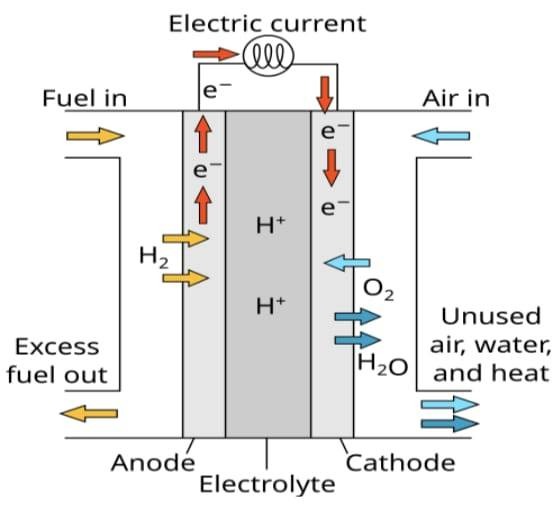
Rapid electrification over the last 12 years has significantly reduced dependence on imported diesel, paving the way for the next advancement in clean rail transport. Today, with the electrification of more than 99 per cent of broad gauge routes, Indian Railways is taking a step forward in this direction. Unlike conventional electric trains that draw power from overhead lines, hydrogen fuel cell trainsets generate electricity inside the train through a chemical reaction between hydrogen and oxygen, with water vapor produced as the only by-product.
In a way, this train once again uses its own energy source, just as steam and diesel engines once did. But instead of burning traditional fuels like coal or diesel, hydrogen produces electricity inside the train by taking oxygen from the atmosphere, eliminating combustion and reliance on external power supplies. Because clean hydrogen technology generates electricity inside the train, the train is the most eco-friendly form of rail transport, powering the future of sustainable mobility.
To further strengthen this advanced propulsion system, the country has installed multi-layered safety systems on the train that are capable of detecting hydrogen leakage, heat, fire and smoke. With an operating speed of 75 kmph and a design speed of 110 kmph on the Jind-Sonipat section, this train is not only safe but also fast on this 89 km route.
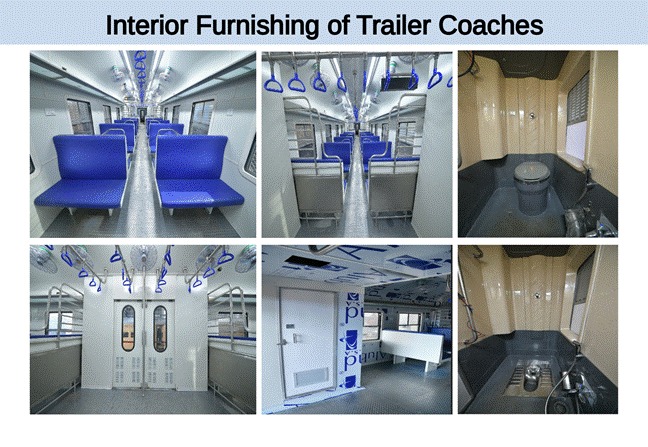
Most hydrogen passenger trains currently operating globally have only two or three coaches and operate primarily on short regional routes. In contrast, the Indian Railways train is designed as a 10-coach passenger train, with a capacity of around 2,600 passengers. This demonstrates the adaptability of hydrogen-powered rail transport for high-capacity passenger services.
How does a hydrogen train actually work?
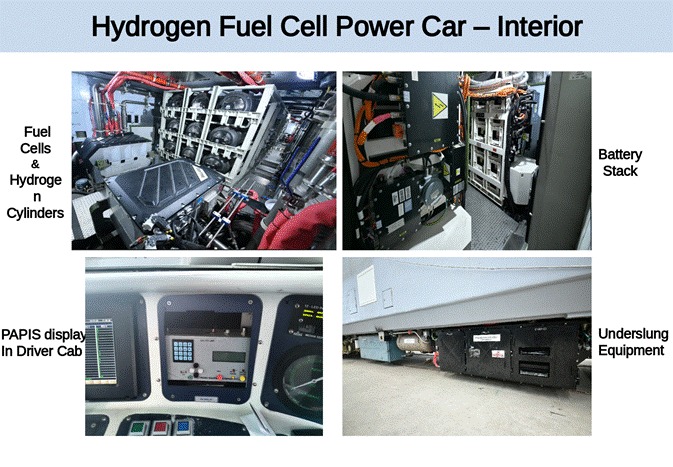
Unlike conventional diesel engines, which burn fuel to generate mechanical power, the hydrogen train has a small power plant in the form of a proton exchange membrane (PEM) fuel cell. Hydrogen stored in the train’s cylinders combines with oxygen from the surrounding air inside the fuel cell to generate electricity, which powers the traction motors and turns the wheels. The only direct by-products of this electrochemical reaction are water vapor and heat. There is no combustion, smoke or tailpipe carbon emissions.
To put it simply, the process is almost magical: hydrogen + oxygen → electricity + water vapor → the train starts moving. What looks like magic is actually a marvel of science, converting hydrogen directly into electricity inside the train. Its only direct by-product is water vapor. It emits neither smoke nor direct carbon emissions, thereby contributing to the environmental protection of Indian Railways.
This train consists of two Hydrogen Driving Power Cars (DPC) and eight Trailer Coaches (TC). Each driving power car is equipped with a fuel cell, lithium iron phosphate (LFP) battery and hydrogen storage cylinders that work together to provide traction power while ensuring reliable operation in a variety of operating conditions.
Two power cars located at either end, each driving power car generating 1,200 kilowatts (1600 hp) of power, enough to propel the entire train to a speed of 110 km/h. The hydrogen fuel cell-powered train will initially run on the Jind-Sonipat section of Northern Railway, connecting Jind Junction, Gohana Junction and Sonipat and also at intermediate stations and proposed halts including Jind City, Pandu Pindara Junction, Lalit Kheda Halt, Bhambhewa, Isapur Kheri Halt, Butane Halt, Khandarai Halt, Rabra Halt, Lath Halt, Mohana, Barwasni Halt and Sonipat New. Will stop.
This route has been selected to demonstrate the operational feasibility, safety and reliability of hydrogen-powered passenger rail services under normal operating conditions. The dedicated hydrogen storage, compression and distribution facility set up at Jind will support refueling operations, creating India’s first integrated hydrogen railway ecosystem.
Where does hydrogen come from? There is a fuel filling station in Jind
Just like a petrol pump or a CNG station, trains also need space to refuel, and for this purpose Indian Railways has set up India’s largest railway hydrogen refueling facility at Jind, Haryana. This facility operates in three phases.
First, hydrogen is produced by electrolysis in a green hydrogen plant, in which water is split into hydrogen and oxygen using electricity, and then stored safely in special storage tanks. Secondly, hydrogen is compressed up to 500 bar, allowing larger amounts of hydrogen to be stored in less space. Finally, it is delivered at a controlled pressure of 350 bar through two independent hydrogen dispensers, allowing both hydrogen driving power cars to be fueled simultaneously and reducing turnaround time.
The facility stores approximately 3,000 kg of hydrogen at a time, enough to maintain regular operation of trainsets, and its storage and supply system has been approved by the Petroleum and Explosives Safety Organization (PESO).
building indigenous capabilities
Designed, engineered and integrated in India, the train has been developed using indigenous technology, reflecting the country’s growing capabilities in advanced railway engineering.
The country’s first hydrogen fuel cell-powered trainset has been developed under the leadership of Indian Railways. The Research Design and Standards Organization (RDSO) prepared the technical specifications and led the design approval process. The integration of the trainset has been done by M/s Medha Servo Drives, while Integral Coach Factory (ICF) has contributed to the theme and exterior design of the train.
To complement the trains, Indian Railways has set up a complete hydrogen ecosystem at Jind, comprising hydrogen production through electrolysis, storage, compression and distribution infrastructure to support train operations.
What exactly is hydrogen, and why does it worry people?
To put it simply, hydrogen is colourless, so it cannot be seen or smelled, and being odourless, it has no smell. It is also tasteless. It is not poisonous, which means being near it will not cause any harm to you. What people fear, and this fear is justified, is that it is highly flammable and should be used with great care. Since hydrogen cannot be seen or smelled, the entire safety plan of this project is based on a single goal, which is to detect even the smallest leaks quickly and never let them turn into hazards.
So how is security actually ensured?
Security has been integrated at every level of this project. From the design of the train and hydrogen storage cylinders to the refueling infrastructure, monitoring software and emergency response systems, safety has been taken care of at every stage. Rather than relying on a single safety measure, Indian Railways has adopted the internationally accepted principle of ‘Safety in Depth’, whereby multiple independent safety systems continuously monitor, verify and protect every step of hydrogen storage, transfer and use.
There is a system of surveillance everywhere. The train and plant are equipped with equipment that continuously monitors for hydrogen leaks, unusual heat, flames or smoke, so any problems are detected within seconds. Additionally, continuous ventilation keeps air flowing through the train, so that if even a small amount of hydrogen leaks, it can safely escape and dissolve in the open air instead of accumulating somewhere.
It also has an automatic shut-off system. If any abnormal conditions are detected, the system can automatically stop the hydrogen supply without waiting for a person’s reaction. Special attention has also been paid to the safety of the loco pilot. The loco pilot’s cabin is specially designed for the safety of the loco pilot, with a special mode that allows the train to be moved to a safe place in an emergency, and a screen that shows the actual status of the entire system to the loco pilot at all times.
The Jind hydrogen plant also has similar safety systems, which include leak detection devices, fire detection devices, automatic shutdown systems, water sprinklers to control fires and fire alarms, all working in concert.
Checked and approved not only by Indian Railways but also by others
The hydrogen system is designed as per internationally accepted standards, such as NFPA-2 and ISO 19880 series, while also complying with the statutory requirements of Petroleum and Explosives Safety Organization (PESO). Prior to commissioning, the entire system underwent an independent third-party safety assessment by Germany-based TUV SUD, one of the world’s leading technical inspection and certification agencies.
The train was tested before carrying passengers
Before this train was allowed to run, it went through many rigorous tests to ensure that everything was working properly. Load box testing checks that the electrical and power systems function properly under actual load. Radio frequency tests ensured that the train’s electronics did not interfere with other signaling and communications systems.
Oscillation tests checked that the train ran smoothly and stably at speed, without excessive vibration. Emergency braking distance tests confirmed how quickly and safely the train could stop in an emergency. Only after successful completion of all these assessments, statutory inspections and independent safety assessments was the project considered ready for operation.
What is India’s position at the global level?
Hydrogen-powered trains are still in their infancy globally. Germany has become the first country to launch commercial hydrogen passenger trains, while France, Italy, China, Japan and some other countries are working on pilot projects or limited operations. However, these trains usually have two to four coaches and are primarily designed for regional passenger services.
India’s hydrogen fuel cell trainset represents a significant advance in both scale and ambition. Apart from the trains, India has also set up the country’s largest railway hydrogen refueling facility in Jind, creating a complete hydrogen rail ecosystem encompassing rolling stock, storage, distribution infrastructure, safety systems and operational protocols.
The future of hydrogen trains
Indian Railways is also exploring the possibility of deployment of hydrogen technology on heritage railways including the Kalka-Shimla route, taking advantage of the experience gained from the Jind-Sonipat Hydrogen Train Project.
These initiatives mark Indian Railways’ transition from a pioneering pilot project to a structured national program for hydrogen-powered rolling stock, strengthening India’s leadership in sustainable mobility while contributing to the National Green Hydrogen Mission and the country’s long-term net zero goal.
Follow the LALLURAM.COM MP channel on WhatsApp

Comments are closed.