
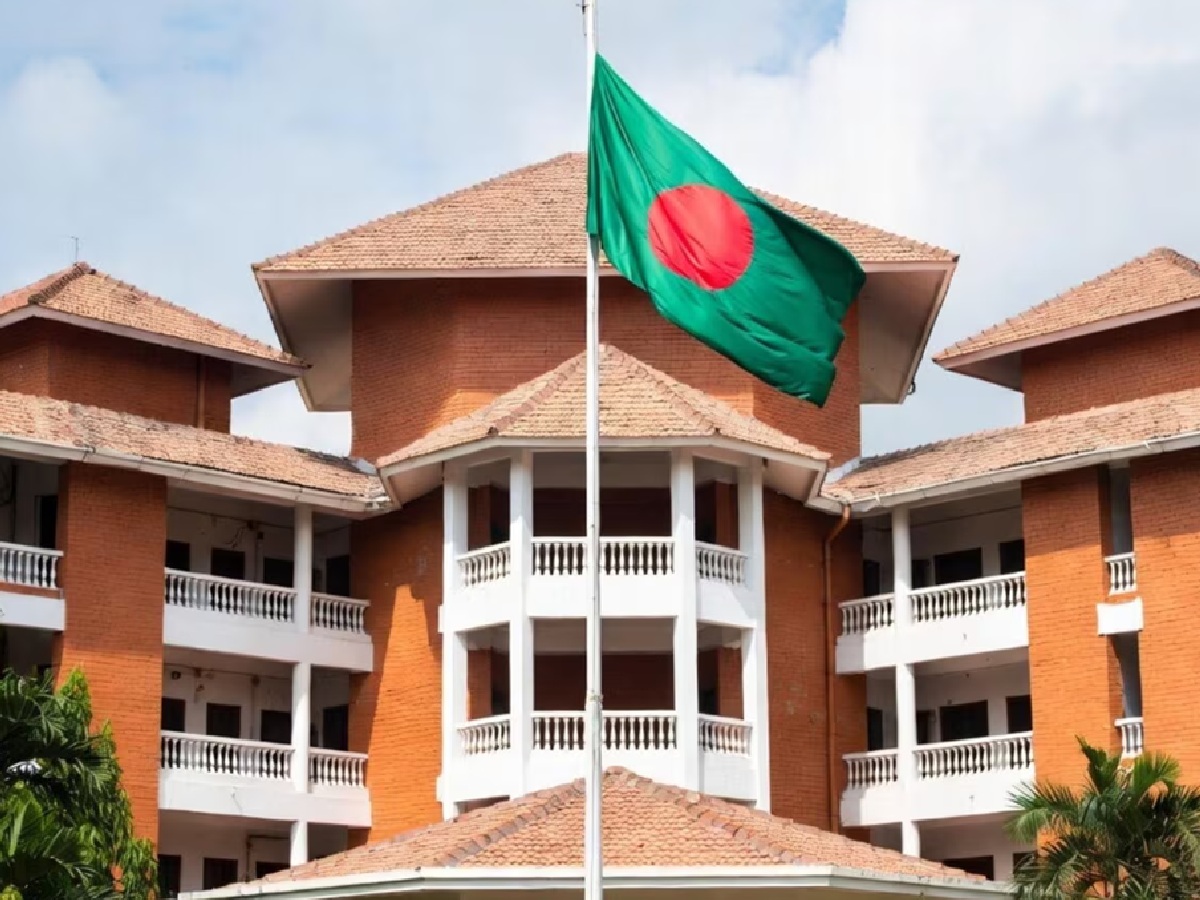
Bangladesh appointed journalists who spewed venom against India as diplomats in Delhi and Kolkata, sparking uproar in diplomatic circles. – ..

Once again, major tension seems to be arising in the bilateral relations between India and Bangladesh. The interim government of Bangladesh has appointed two journalists, whose social media accounts have been found posting anti-India posts and sharp comments in the past, to key diplomatic posts in India. The Bangladesh government has named senior journalist Mohammad Saidur Rahman as Minister (Press) in the New Delhi-based Bangladesh High Commission and TV journalist Umme Marufa as First Secretary (Press) in the Kolkata-based Deputy High Commission. Since this notification of the Ministry of Public Administration came out, a heated debate has erupted in diplomatic and political circles on whether the neighboring country is deliberately trying to increase bitterness in relations with India.
Who are Mohammad Saidur Rahman and Umm Marufa?
Mohammad Saidur Rahman, who is surrounded by controversies, is a senior journalist of Bangladesh’s prestigious Bengali daily ‘Ittefaq’. Rahman, who studied Mass Communication at Dhaka University, has served as the politics and elections editor at Ittefaq following the July 2024 student movement and is also the former general secretary of the Dhaka University Journalists Association. He has been given the responsibility of Press Minister in Delhi for one year. On the other hand, Umm Marufa, special reporter of News24 TV channel, has been given the post of First Secretary (Press) in Kolkata. More than their professional background, their old and controversial views remain at the center of discussion these days.
What is the main reason for the controversy and the truth of the social media posts?
The biggest reason for raising questions on these appointments are the old social media posts of both the journalists, in which serious questions were raised on India’s sovereignty and history. In December 2024, when Prime Minister Narendra Modi remembered the sacrifice of Indian soldiers in the 1971 liberation war, Saidur Rahman, reacting on Facebook, downplayed India’s role and claimed that Bangladesh got real independence from the so-called ‘colonial hold’ only after Sheikh Hasina left power in August 2024. Apart from this, he had made false allegations of India’s involvement in the 2009 BDR insurgency and other historical events. At the same time, Umme Marufa is also accused of making sensitive statements of Bangladesh Chief Advisor Muhammad Yunus related to the North-Eastern states of India i.e. ‘Seven Sisters’ and promoting anti-India content on social media. Although many controversial posts have been deleted or hidden after the controversy escalated, the resentment in diplomatic circles has not diminished.
Clouds of danger loom over India-Bangladesh diplomatic relations
In India, generally professional and trained diplomats of the Ministry of External Affairs hold diplomatic posts related to press and information, whereas in Bangladesh there has been a long tradition of making political appointments to these posts. Even before this, in the month of February, Bangladesh’s previous spokesperson Faisal Mahmood had to face strong displeasure from the Indian government for making unnecessary comments on India’s domestic politics and his contract was cancelled. Experts believe that in the current delicate period between the two countries, sending such controversial faces to India as diplomatic faces can cause a deep blow to the efforts to restore bilateral trust. Although till now no official statement has come from the Bangladesh government on this entire matter, but according to Indian diplomatic sources, a serious discussion has started at the internal level on this sensitive issue.

Comments are closed.