
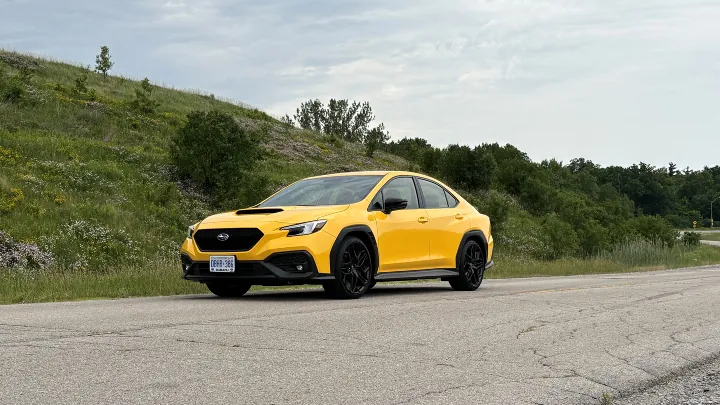

Subaru is making it clear that performance cars still have a place in its future. At a time when many automakers are shifting their attention almost entirely to electric vehicles and SUVs, the Japanese brand has announced a dedicated team focused solely on developing exciting driver’s cars.
The move comes as Subaru restructures part of its product planning operations, creating a new Sports Vehicle Planning Office under its recently established Product Innovation Division. The goal is straightforward: build vehicles that keep Subaru’s performance heritage alive while adapting to an automotive industry that is rapidly evolving.
A Fresh Approach to Building Performance Cars
For decades, Subaru earned its reputation through rally-inspired machines that combined turbocharged engines, all-wheel drive, and engaging driving dynamics. Models like the WRX, WRX STI, Legacy Spec B, Forester XT, and BRZ became favorites among enthusiasts across the world.
Now, Subaru wants to preserve that identity while modernizing how these vehicles are developed.
According to Subaru Chief Technical Officer Tetsuo Fujinuki, the company has moved away from slower development processes and embraced digital engineering tools. By relying more heavily on virtual development, engineers can evaluate designs faster, reduce repeated meetings, and explore more ambitious ideas before physical prototypes are built.
The streamlined process is expected to shorten development timelines while allowing Subaru to experiment with more performance-oriented projects.
Manual Transmission Isn’t Going Anywhere
Perhaps the biggest takeaway for driving enthusiasts is Subaru’s continued support for manual transmissions.
The company has indicated that its next wave of performance-focused vehicles will continue offering stick-shift options, reinforcing its commitment to enthusiasts who still value driver involvement over outright automation.
While many manufacturers have gradually eliminated manual gearboxes from their lineups, Subaru believes there remains strong demand among its loyal customer base.
This decision also helps distinguish Subaru from competitors that have increasingly prioritized automatic-only performance models.
Three Performance Models Already in Development
Subaru has already confirmed that three STI-engineered vehicles are currently under development.
Although official specifications remain under wraps, industry expectations point toward a higher-performance WRX, an upgraded BRZ, and a new performance-oriented hatchback that could revive the Impreza nameplate in a sportier form.
These vehicles are not expected to be full-fledged STI models in the traditional sense, but they will carry engineering improvements inspired by Subaru Tecnica International, the company’s renowned performance division.
Each model is expected to focus on improved handling, sharper driving dynamics, and greater driver engagement rather than simply increasing horsepower.
Performance Meets Electrification
Subaru’s renewed investment in performance does not mean it is ignoring the industry’s shift toward cleaner mobility.
Instead, the company appears to be pursuing a balanced strategy that combines traditional internal combustion performance with future electrified technologies.
Executives have acknowledged that electrified performance vehicles are part of Subaru’s long-term roadmap, although specific details remain undisclosed.
This approach could eventually lead to hybrid or fully electric performance models that retain the engaging characteristics Subaru enthusiasts have come to expect.
Everyday Models Will Continue to Fund Enthusiast Cars
While the spotlight is on performance vehicles, Subaru’s mainstream SUV lineup remains central to its business.
Popular models such as the Forester, Outback, Crosstrek, and other high-volume vehicles will continue generating the sales needed to support development of niche enthusiast models.
This strategy mirrors the approach taken by several global automakers, where profitable family vehicles help finance lower-volume performance projects.
By improving engineering efficiency through digital development, Subaru also expects to reduce costs associated with specialty vehicle programs, making it easier to justify future performance investments.
Keeping Subaru’s Identity Alive
As electrification reshapes the automotive industry, many enthusiasts have questioned whether iconic performance brands can maintain their character.
Subaru’s latest announcement suggests it has no intention of abandoning the formula that built its reputation.
Rather than treating performance as a relic of the past, the company is positioning it as an important part of its future identity. The establishment of a dedicated sports vehicle planning team, continued support for manual transmissions, and commitment to developing STI-inspired models all point toward a brand determined to preserve its enthusiast appeal.
For Subaru fans, that means the spirit of rally-bred performance is set to continue, even as new technologies reshape the roads ahead.

Comments are closed.