
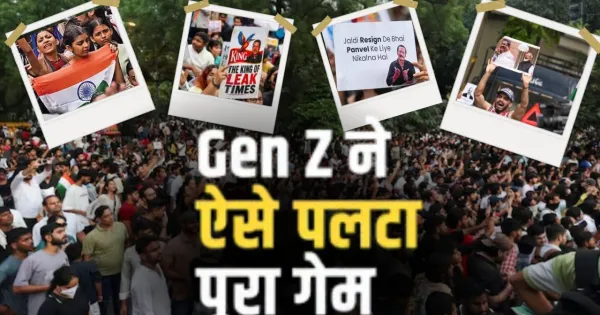
EXPLAINED: Did Gen Z change the identity of the movement? When memes became weapons and reels became the new voice of the movement

Delhi. There is a tense atmosphere. Police and protesters are standing face to face. Meanwhile, a student smilingly says to the policemen, “Brother, there is no arrangement for tear gas. You have not made any arrangements. Hey, where is the water cannon? Even water is not there.” Seeing this style of the student, the people present around also start laughing. Within a few minutes this video goes viral on social media. Not only this, during the protest in Patna when the police used water cannon to stop the students, the picture looked different. While people usually step back when a heavy shower of water occurs, some youth turned the same shower into a ‘water park’ like environment and started doing rain dance.
With the resignation of Dharmendra Pradhan from the post of Education Minister, the movement from Jantar Mantar has ended, but it has left a question on which the debate is still going on. Is the language of protests changing in the country? Is the movement now being fought not only on the streets but also on mobile screens? During this movement, as much as the demands of the students were discussed at the protest site, their style of protest was also discussed equally. There were placards in the hands, but the cameras were also on. Slogans were being raised, but at the same time Instagram reels were being recorded. Hashtags were trending on social media, memes were being made and some videos were reaching millions of people within a few hours. This is where the question arose whether Gen Z protested
The definition has started to change?
The journey from poster to post There was a time when the strength of a movement was measured by the crowd present at the protest site. Newspaper headlines and TV pictures the next day determined how big the movement was. Now the picture is changing. Along with the crowd, views, shares, comments and trending hashtags have also become a part of the discussion. This does not mean that the importance of the road has diminished. The only difference is that a new platform of movement has been created. The voice raised on the road now reaches the mobile screen within a few minutes and from there it spreads among millions of people.
Why did Gen Z’s approach look different?
This generation has grown up in the era of internet and smartphones. Therefore its expression is also digital. It also did not limit serious issues like unemployment, paper leaks and government recruitment to mere slogans. Also expressed their views through short videos, memes, satire and creative content. Many such videos surfaced, which first went viral on social media and then became headlines on TV channels and news websites. This made it clear that digital platforms have now become not only a medium of information but also an effective means of generating public opinion.
What does the report say?
According to the Reuters Institute Digital News Report 2026, more than half of 18 to 24-year-olds get their news through social media, video platforms and digital creators. This is the reason why a reel of 30 to 60 seconds often reaches more people than a long speech. However, experts also clarify that viral content and actual public support are two different things. The success of any movement even today depends on organization, leadership and grassroots participation.
The answer to trolling also changed
Another change was seen during this movement. Criticism and trolling on social media was not always responded to with anger. Many youth expressed their views through memes, satire and AI based visual content. In some cases, the taunts of the opponents were also turned into satire and made a part of the social media campaign.
Why were viral videos of Bihar in discussion?
Parallel to the Jantar Mantar movement, many videos related to the student movement of Bihar also went viral on social media. In a video, the protesting student smilingly asks the police, “Brother, is there no provision for tear gas? Where is the water cannon?” The video reached millions of people and was shared widely on social media. During the operation of water cannon in Patna, the videos of some youth doing rain dance were also widely discussed. These images showed that the new generation is using traditional methods as well as visual and digital expression to register their protest. However, the other side of the picture also emerged. Violence broke out at some places, police vehicles were damaged and several policemen were injured. This made it clear that while evaluating any movement, it is important to differentiate between peaceful demonstrations and violent incidents.
Movements don’t win with memes alone
UNESCO report shows that digital platforms not only give people the opportunity to get information but also give them the opportunity to express their views by creating their own content. Besides, the organization also considers media literacy, correct information and protection from fake news equally important. The opinion of analysts is also almost the same. He says that memes and reels can reach an issue quickly to the people, but they cannot replace organization, public support and grassroots struggle.
The language of protest is changing
The Jantar Mantar movement definitely told one thing. Now the movement is not limited to just posters, banners and slogans. Posters with posts, slogans with hashtags and protests with reels – all these have now become part of the new picture of protest. In the years to come, the strength of the movement will be judged not just by how many people were on the streets, but also by how quickly the issue reached people’s mobile phones. Still, the ultimate truth will remain the same – social media can give momentum to a movement, but even today, public participation and grassroots struggle is responsible for taking it to its destination.

Comments are closed.