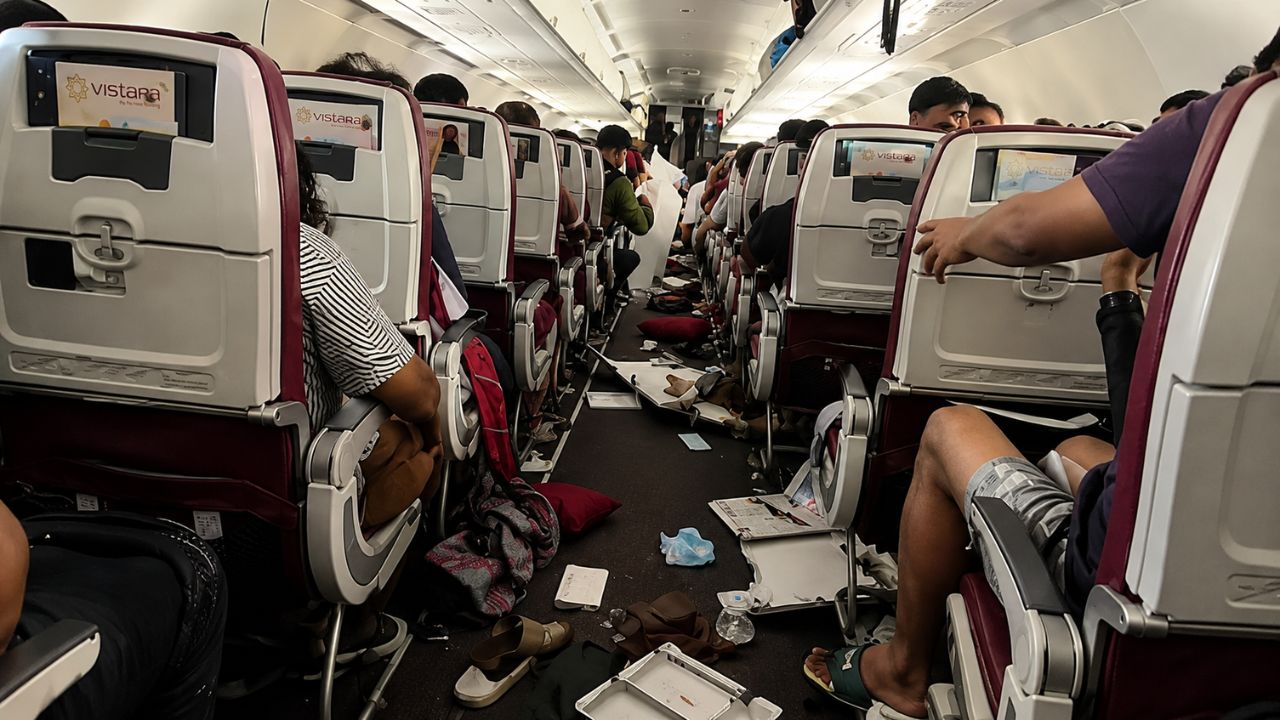
New revelations are being made every day regarding Air India’s Phuket-Delhi flight. Information had come to light yesterday that the pilot was drunk. Now information is coming to light that when the plane was flying at an altitude of 36 thousand feet, the flight commander had taken a sleep of 30 to 35 minutes. In a statement given to investigators, the flight commander reportedly said that he was unable to sleep during his stay in Phuket and was taking medication on the advice of his family doctor.
According to two people associated with the case, the Aircraft Accident Investigation Bureau (AAIB) interrogated the pilot for more than an hour. The aircraft’s flight log and tracking data indicate that the Airbus A320 was at an altitude of approximately 36,160 feet at the time of the incident and descended approximately 360 feet within a short period of time.
What information did the commander give?
According to a person close to the investigation, the commander told authorities that he was having sleep problems during his stay in Phuket. He told the investigators that his sleep was affected for some time due to personal reasons and due to this he had taken the medicine prescribed by his family doctor. The pilot also told how long he had been using this medicine. However, it is not yet clear whether he had informed the airline about the medicine he was taking on doctor’s advice or not.
What is DGCA’s rule regarding taking medicines?
According to the rules of the Directorate General of Civil Aviation (DGCA), pilots taking medicines prescribed by a doctor have to inform their airline about the same. If information about prescribed medicines is not given to the airline, action can be taken against the concerned pilot.
Had the Commander really fallen asleep?
According to both the people associated with the investigation, the commander had slept for about 30 to 35 minutes during the flight. After this he went to the washroom and returned and stood behind the first officer. It is reported that the commander was discussing the air conditioning system at that time. Meanwhile, a sudden altitude incident occurred in the aircraft and the commander fell on the floor of the cockpit.
At the time of the incident, the First Officer was piloting the aircraft, while the Commander was in a monitoring role. According to people associated with the investigation, after the commander fell, a member of the cabin crew present on the observer seat helped him get up. The crew member sitting in the observer seat remains present in the cockpit in case the pilot leaves the cockpit for a while and appoints another member to remain there.
How many warnings were registered?
After the plane took off, a copy of the Centralized Fault Display System log revealed that 9 warning messages were recorded within a minute at 9:32 am Indian time. At that time the plane had entered the coast of Odisha from the Bay of Bengal. Several warnings related to different hydraulic systems were recorded in the log. These included messages related to low pressure in various combinations in the green, blue and yellow hydraulic systems, low levels in the reservoirs of the yellow and blue systems, autopilot disconnect, and elevator flight-control malfunction.
After messages related to hydraulics and flight-control, messages related to two emergency exit sensors were received at 9:33 am and 9:35 am. After this, no other message related to the hydraulic system or elevator was recorded for about 43 minutes. However, at 10:16 am a separate malfunction was recorded in the engine anti-ice system. After this, at 10:52 in the morning another message of autopilot disconnection appeared.