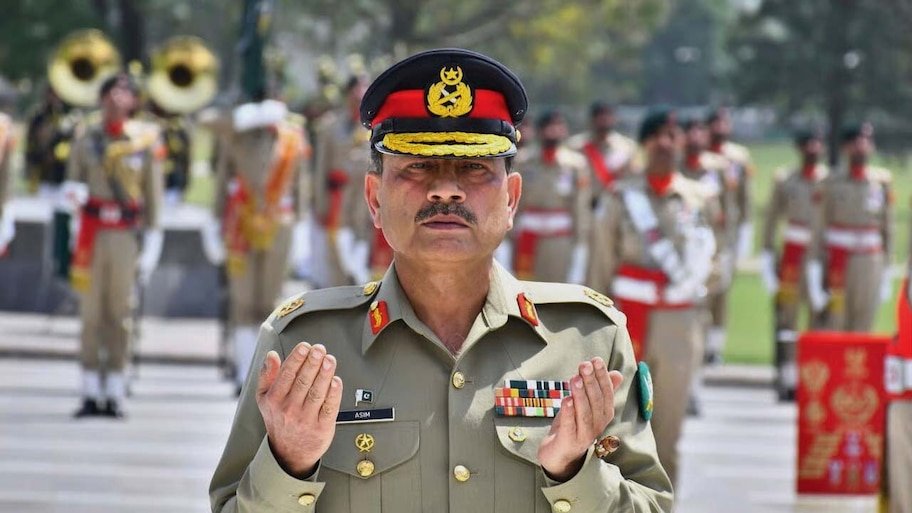
Once again history seems to be repeating itself in the power structure and political corridors of Pakistan. Amidst the country's weak economic condition, political instability and the helplessness of the coalition government, Pakistan Army Chief (COAS) General Syed Asim Munir has emerged as the country's most powerful person and undeclared 'super boss'. Through the new legislative amendments passed by the Parliament and the Government and the defense restructuring, the command of the entire national security apparatus including not only the Army but also the Navy and Air Force has been placed in the hands of General Munir. The military command of Rawalpindi, which used to rule from behind the scenes, has now come on the front foot under complete legal and constitutional cover, due to which democracy in Pakistan has remained only in name and the complete monopoly of the commander has been established. Amendment in Army Act: Complete control over all three armies and tenure of 5 years Amidst the huge uproar and haste in the National Assembly and Senate of Pakistan, major amendments have been approved in the 'Pakistan Army Act' and Defense Services laws: Tenure increased from 3 to 5 years: Under the new law, the tenure of the Chiefs of Army, Navy and Air Force has been directly increased from 3 years to 5 years. With this, General Asim Munir's influence at the top post has become secure and undisputed for a long time. Army Chief's dominance over Chiefs of Staff Committee: Under the new administrative structure, the Army Chief has been given unlimited powers to veto and take final decisions on national defense strategies, foreign security agreements and joint operations of the three services. Scope of Military Courts: The system of prosecuting civilian protesters and political opponents in military courts has been made more stringent, so that every voice raised against the army can be legally crushed. Special Investment Facility Council (SIFC): Military guard over the economy too General Asim Munir's influence has not been limited only to defense and borders, but the army has also directly captured the country's economic decisions. Since the establishment of 'Special Investment Facilitation Council' (SIFC): Commanding Mineral, Agriculture and Energy deals: All major investment agreements with Gulf countries (Saudi Arabia, UAE, Qatar) and China, privatization of public sector undertakings and precious mineral (mining) projects are being finalized by General Munir and his top generals. Helplessness of the civilian cabinet: The Prime Minister and federal cabinet ministers are now seen playing mere paper roles in front of military officials in SIFC meetings. Foreign investors are also preferring agreements directly with the military leadership rather than the civilian government. The jurisdiction of the Supreme Judiciary and High Courts of Pakistan has also been limited to a great extent through the new judicial reforms and amendments passed by the Parliament. Formation of Constitutional Benches: To neutralize the independence of the senior-most judges in the judiciary, separate 'Constitutional Benches' have been created, in whose appointment the interference of the government and the security establishment has increased. Free hand to ISI and security agencies: The country's powerful intelligence agency Inter-Services Intelligence (ISI) has been given full legal validity for phone tapping, digital surveillance and tracking the communications of any citizen and leader in the name of national security. Weak Civilian Government and Suppression of Opposition The existence of the current Shehbaz Sharif government in Pakistan rests entirely on the military support (Establishment's Grace). Control on PTI and Imran Khan: Every possible legal and administrative trick is being adopted to keep the country's largest opposition party PTI and jailed former Prime Minister Imran Khan out of electoral politics and the mainstream. Censorship of media and social media: Any form of anti-military narrative is being suppressed by imposing 'virtual firewalls' on the Internet and strict restrictions on digital media. Incidents of arrests of journalists, lawyers and human rights activists have become common. Concern for regional stability and international community The emergence of General Asim Munir as 'super boss' in Pakistan has brought new geopolitical challenges for the South Asian region and western countries including India. When the military goes completely out of control, it resorts to escalating tensions on the borders or aggressive rhetoric to divert attention from domestic discontent and failures. The International Monetary Fund (IMF) and global financial institutions are also continuously raising questions about the weakening of democratic institutions in Pakistan and the formation of a military dictatorship-like system.