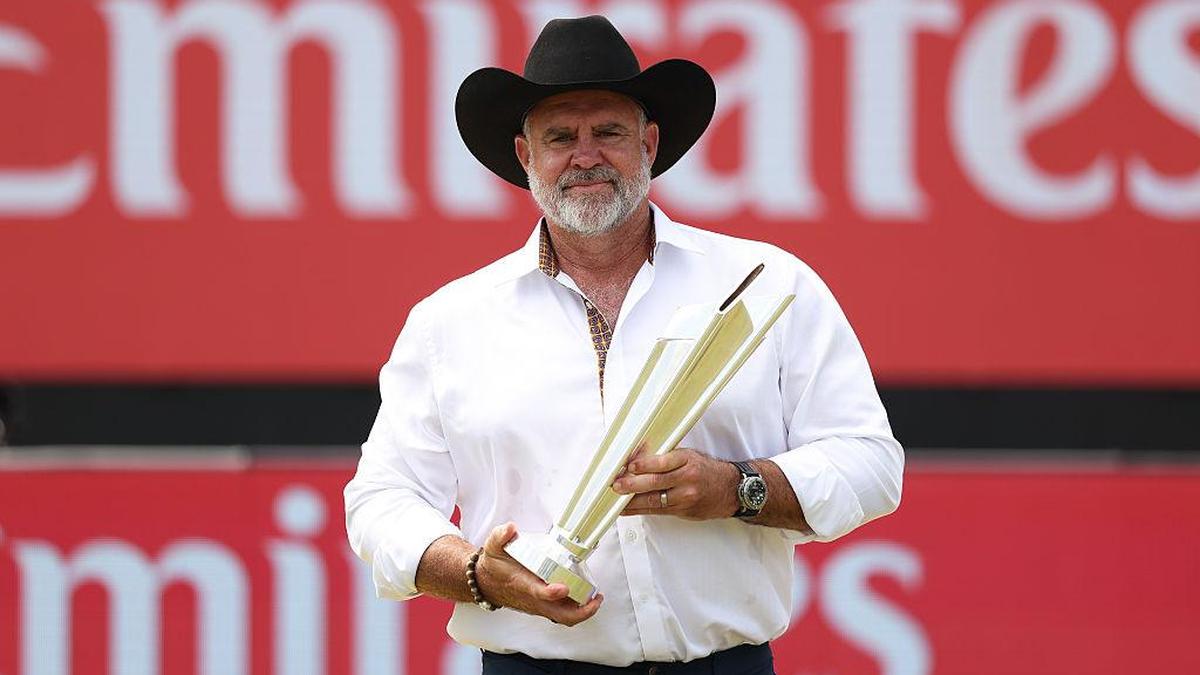
A few metres from the Wagener Stadion, where the Hockey World Cup is in full swing, along the trail of the Amsterdam Bos (Forest), a bunch of cricketers are sweating it out in the nets. Among them, it’s hard to miss the presence of Matthew Hayden, the former Australian opener, who is having a close look from the top of the bowling mark.
Hayden is the part-owner of the Glasgow Cosmic franchise in the newly-launched European T20 Premier League. He is also fulfilling a dual role of a head coach for a side packed with international names, including Lungi Ngidi, Liam Livingstone, Jason Roy, Keshav Maharaj and Moises Henriques.
Hayden has fond memories from his maiden visit to Amstelveen, he top-scored in Australia’s VIDEOCON Cup final win over Pakistan, 23 years ago. Now back in the city, the towering Aussie is aiming to have another fruitful outing.
At the end of the training, Hayden spoke to Sports starsexplaining his decision to invest in ETPL, the league’s long-term objectives, the impact of rising franchise leagues and more.
Q. What was your interest in wanting to invest in this league and in the Glasgow franchise?
The associate nations don’t get programming like the full membership nations, so my interest was to just really expand the game and be a part of that expansion process.
It’s actually not dissimilar to the way that Dean Jones, myself and Brett Lee were the first to the party of the Tamil Nadu Premier League. We see that there’s a great value in getting that cricket intellectual property at that grassroots level that enables players to grow.
By growing the base, you grow the game. I mean the ivory tower is always going to be India, Australia and England.
But then we don’t want it to be a point in the game where it just goes exclusively like that only, which means distribution is only geared towards those nations, playing competitions is geared towards those nations. So if we can spread the base, it will mean that our associates will be able to have competitions to look forward to outside of the World Cups.
ALSO READ |Dinesh Karthik ‘perfect’ as next CSK head coach, says Hayden
I was here last night, about 10 o’clock, and I had kids all around us, I had the dads, the mums involved in community cricket and that’s really where the game is at, it’s the number one stakeholder is community cricket.
Q. What is the long-term objective of this league? Is this primarily a commercial T20 property, or do you see it eventually becoming an important part of the European cricket ecosystem?
It has commercial interests and therefore benefits that should always be there to any kind of investment.
But, I think what is underrated in this investment is the social capital that goes with having a franchise based competition in emerging nations which love the game and participate in the game heavily. So there’s going to be a great investment which will be a non-transactional investment.
Last night, we had George Munsey, we had Matthew Mott, and myself talking to kids, explaining the game of cricket, kids asking great questions like finding their feet in and around what the opportunities are, so I know there’s always going to be commercial interests, but it’s the non-transactional parts of these tournaments that really provide great value and scope.
Q. How is your team coming along in terms of the players you have put together? How do you see your prospects in this first edition?
We’ve built a strong squad right from the start of the auction process. We’ve got some really high quality international superstars who want to come here, that’s the other thing, like being in Amsterdam and Dublin, two great cities of the world.
It’s kind of on the landscape now for just cricketers at that level to come and enjoy and benefit from a competition like this, but again the real benefit is the associates and we’ve got some beauties.
ALSO READ |Dinusha, Sooriyabandara help Sri Lanka stay afloat
So I’m looking forward to personally just building out what that looks like from a cricketing point of view. We’ve got three weeks to hold the attention of these players and we’ve got some superstars.
Q. From starting out in two cities, do you see this league potentially moving around Europe?
Yeah, it’s been pointed out that it is a two-city competition at this stage, it would be nice to have the competition based up in Scotland as well, but I think it’s quite smart because every time that a competition moves, it’s another logistical feat.
It’s really important that the combination of just getting venues bedded down and sorted right for the first edition is good, so I’m pleased that it is this at the moment, but looking forward to seeing what it could be in the future as well.
Q. Has the rise of franchise cricket changed what it means to be a professional cricketer, in a way that traditional cricket boards haven’t fully caught up with?
I don’t think that question is really aimed at boards. I think boards are doing their best to be able to do what they do best and that’s develop the game within the major playing nations.
Their challenge is really how it is that they can manage their assets across franchise cricket globally, because the change is that there used to be a Future Tours Programme only, now there’s also the additional franchise competition, giving players options and scope.
They have to be smart about their own careers and where they want to spend their time. You can achieve anything in life, not everything, so it’s on their shoulders to make those choices.