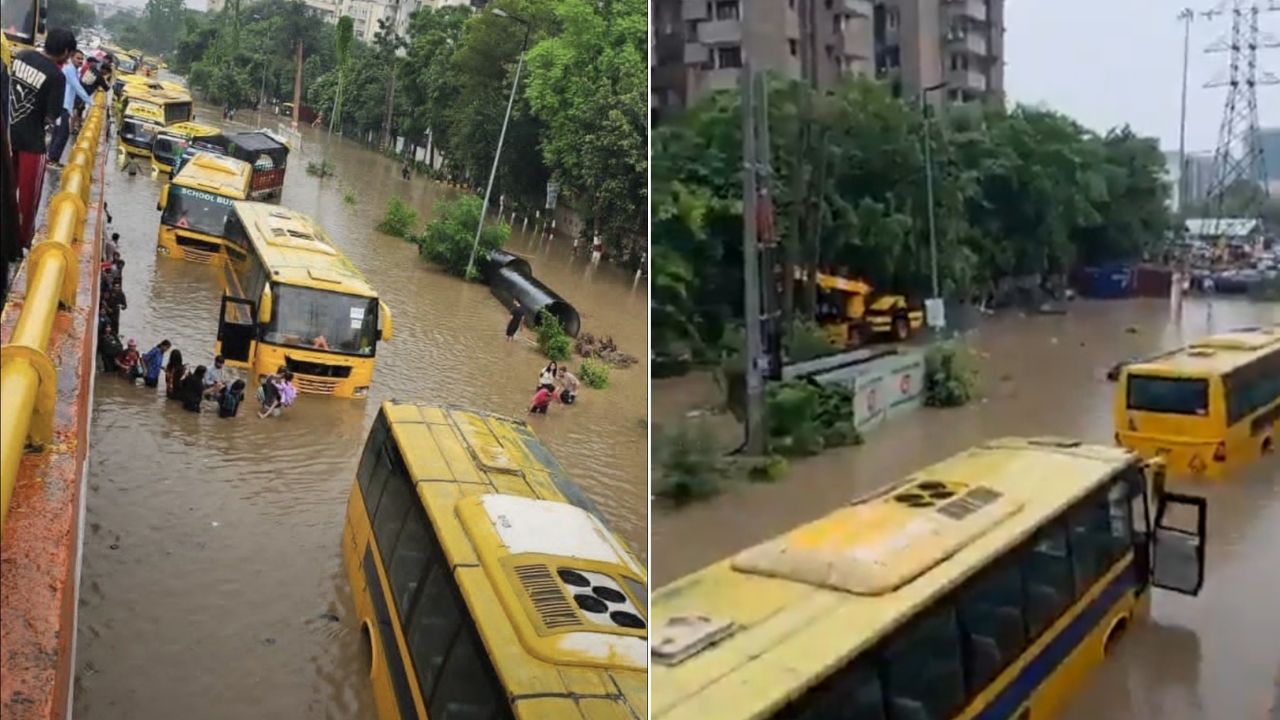
Due to heavy rains yesterday, roads in Gurugram were flooded at many places, due to which people had to face the problem of traffic jams. The video of school buses stuck in jam on social media also attracted people's attention, after which questions started being raised on the work of Gurugram administration and government. Now, after facing a lot of criticism, the Gurugram administration seems to be waking up from its sleep.
In fact, on August 24, many school buses carrying children were stuck in severe waterlogging and traffic jam for more than five hours. A day later, the administration issued detailed guidelines fixing the responsibilities of schools, traffic police and related departments to ensure that such a situation does not happen again during monsoon. The orders issued by the administration have come into effect with immediate effect. These guidelines will remain effective till 30 September 2026 or until further orders.
Know what rules changed in 10 points
1. Under the new system, Gurugram Traffic Police will monitor waterlogging and traffic situation on major routes of school buses. After the rain, the affected places will be identified and the routes will be divided into three categories. Which includes clean routes, slow speed routes and routes that can be avoided due to waterlogging. These reports will be issued on days when there has been rain during the last 12 hours or a weather warning has been issued by the Indian Meteorological Department.
2. To provide timely information about weather and road conditions to schools, the traffic police will have to issue three reports a day. First morning report till 5:30 am, second mid-day report till 10:30 am and third afternoon report till 12:30 pm. If the road is closed due to heavy rain or the situation suddenly worsens, it will be mandatory to issue an immediate update within 30 minutes.
3. District Education Officer and District Primary Education Officer have been instructed to prepare a WhatsApp broadcast group for the principals and transport in-charges of all schools. Along with this, a database of bulk SMS and email will also be prepared. It will be mandatory to send every traffic police report or emergency update to schools within 15 minutes of its release without any changes.
4. The administration has given the most important instructions regarding the movement of school buses. School buses will not be sent on roads which are officially declared waterlogged and unsafe.
5. The administration has also tightened safety rules while dropping children home from school. No student will be allowed to be dropped at a bus stop where there is water or no responsible person is present. The child will be handed over only to the parents or one of their guardians.
6. Every school will have to appoint a transport in-charge or road safety officer. The contact information of this officer will have to be prominently displayed on the school website and notice board. This officer will play an important role in routing decisions based on the movement of school buses, traffic updates and weather warnings.
7. If school buses get stuck due to heavy rains, emergency transport arrangements will be kept ready to evacuate the students safely. Haryana Roadways has been instructed to keep additional buses and drivers in reserve. In case of IMD warning or heavy rain, these buses will be kept ready at pre-determined places.
8. Traffic police have been instructed to deploy additional forces at sensitive and crowded places during morning and afternoon school hours. As per need, resources like policemen, PCR vehicles, towing vehicles, cranes and barricades will be arranged at these places.
9. Municipal agencies have been asked to give first priority to drainage around school bus routes and school gates. Nodal officers appointed at waterlogged places will have to be present on the spot during and after the rains. For this, drainage pumps, cranes and other resources can be used if needed.
10. Schools have been instructed not to use basements or any other low area for gathering students during rains. Apart from this, before releasing the children, the school administration will have to check the electrical panels and open wires, so that accidents like electrocution in case of water filling can be avoided.