7
Health Ministry targets high-burden districts with stronger surveillance and timely treatment measures
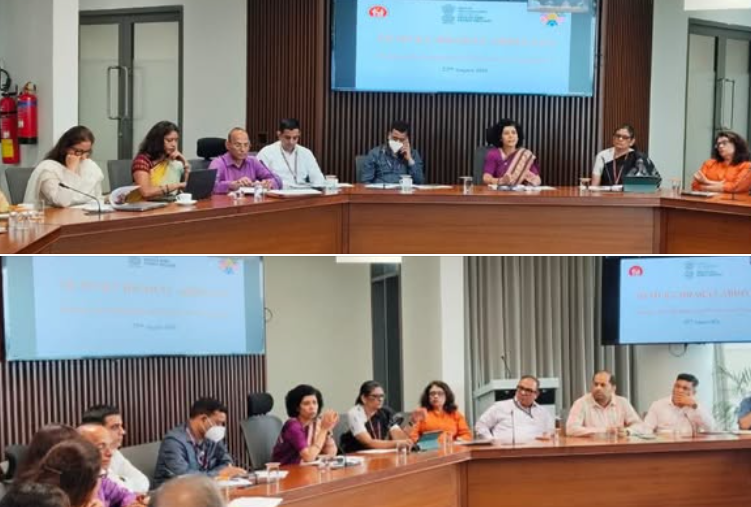
NEW DELHI: The Union Health Ministry has intensified efforts to achieve India’s Sustainable Development Goal of eliminating malaria by 2030, calling for targeted, area-specific interventions, stronger surveillance and timely diagnosis and treatment in districts that continue to record a high disease burden. Additional Secretary and Mission Director, National Health Mission (NHM), Aradhana Patnaik chaired a high-level review meeting to assess the country’s progress towards the malaria elimination target.
Notably, India has recorded significant gains in its fight against malaria over the past decade. Health Ministry data shows that malaria cases and deaths fell by nearly 80 per cent between 2015 and 2025, while the number of high-burden districts declined sharply from 155 to 33.
The government said 160 districts recorded zero indigenous malaria cases during 2022-2025, reflecting sustained interruption of local transmission and the impact of focused control and elimination measures. Despite this progress, 33 high-burden districts spread across nine states and Union Territories remain a major concern. These districts accounted for 64 per cent of malaria cases and 54 per cent of malaria-related deaths reported in 2025.
The review covered Mizoram, Odisha, Tripura, Assam, Andhra Pradesh, the Andaman and Nicobar Islands, Chhattisgarh, Jharkhand and Maharashtra. Patnaik emphasised that the remaining burden must be addressed through strategies tailored to the epidemiological and geographical characteristics of individual areas. She directed states to ensure effective implementation of District Action Plans in all 33 high-burden districts, along with Village Action Plans in villages reporting a high incidence of malaria.
The meeting also stressed the need to strengthen the Test, Treat and Track approach by improving active surveillance, ensuring early detection and guaranteeing complete treatment for those diagnosed with malaria. States were asked to ensure uninterrupted availability of diagnostic services and anti-malarial medicines, particularly in remote, vulnerable and hard-to-reach areas.
Notably, officials identified delays in diagnosis and treatment as an important factor behind malaria deaths and called for stronger surveillance systems to ensure that confirmed cases receive treatment promptly.
Moreover, the ministry also raised concerns over the quality and accuracy of surveillance data. States were asked to examine unusually high Annual Blood Examination Rates (ABER) to rule out duplicate testing, repeated entries and the inclusion of asymptomatic individuals during screening.
Further, it was clarified that asymptomatic cases detected during mass screening should be recorded separately and excluded from the calculation of Annual Parasite Incidence (API) and ABER. The move is aimed at ensuring a more accurate assessment of malaria prevalence and the effectiveness of elimination programmes.
The ministry further emphasised that eliminating malaria will require coordinated action beyond the health sector. Issues such as water-logging, mosquito breeding and environmental conditions that facilitate transmission require sustained intervention from multiple departments. States were therefore advised to enhance coordination with Rural Development and Urban Development departments, as well as Panchayati Raj Institutions, to strengthen environmental management, source reduction and vector-control measures.
The Centre also called for greater participation of Self-Help Groups, community volunteers and Panchayati Raj representatives in malaria-control initiatives. Their involvement can help improve early reporting of fever cases, identify water-logged areas and mosquito-breeding sites, and support source-reduction activities at the community level. With the number of high-burden districts having fallen substantially over the past decade, the government is now focusing its efforts on the remaining pockets of transmission. Officials stressed that continued surveillance and vigilance will be essential even in areas that have interrupted indigenous transmission to prevent a resurgence and keep India on course to meet its 2030 malaria elimination target.