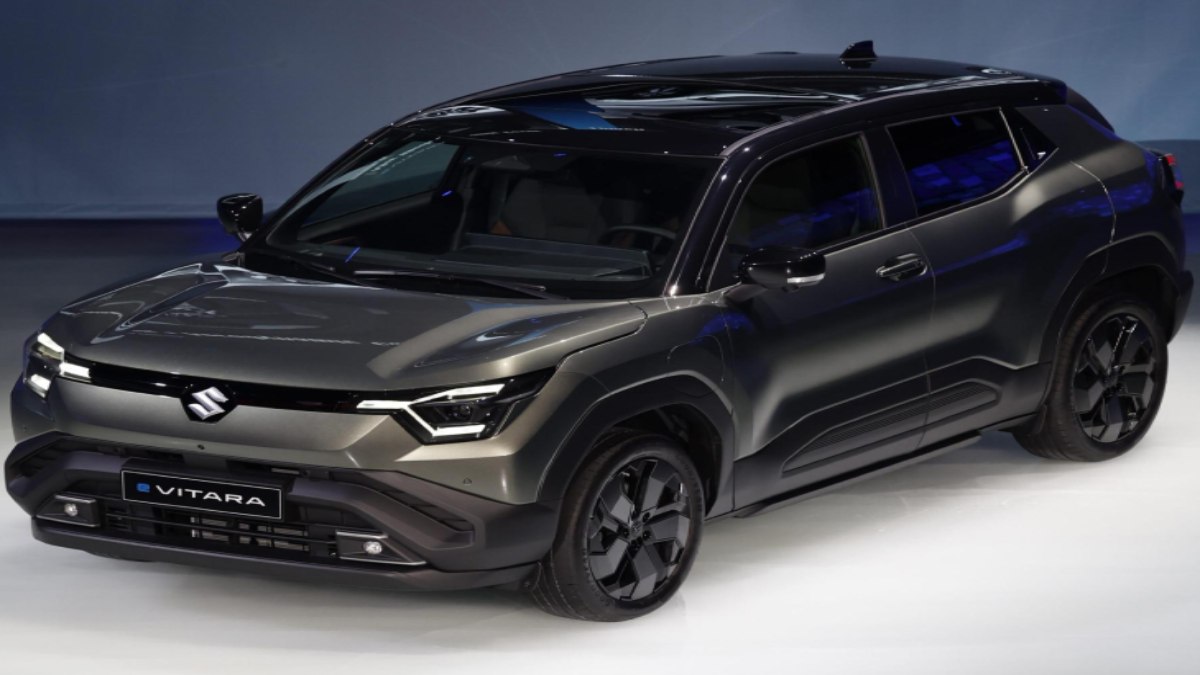
Automobile Desk: The country's largest car manufacturer Maruti Suzuki is now working rapidly towards expanding its electric vehicle (EV) portfolio in the Indian automobile market. After entering the EV segment with the mid-size electric SUV e-Vitara, the company's next step is to introduce small and affordable electric cars for Indian customers. However, before launching these vehicles in the market, Maruti Suzuki is focusing on completely strengthening the charging network infrastructure in the country.
The company's Managing Director and Chief Executive Officer (CEO) Hisashi Takeuchi has clarified that Maruti will launch its small EV vehicles as soon as adequate charging facilities become available in India. Maruti believes that an extensive charging network is a primary requirement for the success and success of e-vehicles. Currently, companies like Tata Motors and JSW MG Motor already dominate this segment with their small electric cars in the Indian market.

To achieve this target, Maruti Suzuki has prepared a big plan to install more than 1 lakh charging points across India by the end of this decade. Taking steps in this direction, the company has partnered with 13 major charging operators. Currently, Maruti has operationalized more than 2,000 exclusive charging stations in more than 1,100 cities. Apart from highways and expressways, work is underway on a strategy to provide charging facilities within a radius of every 5 to 10 kilometers in the top 100 cities of the country.
Despite betting big on electric vehicles, Maruti Suzuki is not leaving behind its conventional and alternative fuel technologies. The company will also continue its investment in mediums like petrol, hybrid, CNG and flex-fuel. In view of the increasing use of compressed biogas (CBG) in the future, the company is making its new manufacturing units extremely flexible. Maruti's new plants are being designed in such a way that EV, hybrid and CNG vehicles can be produced simultaneously on the same assembly line. With this, the production of vehicles can be changed immediately according to the changing demands of the customers in the market.
Along with the domestic market, Maruti Suzuki is also playing a leading role in the global export of electric vehicles from India. This company, which sends its vehicles to about 120 countries, exported more than 4.40 lakh vehicles last year with an annual growth of 34 percent. With the start of exports of e-Vitara to Europe, Maruti's share in total EV exports from India has reached almost 90 percent. In the coming time, the company is going to further strengthen its presence in big international markets like Britain, Germany, France and Japan.
To fulfill these ambitious plans, Maruti Suzuki has prepared a capital expenditure (CapEx) blueprint of approximately Rs 77,500 crore during the financial year 2027 to 2031. This huge amount of money will be used to develop new manufacturing capabilities, introduce new vehicle models and research advanced automotive technologies. In collaboration with Suzuki Motor Japan, the company is rapidly adopting digital technologies in the vehicle design and development process, so that new models can be launched in the market in the shortest possible time.