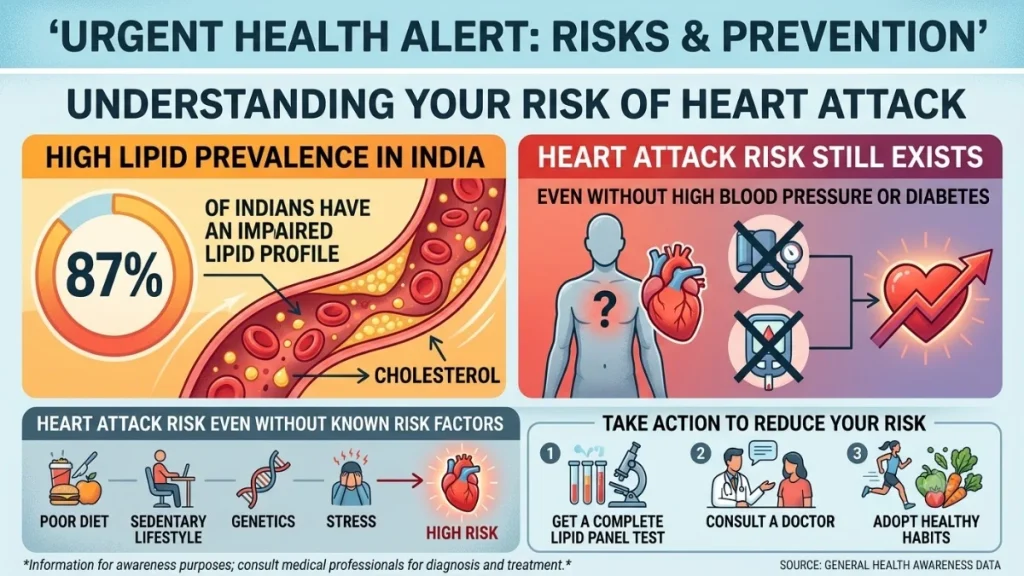
If you believe that your heart is completely safe in the absence of blood pressure, obesity or diabetes, then this may be your misunderstanding. A study by the Indian Council of Medical Research (ICMR) has revealed that 87.3 percent of adults in the country have disturbances in their lipid profile. The most shocking thing is that out of these, there are about 35.5 crore people who neither have diabetes, nor high blood pressure nor obesity. Despite this, they remain at serious risk of heart disease and stroke.
Why are heart attacks occurring even after normal cholesterol report?
Often people believe that if total cholesterol or bad cholesterol (LDL) is normal, then the danger is gone. However, according to medical experts this is not the entire truth. LDL is not the only reason behind heart attacks. Factors like internal inflammation in the arteries, genetic factors, lipoprotein (A), apolipoprotein (B), smoking and deposition of calcium in the coronary arteries are equally responsible. This is the reason why even people with normal lipid profile are becoming victims of sudden cardiac arrest.
LPA: New and important marker to check heart health
Along with traditional cholesterol tests, doctors are now considering lipoprotein (A) i.e. LPA as very important. This is a component present in the blood that makes the arteries narrow and hard.
- Risk level: Individuals whose LPA level is more than 50 mg/dL have a manifold increased risk of developing serious heart disease at an early age.
- Genetic Risk: If there is a family history of heart attack or heart diseases at a young age, it is mandatory to undergo LPA test along with cholesterol test.
Children are at risk from the age of 10, lipid profile check necessary
The metabolism of children changes rapidly between the ages of 10 to 12. Nowadays, due to junk food, packaged snacks, cold drinks and excessive oil and spices being included in the diet of children, bad cholesterol starts accumulating in the arteries from an early age. Along with this, the risk has further deepened due to lack of physical activity and increased screen time.
According to experts, the first lipid profile test of children should be done at the age of 10 years so that conditions like hypocholesteremia can be detected at an early stage. After this, a second test at the age of 20 and then regular follow-up every 4-5 years is necessary.
Expert advice: Change in lifestyle is the first defense
“Controlling cholesterol does not mean completely eliminating oil or fat from the diet, but choosing healthy fats. Abdominal obesity in Indians increases triglycerides and insulin resistance. If LDL remains around 160-170 mg/dL, then first of all efforts should be made to reduce it through lifestyle, diet and physical exercise (at least 30 minutes daily). Medicines can be used only then. “These are necessary when risk markers remain persistently high.”
What to eat and what things to stay away from?
A slight change in diet can bring down bad cholesterol levels rapidly:
- Avoid these (trans fat and saturated fat): Stop excessive consumption of bakery items, cookies, frozen pizza, fried foods (French fries, samosas), red meat, full cream milk, ghee and dalda vanaspati. Refined carbs like flour and sugar also reduce HDL (good cholesterol).
- Include these in your diet (fibre and good fats): Oats, barley, brown rice, quinoa, kidney beans, green leafy vegetables and fresh fruits. To increase good cholesterol (HDL), use mustard, almond, canola or rice bran oil in limited quantities.
Important steps for citizens
If you are above 20 years of age and have not had your lipid profile tested in the last two years, add this to your primary health check list. If there is a history of heart disease in the family, immediately consult a doctor regarding LPA (Lipoprotein A) test. Keep in mind that it is better to take prevention through regular checkups and a balanced routine rather than waiting for symptoms to appear.