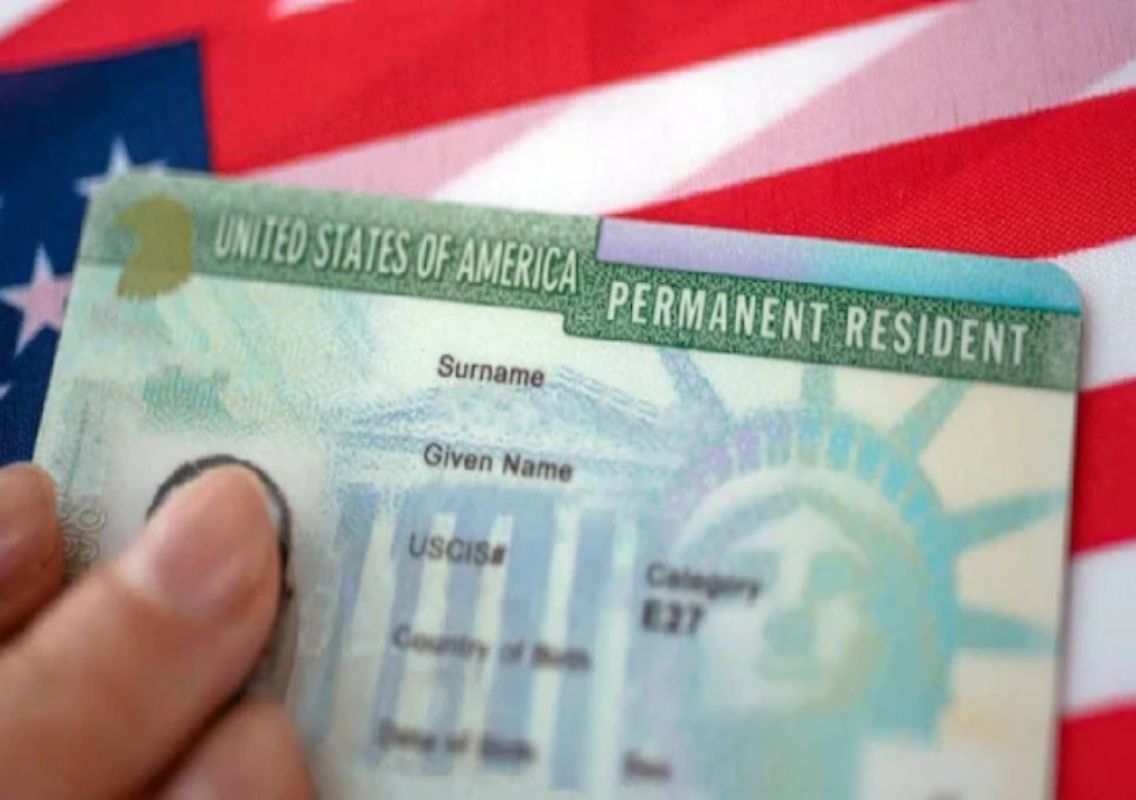
New Delhi: Indian professionals seeking a US green card through the employment-based EB-2 category could face an estimated wait of up to 179 years, according to a new analysis by the National Foundation for American Policy (NFAP). The projection highlights the extraordinary backlog faced by Indian skilled workers seeking permanent residency in the United States.
The estimate means that an Indian professional entering the EB-2 queue today could theoretically wait until around 2205 for a green card. While the figure is a projection based on the existing backlog, visa availability and statutory limits, it underlines the scale of the immigration challenge facing Indian workers in the US.
The situation is particularly relevant for Indian professionals working in the US on H-1B visas, many of whom remain in temporary status for years while waiting for their employment-based permanent residency applications to progress.
EB-2 wait could reach 179 years
The NFAP analysis examined the employment-based EB-1, EB-2 and EB-3 immigration categories.
Among these, EB-2 has the most severe projected wait for new Indian applicants, at up to 179 years. The category generally covers professionals with advanced degrees and individuals with exceptional ability in areas such as science, arts or business.
The projected wait for Indian applicants under EB-3 is around 38 years, which is considerably lower than EB-2 but still represents an exceptionally long period for someone seeking permanent residency.
Applicants in the EB-1 category, which covers individuals such as workers with extraordinary ability, outstanding professors and researchers, and certain multinational executives and managers, could face a projected wait of around four to five years, according to the analysis.
The estimates apply to new applicants entering the queue based on existing backlogs and current immigration limits. Actual waiting periods can change if US immigration laws, visa availability or demand patterns change.
Nearly 1 million Indians already in backlog
The scale of the problem becomes clearer from the number of Indians already waiting for employment-based green cards.
According to the NFAP analysis, nearly 1 million Indians were estimated to be in the US employment-based immigration backlog as of December 2025.
Across the EB-1, EB-2 and EB-3 categories, the total estimated backlog stood at approximately 1.26 million people by December 2025. This represented a 20.6 per cent increase from the estimated 1.05 million backlog recorded in April 2020.
EB-3 accounted for the largest share of the combined backlog at 30.1 per cent. EB-2 represented 22.9 per cent, while EB-1 accounted for 16.6 per cent.
The growing backlog means that the number of people seeking permanent residency is increasing faster than the system’s ability to process them under existing annual visa limits.
Why Indian applicants face such long waits
One of the central reasons for the backlog is the structure of the US employment-based immigration system.
US immigration law limits employment-based green cards to about 1.4 lakh per year. There is also a per-country limit under which no more than 7 per cent of employment-based immigrant visas can generally be allocated to nationals of a single country in a year.
For countries with very large numbers of applicants, these limits can create substantial queues.
India has been particularly affected because of the large number of highly skilled professionals seeking permanent residency in the US. Indian engineers, technology professionals, doctors, researchers and other skilled workers make up a significant portion of employment-based immigration demand.
The result is a mismatch between the number of applicants waiting for green cards and the number of visas available each year.
H-1B workers caught in prolonged uncertainty
The green card backlog also has consequences for Indians who are already established professionally in the United States.
Many workers facing these lengthy waits remain in H-1B temporary status while their employment-based permanent residency cases move through the system.
A prolonged wait can influence major personal and professional decisions, including changing employers, purchasing a home, planning children’s education and deciding whether to remain in the US permanently.
For families, the uncertainty can continue for decades. The NFAP has also highlighted concerns that lengthy immigration queues could make it more difficult for US companies to attract and retain highly skilled workers.
Backlog has continued to grow
The latest projection is not an isolated development. The employment-based backlog has been expanding over time.
NFAP estimates show that the combined EB-1, EB-2 and EB-3 backlog increased from approximately 1.05 million in April 2020 to 1.26 million by December 2025, representing a rise of 20.6 per cent.
With statutory visa availability remaining constrained, continued growth in demand can put additional pressure on waiting times.
For Indian applicants, the difference between categories is especially significant. An EB-1 applicant may face a wait measured in years, while a new EB-2 applicant faces a projection measured in generations.
US immigration policies add uncertainty
The NFAP estimate comes at a time when the US is also tightening several aspects of its immigration system.
The Trump administration has pursued broader immigration enforcement measures, including tighter scrutiny of immigration applications and changes affecting visas and green card processes. India Today reported that these policy developments have added to uncertainty for Indian professionals seeking to establish long-term residency in the country.
The Indian-born population in the US was estimated at around 3.2 million in 2024, making Indians the second-largest foreign-born population in the country, according to the report.
For many of these professionals, securing employment in the US may therefore be only the first step. Obtaining permanent residency can represent a far longer challenge.
What the 179-year estimate means
The 179-year figure should be understood as a projection rather than a guaranteed individual waiting period. It is based on the current backlog, demand and statutory visa limits. A change in US immigration law, an increase in employment-based visa numbers or reforms to per-country limits could significantly alter the calculation.
Nevertheless, the projection demonstrates how severe the current imbalance has become.
For Indian professionals entering the EB-2 category, the green card process is no longer simply a matter of waiting several years. Under current conditions analysed by NFAP, the projected queue extends across multiple generations.
With nearly 1 million Indians already estimated to be in the employment-based backlog, the issue is likely to remain an important concern for Indian technology professionals and other skilled workers in the United States.
The latest NFAP analysis therefore brings renewed attention to a long-standing issue: the growing gap between the number of Indian professionals seeking permanent residency and the limited number of employment-based green cards available under current US immigration rules.