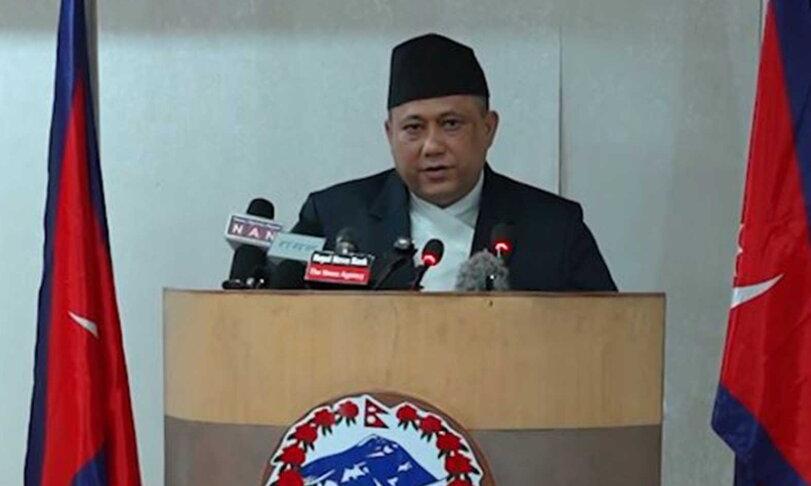
As Nepal still reels under the impact of the deadly flash floods that have led to 1,127 deaths and 4858 missing, the Himalayan nation has decided to seek “climate compensation” from India along with China and the US, describing the three countries as “major industrial emitters.”
The Balendra Shah government has also officially sent a “formal climate compensation claim letter” to its international partners. The announcement was made by Nepal’s Foreign Affairs Minister Shisir Khanal during a recent interview with Kantipur TV.
From “aid” to “justice and compensation”
The minister made it clear that Nepal will shift its diplomatic framework from “aid” to “justice and compensation”, adding that it was not a matter of charity but of “legal and moral liability.”
Also Read: Nepal’s deadliest disasters: From earthquakes to flash floods and avalanches
“The major industrial emitters—such as China, which is the world’s top emitter, the United States at number two, and India at number three—have a historical responsibility to compensate vulnerable nations like Nepal,” stated Khanal during the interview as quoted by The Kathmandu Post.
Glaciers and regional water security
Describing the issue as a matter of “civilizational survival”, the minister further stated that if the Himalayan glaciers disappear, it will jeopardise the water security of more than 2 billion people in South Asia.
Also Read: Nepal floods: More Himalayan disasters are already being built
“This is a matter of civilisational survival. If our Himalayan glaciers disappear, the water security of over two billion people in South Asia—dependent on rivers like the Ganges and the Trishuli—will be permanently compromised. We are advocating not just for Nepal, but for the survival of South Asian civilisation,” he added.
‘Himalayan tsunami’
As for the scale of the disaster, the minister described it as a “Himalayan Tsunami”.
Also Read: Nepal floods: 163 Indians evacuated, tunnel rescue team soldiers on despite challenges
“The damage is immense. Early assessments indicate that ten municipalities across Nuwakot, Rasuwa, and Dhading—spanning 30 to 32 wards—have been heavily impacted, with additional damage downstream in Gorkha and Chitwan. We are looking at tens of thousands of damaged private homes, alongside heavily hit schools and multi-billion-rupee hydropower projects,” he added.
Nepal rejects delay claims
Khanal also refuted criticism of the government for allegedly being slow and rigid with regard to seeking international help.
“There was absolutely no delay or rigidity on our part. The disaster unfolded rapidly. By 11am, while the floodwaters were still surging toward Dhading, the prime minister convened the National Disaster Council and mobilised security forces for immediate search and rescue,” he added.