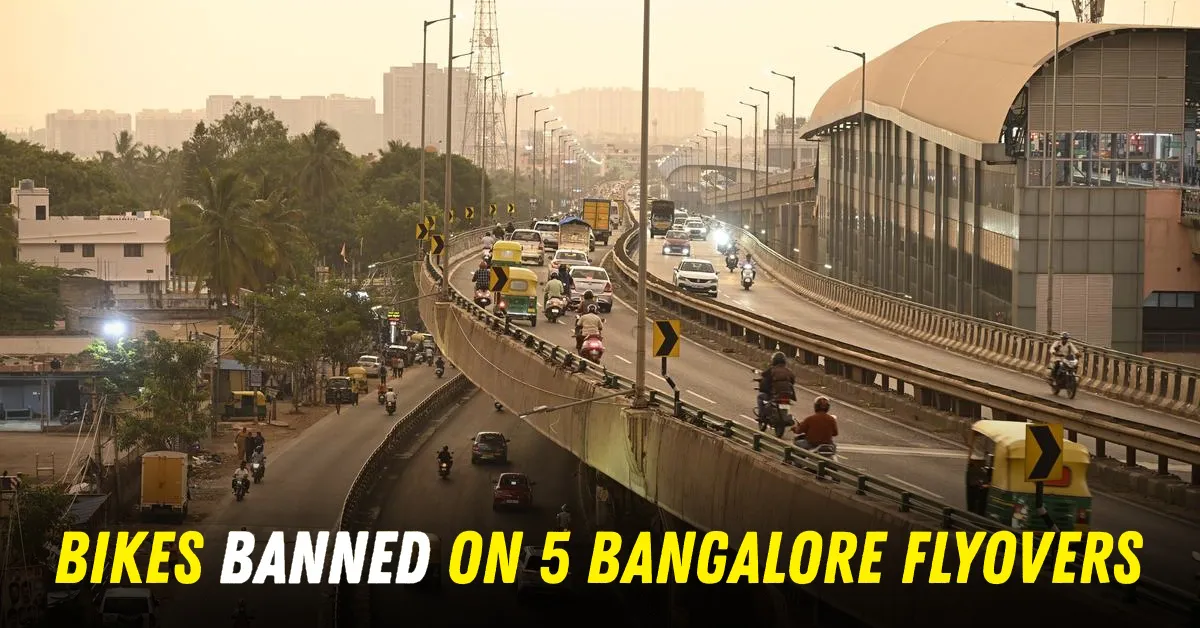
Bengaluru is about to make five important elevated corridors completely off-limits to motorcycles and scooters after a series of fatal crashes.
Two-wheelers and autorickshaws will be banned round the clock on a specific stretch of the International Airport Road Elevated Corridor (between Aster Hospital/Miltary Farm to Yelahanka turn-off) from September 4 and on the Electronics City Elevated Corridor from September 11. The restrictions are being introduced on a trial basis.
The strongest argument behind the decision is the accident data. The two elevated stretches recorded more than 41 fatalities over a 19-month period, with two-wheelers involved in a large majority of crashes. But this is not a citywide bike ban. Bengaluru Traffic Police has introduced different restrictions for five elevated corridors, depending on their design, accident record and traffic mix.
The Electronics City corridor has the more worrying numbers. It recorded 14 fatal crashes in 2025 and another 12 up to the end of July 2026. There were also 32 non-fatal accident cases in 2025 and 28 in the first seven months of 2026.
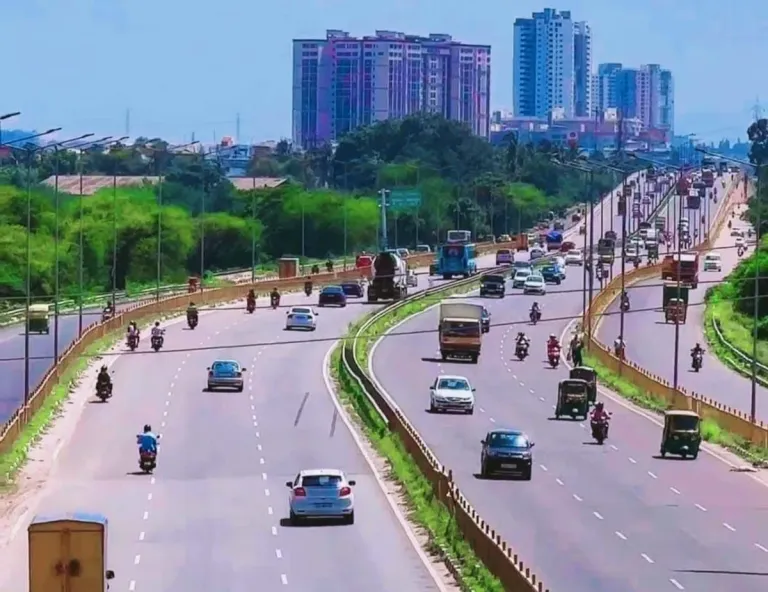
The Airport Road elevated section between Sanjeevini Nagar Cross and Vidyashilp Junction recorded five fatal crashes in 2025 and 10 up to July 2026. Police data cited in reports indicates that two-wheelers accounted for roughly 70 to 85 percent of accidents across these two elevated corridors.
The police review also looked at differences in vehicle speeds, flyover width and design, congestion at entry and exit points, breakdowns and emergency access. A stalled vehicle can be especially disruptive on a flyover because there is little space to move it away from traffic.
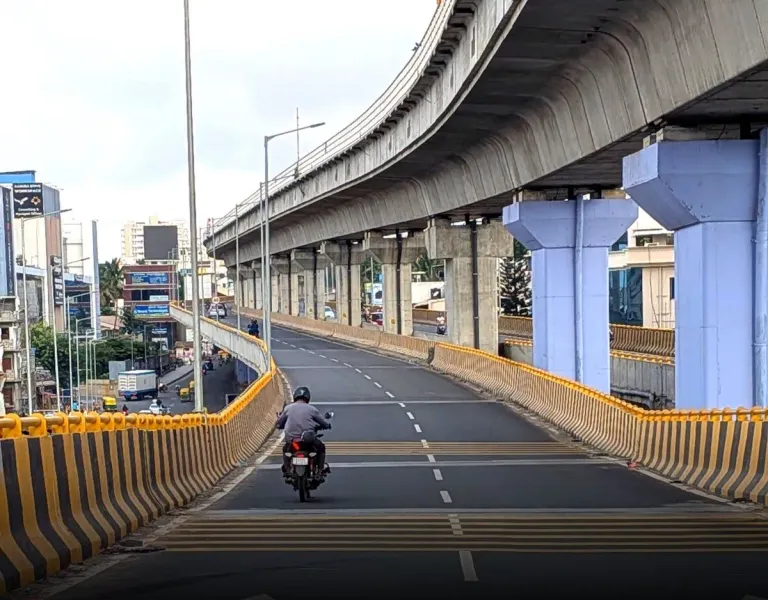
Other elevated roads get different rules. On the BGS Flyover, heavy goods vehicles will be banned completely, while other goods vehicles face morning and evening peak-hour restrictions.
The Peenya Elevated Corridor will prohibit passenger and goods autorickshaws, while heavy and medium goods vehicles will be restricted during peak hours. The Silk Board-Ragigudda Double-Decker Flyover will ban heavy goods vehicles.
The toughest rules apply to Electronics City and Airport Road. Along with the two-wheeler and autorickshaw ban, goods vehicles will be prohibited from both between 6am and 10pm. The police are therefore matching restrictions to individual roads rather than applying one rule everywhere.
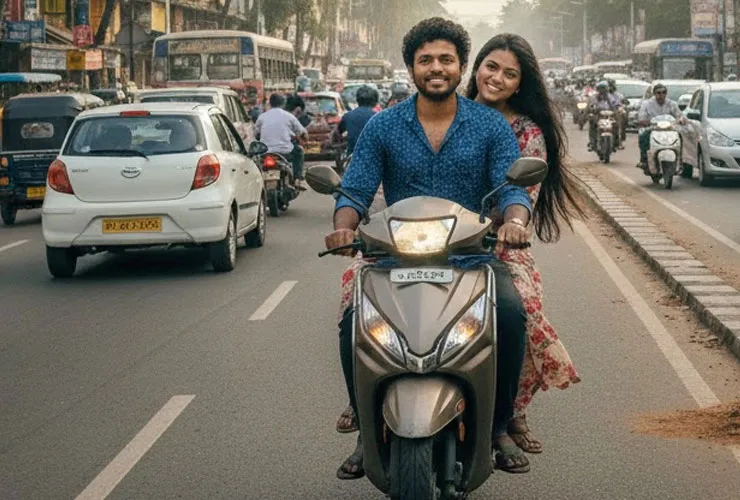
The safety numbers make action understandable, but the objection from daily riders is straightforward. Removing motorcycles from an elevated road does not remove those commuters from traffic. It pushes them onto the surface road below.
For someone commuting to Electronics City every day, that can mean a slower journey through junctions, buses, pedestrians and dense mixed traffic. There is also a reasonable question about whether banning an entire vehicle category is preferable to stronger speed enforcement, lane discipline, better road surfaces and action against dangerous driving by all vehicle types.
The crash data shows riders are disproportionately involved in accidents. It does not establish that the motorcycle rider caused every crash. A rider can also be the victim of a speeding car, unsafe lane change or road hazard.
The trial format gives the traffic police a chance to check whether fatalities and serious crashes actually fall on the elevated corridors. But the assessment also needs to measure travel times, congestion and crashes on the surface roads receiving the displaced motorcycles and autos.
If the flyover becomes safer while the road underneath becomes substantially more congested or dangerous, part of the problem has simply moved. With more than 41 deaths in 19 months, doing nothing was difficult to defend. Whether a complete two-wheeler ban on these two corridors is the right answer remains to be seen.