Kenya Wants More Value From Its Natural Resources
Tata Chemicals, one of India’s major chemical companies, has been told to leave Kenya after President William Ruto accused the company of failing to generate enough economic benefits for the country.
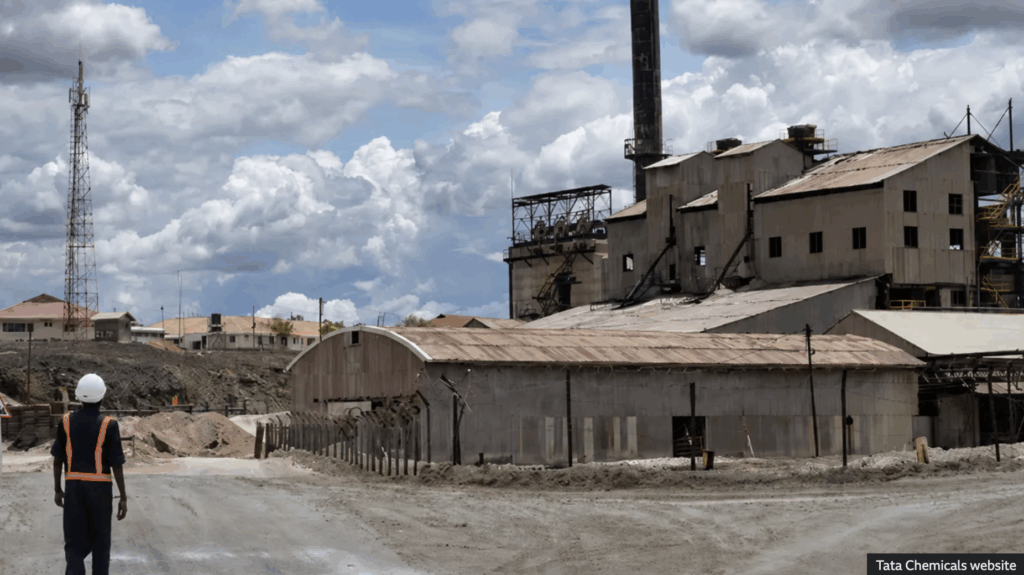
Ruto made the remarks during a visit to Kajiado County, where Tata Chemicals operates its soda ash plant at Lake Magadi. He said the government wants the mineral extracted in Kenya to be processed further inside the country rather than largely exported as a raw material.
The president said new investors had been identified to take over the operations, with the government seeking greater employment and investment for Kenyans.
A Century-Old Operation
The dispute involves a business with a history stretching back more than a century. Soda ash production at Lake Magadi dates to 1911, while a major mining lease was signed with the Kenyan government in 1928.
Tata Chemicals acquired the operation in 2005 after buying the UK-based Brunner Mond Group. The company now operates one of Africa’s largest natural soda ash facilities.
The plant extracts trona from Lake Magadi and processes it into soda ash, a material widely used in glassmaking, detergents, chemicals, water treatment, textiles and paper.
Tata Chemicals exports more than 350,000 tonnes of soda ash annually to markets including India, Southeast Asia, the Middle East and other African countries.
Why Kenya Is Angry
Ruto’s criticism centres on what Kenya sees as limited local value addition. The president accused the company of extracting the country’s resources and sending them abroad without building sufficient processing capacity or creating enough economic opportunities locally.
The issue has also moved beyond political criticism. Five weeks before Ruto’s latest comments, Kenya’s mining minister directed Tata Chemicals Magadi to suspend operations, reportedly citing concerns over royalty payments and other regulatory requirements.
Tata Chemicals said it had submitted a comprehensive response addressing the concerns and was awaiting further direction.
Tata Chemicals Defends Its Role
The company has pushed back against the suggestion that it has not contributed to Kenya’s economy.
Tata Chemicals said that since acquiring the Magadi operation, it has played an important role in the Kenyan economy and remains committed to the business.
The company employs around 500 people and says its community programmes benefit approximately 30,000 people around Magadi. These initiatives include support for water supply, healthcare, education and infrastructure.
Its 2024 accounts reported around 245,000 tonnes of soda ash sales and turnover of approximately $78.7 million.
What Happens Next
The Kenyan government now says it wants two new companies to take over the operations. Tata Chemicals, meanwhile, has indicated that it will continue engaging with authorities through legal and regulatory channels.
The dispute highlights a broader question facing resource-rich countries: whether exporting minerals and raw materials creates enough local economic value, or whether governments should demand greater processing, employment and investment within their borders.
For Tata Chemicals, the Magadi dispute could become a significant international business challenge, particularly because the operation has been part of the soda ash industry for decades.
Summary
Kenya President William Ruto has ordered Tata Chemicals to leave the country, accusing it of failing to provide sufficient local economic benefits from its century-old soda ash operation at Lake Magadi. Kenya wants more local processing, jobs and investment, while Tata Chemicals says it has contributed significantly to the economy and is addressing regulatory concerns. The government plans to bring in new investors to take over the operation.
Image Source