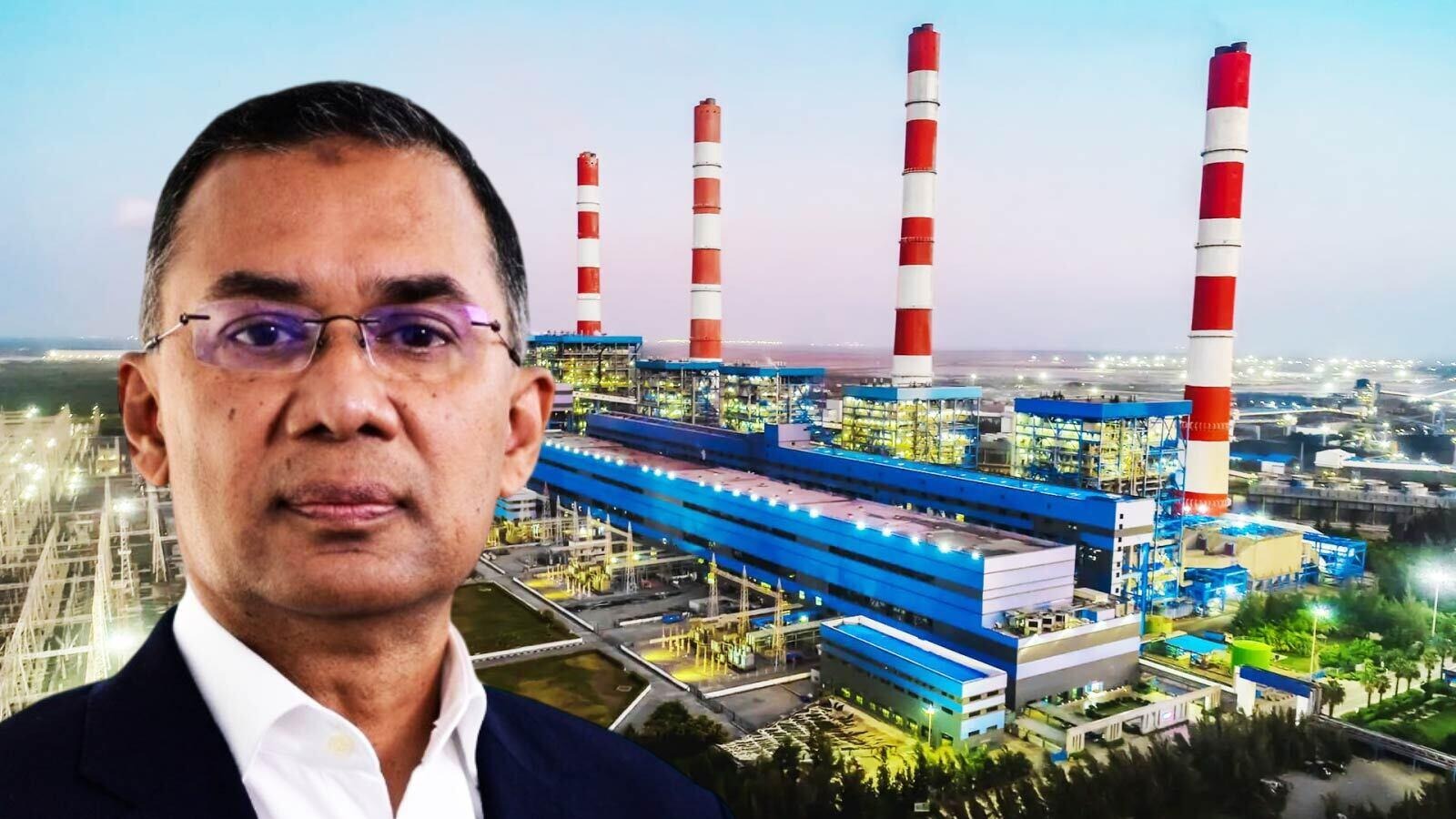
These days, along with the political upheaval in the neighboring country Bangladesh, another terrible economic and energy crisis has started rising, which is giving sleepless nights to the interim government and the power distribution companies there. A huge amount of electricity is supplied to the neighboring country Bangladesh from the ultra-supercritical thermal power plant established in Godda, Jharkhand by Adani Power, a company of India's well-known industrialist Gautam Adani, which handles a large part of the total power grid there. Recently, there has been a news of sudden major technical failure in a major technical unit of this giant power plant resulting in halt or interruption of power generation, which has created a huge threat of deepening power crisis in the whole of Bangladesh. After this unexpected technical fault came to light, energy experts, economic analysts and opposition parties of Bangladesh are extremely angry and they are strongly criticizing their government's poor policies as well as such excessive dependence on foreign energy. Bangladesh gets main electricity from Jharkhand's Godda plant. Located in Jharkhand's Godda district, this state-of-the-art power plant was specifically designed and established for the purpose of exporting electricity to neighboring countries, through which thousands of megawatts of electricity is sent uninterrupted daily to the national power grid of Bangladesh. For the last few years, the role of this plant has been considered the most important in meeting the domestic electricity demand of Bangladesh because the local generating units there are proving to be completely unsuccessful in meeting the increasing energy needs of the country. Whenever there is any kind of technical interruption in this transmission line or power plant, its direct and serious impact immediately starts falling on the power system of large industrial and residential areas of Bangladesh including Dhaka. At present, due to the major technical fault which has affected the production, the fear of load shedding and power cuts in many cities of Bangladesh has increased the concern of common citizens and businessmen manifold. Bangladeshi experts' anger and serious questions on the government: After this entire incident came to light, the anger of Bangladesh's well-known energy experts, economists and technical analysts has reached sky high and they have started openly expressing their displeasure. Experts say that leaving the country's energy security to this extent in the hands of a single foreign private company is a big strategic and diplomatic mistake, the consequences of which ultimately the general public and industries of the country have to suffer. They also argue that there has been a severe lack of transparency in such agreements and that previous governments blindly increased overdependence on external power supplies instead of developing local energy sources. Bangladeshi media and think tanks are continuously raising the question that if such technical failure continues for a long time in the future, then how will the country's big factories, hospitals and common people be able to face this terrible energy crisis. On the other hand, Adani Power management's team of technical engineers and experts in India are working day and night on a war footing to immediately resolve this unexpected technical glitch so that the power supply can be restored to full capacity as soon as possible. According to official sources of the company, in such huge industrial projects, sometimes internal technical problems are a part of the normal process, which are rectified in time under the supervision of highly trained engineers. Adani Group has assured Bangladeshi authorities that its priority is to ensure that the neighboring country does not face any prolonged disruption in power supply and that the system can be brought back on track safely. Despite this, the way the rhetoric has intensified at the political and social level regarding this technical fault, it has definitely created a new earthquake on the energy diplomacy front between the two countries. Lessons for Bangladesh and challenges of future energy security. This entire incident has put a clear mirror before the rulers and policy makers of Bangladesh as to how important it is to become self-reliant to strengthen the country's energy independence and infrastructure. Relying solely on imported electricity cannot sustain the country's industrial growth and economic growth in the long run, especially when there is a danger of power outages overnight due to some technical fault. In the coming days, after dealing with this crisis, the government of Bangladesh will be forced to make huge investments again in its domestic production capacities, renewable energy and modernization of local power plants. Till then, this controversy arising out of this technical fault of Godda plant will remain a hot topic in the political and energy circles of South Asia, on which the keen eye of every international and local expert is kept.