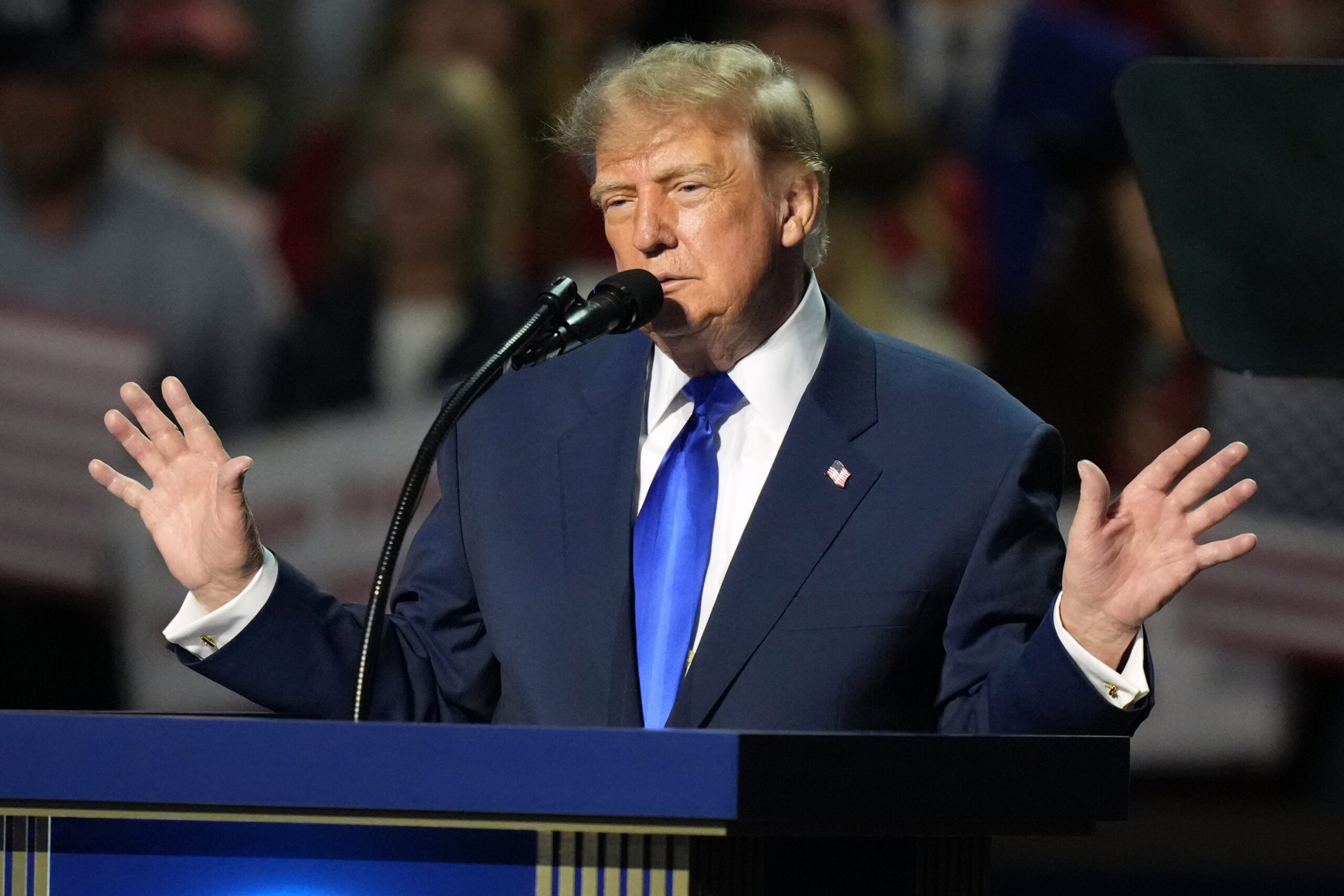
Trump Says Iran ‘Probably’ Behind Attack on Saudi Oil Pipeline/ TezzBuzz/ WASHINGTON/ J. Mansour/ President Donald Trump said Iran was “probably” responsible for the drone attack that forced Saudi Arabia to close its East-West pipeline. Trump also said Yemen’s Iran-backed Houthis contacted his administration because they wanted to avoid direct U.S. military intervention. Iraq closed two crossings with Iran and dismissed security officials after determining that the attack originated in its territory.
Quick Look
- Trump spoke about the Iran war during a visit to Ireland.
- He accused Iran of likely responsibility for the Saudi pipeline attack.
- No public evidence directly establishing Iran’s responsibility was presented.
- Trump said the Houthis contacted the United States to discourage intervention.
- Saudi Arabia closed the East-West pipeline as a precaution.
- Iraq confirmed that the drones were launched from Maysan province.
- Iraq closed two border crossings with Iran and dismissed regional security officials.
- Bahrain condemned the attack as a violation of international law.
- Trump predicted the Iran war would probably end after the midterm elections.
- U.S. forces continue enforcing a blockade of Iranian ports.
Deep Look
Trump suspects Iran in Saudi pipeline attack
President Donald Trump said Saturday that Iran was probably responsible for the drone attack that forced Saudi Arabia to shut down its East-West oil pipeline.
“I think they are, probably they are,” Trump said in Ireland when asked whether Iran was behind the attack.
Trump did not present evidence supporting his assessment. Saudi Arabia has said the drones were launched from Iraqi territory but has not publicly identified the group responsible.
The East-West pipeline provides Saudi Arabia with an important route for transporting crude oil to the Red Sea while bypassing the Strait of Hormuz, where the Iran war has severely disrupted maritime traffic.
Trump said he had spoken with Saudi Crown Prince Mohammed bin Salman, whom he described as a “good friend.”
Trump says Houthis contacted Washington
Trump also said Yemen’s Iran-aligned Houthi rebels contacted his administration and indicated that they wanted to avoid direct conflict with the United States.
“The Houthis called us and they don’t want to fight with us. They let us know, they don’t want to fight with us…they don’t want us to go after them,” Trump added. “But they have called and they have talked to us, and they don’t want us to, they would much prefer not having us involved.”
In separate remarks reported by Reuters, Trump said the Houthis were allowing most commercial vessels to continue through the region.
“They would much prefer not having us involved, and they’re letting most ships go through. There’s just one country that they’re not too happy with, and we’ll get that straightened out,” Trump said.
The Houthi forces have said navigation remains safe for most companies but have threatened Saudi vessels. Their seizure of strategic territory around the Bab el-Mandeb Strait has increased concerns about shipping through the southern entrance to the Red Sea.
The White House did not release additional information about the reported communication with the Houthis or identify who represented the organization in those discussions.
Trump predicts war could end after midterms
Trump repeated his prediction that the war with Iran would probably end after the November midterm elections.
“I think very soon, I think it will be, probably, right after the midterms,” Trump said when asked whether he would establish an end date for the conflict.
He accused Tehran of attempting to extend the war to influence the elections.
“They are trying to hold out as long as they can to complicate the election but I think people are wise to it because Iran cannot have a nuclear weapon. It’s very simple.”
Trump also repeated his claim that Iran had been close to producing a nuclear weapon when the war began.
“They were two weeks away from having a nuclear weapon. If they had it, they would have blown up Israel, they would have blown up the Middle East, and they would have hit some of Europe’s, in my opinion, Europe’s cities and beyond cities,” Trump said. “And they would have probably hit us too before we put out the fire. But they cannot have a nuclear weapon.”
The president has not provided public evidence demonstrating that Iran was two weeks away from obtaining a nuclear weapon. Independent experts have disputed the administration’s assertions that the Iranian program presented such an imminent threat.
Iraq confirms drones originated in its territory
Iraq closed two border crossings with Iran after authorities determined that the attack on the Saudi pipeline originated in Maysan province, which borders Iran.
Prime Minister Ali al-Zaidi ordered an investigation into the province’s military operations command and dismissed its commander. The provincial police chief was later removed as well.
Iraqi officials were sent to investigate previous “violations and infractions” at the two closed crossings, according to the state-run Iraqi News Agency.
Iraq’s investigation had not publicly established who launched the drones or whether Iran directed the attack.
Saudi Arabia holds back from retaliation
Saudi Arabia said Friday that it temporarily closed the pipeline after several drone attacks. The Saudi Energy Ministry characterized the shutdown as a “precautionary measure.”
The Saudi Foreign Ministry said the kingdom would temporarily refrain from retaliation to give Iraq “an opportunity to take the necessary measures.”
The attack occurred as Houthi forces made major territorial gains along Yemen’s Red Sea coast and captured Mayunalso known as Perim Island, inside the Bab el-Mandeb Strait.
Saudi Crown Prince Mohammed bin Salman previously urged Trump to authorize American strikes against the Houthisaccording to U.S. officials cited by Axios and Reuters. Trump declined, while the United States offered Saudi Arabia intelligence and targeting support instead of direct military action.
Bahrain condemns pipeline attack
Bahrain described the attack on the Saudi pipeline as an assault on critical civilian infrastructure and regional energy security.
“The Kingdom of Bahrain strongly condemned the targeting of the East-West oil pipeline in the Riyadh and Madinah regions of the Kingdom of Saudi Arabia by drones launched from Iraqi territory, which resulted in injuries and property damage,” the Bahrain News Agency said.
“In a statement, the Ministry of Foreign Affairs described the attack as a blatant violation of international law, the Charter of the United Nations and the principles of good neighborliness, as well as an attack on vital civilian infrastructure affecting the security of energy supplies,” it added.
Bahrain also called “on the international community to assume its responsibilities in confronting such attacks that seek to undermine energy security and destabilize regional security and stability.”
Trump claims US cleared mines from Hormuz
Trump praised U.S. military operations in the Strait of Hormuz and claimed American forces had cleared mines from the waterway.
“Everyone is seeing the dominance of the American military equipment all over the planet. And you see it now with Iran. We took over the Hormuz Strait. We cleared out all the mines,” Trump said while visiting Ireland.
“Even I said, ‘well, how come they’re not shooting down our minesweepers?’ ‘Sir, these minesweepers are underwater. They work underwater at all times,’” Trump continued. “I say, ‘why do you do that?’ ‘Well, generally speaking, when there’s mines, there’s a lot of hostility outside.’ You know, I said ‘that makes sense, right’? In other words, if there are mines in some water way, generally speaking, when you see there are mines or people shooting at you. So if you’re underwater, they don’t know you’re there.”
“But we knocked out and we took out every mine. There’s no mines in there, no nothing,” the president added.
U.S. Central Command has said American forces redirected 99 commercial vessels while enforcing the blockade of Iranian ports. It also released photographs of Marines training aboard the USS Portland in the Arabian Sea.
CENTCOM said “more than 50,000 U.S. service members are currently operating across the Middle East and remain vigilant, lethal, and prepared to continue executing operations directed by the Commander in Chief.”
US offers rewards for al-Qaeda leaders in Iran
The State Department’s Rewards for Justice program announced rewards of up to $10 million for information leading authorities to several senior al-Qaeda figures that Washington says are based in Iran.
The announcement came as the United States continued military and economic pressure on Tehran. Iran has not publicly accepted responsibility for the Saudi pipeline attack.
Regional tensions remain elevated as the pipeline shutdown, restricted traffic through the Strait of Hormuz and Houthi advances near the Bab el-Mandeb create further risks for global oil shipments.
More on US News