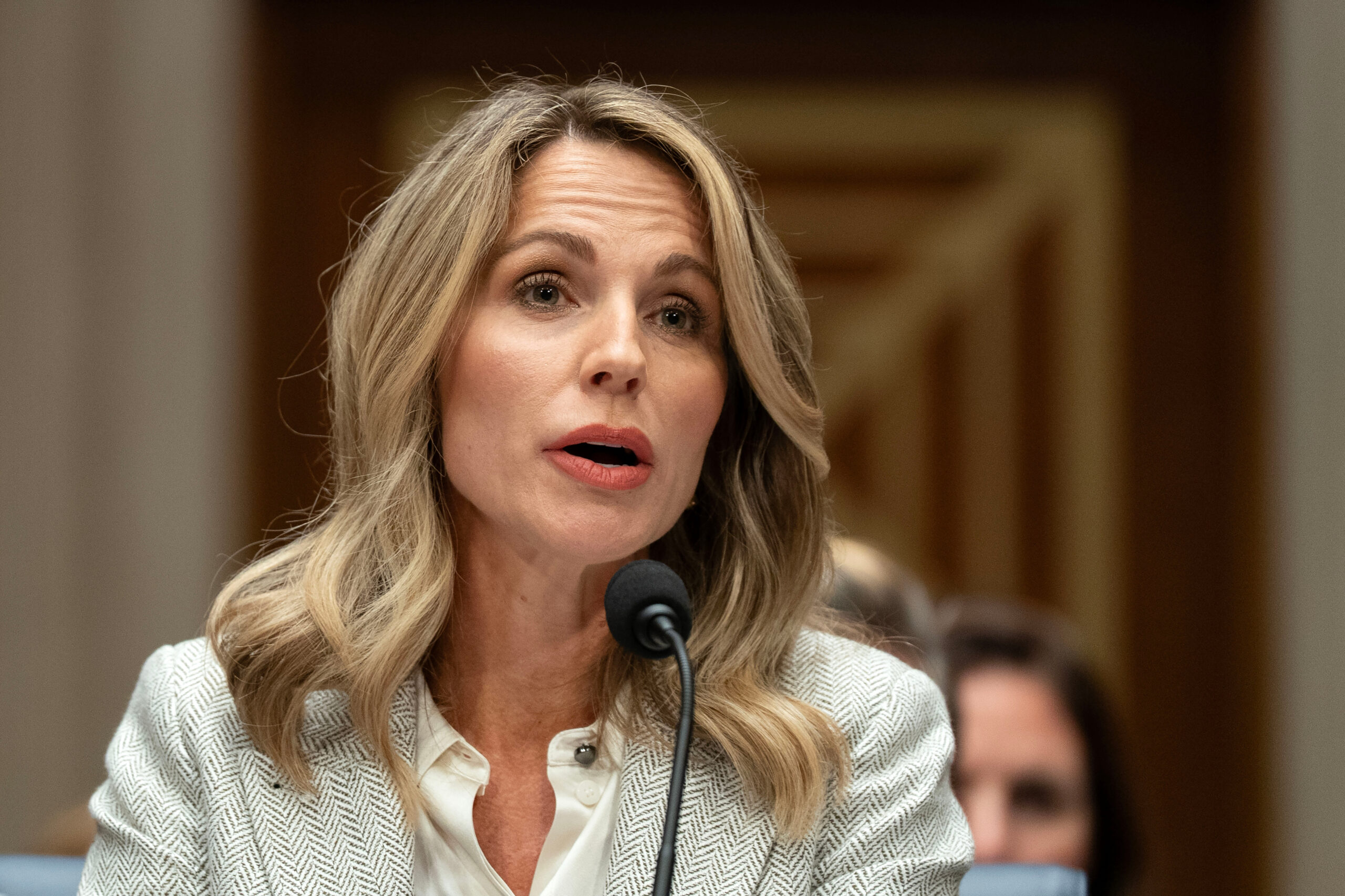
Trump’s 3rd Surgeon General Pick Nicole Saphier Faces Senate Questions on Vaccines/ TezzBuzz/ WASHINGTON/ J. Mansour/ Dr. Nicole Saphier, President Donald Trump’s third nominee for surgeon general, told senators that childhood vaccines do not cause autism. Republican Sen. Bill Cassidy pressed her to present vaccine safety as established scientific evidence rather than personal belief. Saphier also faced questions about restoring public trust, following lawful orders and divesting financial interests if confirmed.
Quick Look
- Saphier is a radiologist and former Fox News Channel contributor.
- She said childhood vaccines do not cause autism and endorsed the MMR vaccine.
- Extensive scientific research has found no causal connection between vaccines and autism.
- Cassidy challenged her answers and the administration’s changes to vaccine guidance.
- Saphier is Trump’s third nominee for surgeon general during his second term.
- The surgeon general has limited direct policymaking authority but a major public-communication role.
- Saphier promised to obey the law and work to restore confidence in public health.
- Her disclosures list investments in healthcare, insurance, food and tobacco companies.
- She said she would leave DropRx and divest assets presenting conflicts of interest.
- The committee had not announced when it would vote on her nomination.

Deep Look
Saphier questioned about childhood vaccines
WASHINGTON — Dr. Nicole Saphier, President Donald Trump’s third nominee for U.S. surgeon general, faced extensive questioning Wednesday about childhood vaccines during her Senate confirmation hearing.
Saphier, a radiologist and former Fox News Channel contributor, expressed support for vaccination while seeking a public-health position within an administration that has pursued significant changes to federal immunization guidance.
Republican Sen. Bill Cassidy of Louisiana asked Saphier directly whether she believed vaccines were connected to autism.
“I do not believe childhood vaccines cause autism,” Saphier said.
Decades of research involving millions of children have found no causal connection between vaccines and autism. The Centers for Disease Control and Prevention says studies continue to show that vaccines are not associated with autism spectrum disorder.
Nominee endorses MMR vaccination
Cassidy also asked whether parents should give their children the combined measles, mumps and rubella vaccine.
Saphier said “the MMR vaccine is our greatest tool for combating measles,” referring to the immunization that protects against all three diseases.
Trump recently ordered that the three components be spaced apart. Public-health authorities have long recommended the combined vaccine, which reduces the number of medical visits and injections children require.
Saphier described vaccines as an important defense against infectious diseases. She also said she appreciated the administration’s attempts to respond to questions from “the vaccine hesitant people.”
Cassidy countered that the administration’s approach was generating more confusion. He repeatedly pressed Saphier to speak about vaccine safety and effectiveness as established scientific evidence instead of framing her answers as matters of personal belief.
Surgeon general serves as national health communicator
The surgeon general has limited authority to determine federal policy but holds a prominent role as the government’s leading public-health communicator.
The position can be used to issue national advisories and influence public understanding of issues including vaccination, smoking, mental health and chronic disease.
Health and Human Services Secretary Robert F. Kennedy Jr. and Trump have suggested that childhood vaccines such as MMR could contribute to autism. That position conflicts with the broad scientific consensus established through decades of research and vaccine monitoring.
The administration has also pursued changes to national vaccine guidance, including a smaller childhood immunization schedule. Several actions were subsequently halted by a judge.
Medical organizations and physicians have warned that abrupt changes and conflicting federal messages could increase vaccine hesitancy.
Trump’s third attempt to fill the position
Saphier became Trump’s third surgeon general nominee after the nomination of wellness entrepreneur Dr. Casey Means stalled in the Senate amid questions about her professional background and vaccine positions.
Trump’s original nominee, former Fox News medical contributor Janette Nesheiwat, was withdrawn after questions emerged about her academic credentials.
The surgeon general position has remained vacant throughout Trump’s second term. Background on Saphier’s nomination and hearing was reported by The Associated Press.
Hepatitis B birth dose discussed
Like Means, Saphier previously questioned whether every newborn should receive the hepatitis B vaccinewhich has long been universally recommended at birth.
During Wednesday’s hearing, however, she said the universal hepatitis B birth dose was safe and effective.
The vaccine is intended to protect children from a viral infection that can cause chronic liver disease, cirrhosis and liver cancer. Infants infected around birth have a particularly high risk of developing chronic hepatitis B.
Saphier has sometimes criticized Trump health policies
Saphier is an author and podcaster who previously hosted “Wellness Unmasked with Dr. Nicole Saphier.” She has frequently discussed the Trump administration’s health agenda, often favorably.
She used the phrase “Make America Healthy Again” before Kennedy made it the name of his health movement. It was the title of Saphier’s 2020 book criticizing the government’s management of healthcare and the Affordable Care Act.
Saphier has nevertheless disagreed publicly with Trump and Kennedy on several issues.
She told AP last year that Trump’s warnings to pregnant women taking Tylenol were oversimplified and “patronizing.”
Saphier also criticized the administration’s first anticipated Make America Healthy Again report after it cited studies that did not exist, calling the problem “pretty embarrassing.”
She described Kennedy’s removal of his first CDC director, Susan Monarez, less than one month into the job as “a mess.”
“When we keep hearing radical transparency and we’re going to regain trust, I can tell you these shenanigans are taking us farther away from that mission,” Saphier said on her podcast.
During Wednesday’s hearing, she promised to work to rebuild public confidence if confirmed.
Cassidy warns about measles and public trust
At the start of the Senate Health, Education, Labor and Pensions Committee hearing, Cassidy cited the “serious health issues” confronting the country.
He focused particularly on the administration’s reduced vaccine guidance as the United States experiences its worst year for measles in decades.
“That is going to be a terrible legacy for this administration,” Cassidy said.
He told Saphier and the other nominees appearing at the hearing that he hoped they would help restore confidence in public health.
Cassidy, who lost his Republican primary earlier this year to a Trump-backed challenger, also criticized what he described as “irresponsible” leadership on health policy.
Saphier says she would follow the law
Senators asked Saphier whether she would carry out unlawful directives from Trump or Kennedy. She responded that she would follow the law.
Lawmakers also tested her knowledge of mifepristone, a medication used in miscarriage care and medication abortions.
It was not immediately clear when the committee would vote on advancing her nomination. If approved by the committee, Saphier would still require confirmation by the full Senate.
Other nominees appearing Wednesday included Chris Klomp, the Health and Human Services Department’s chief counselor and nominee to become Kennedy’s second-in-command.
Timothy Westlake, chief of staff at the Substance Abuse and Mental Health Services Administration, also answered questions as the nominee for assistant secretary for mental health and substance use.
Financial holdings receive scrutiny
Saphier serves as director of breast imaging at Memorial Sloan Kettering Monmouthaccording to her institutional profile.
She earned her medical degree from Ross University School of Medicine in Barbados and subsequently completed fellowships at the Mayo Clinic.
Her Sept. 7 ethics disclosure lists financial holdings in healthcare and insurance businesses, along with processed-food companies including Coca-Cola, Yum Brands and Hershey. It also lists an investment in cigarette manufacturer Philip Morris.
Kennedy has repeatedly criticized pharmaceutical and insurance companies for alleged corruption. He has also identified ultraprocessed food as a contributor to the country’s chronic-disease burden.
Saphier pledges to leave DropRx
Saphier owns DropRx, which produces tinctures marketed for purposes including improved focus and calm.
The products include ingredients such as kava kava root. Federal health information warns that products containing kava have been connected to rare but potentially severe liver injuries.
Saphier’s ethics agreement says she will resign from DropRx and Empower MD LLC, its parent company, if confirmed.
She also stated that she would fully or partially divest investments that could create conflicts with her duties as surgeon general. Her nomination-related disclosures are publicly listed by the U.S. Office of Government Ethics.
More on US News