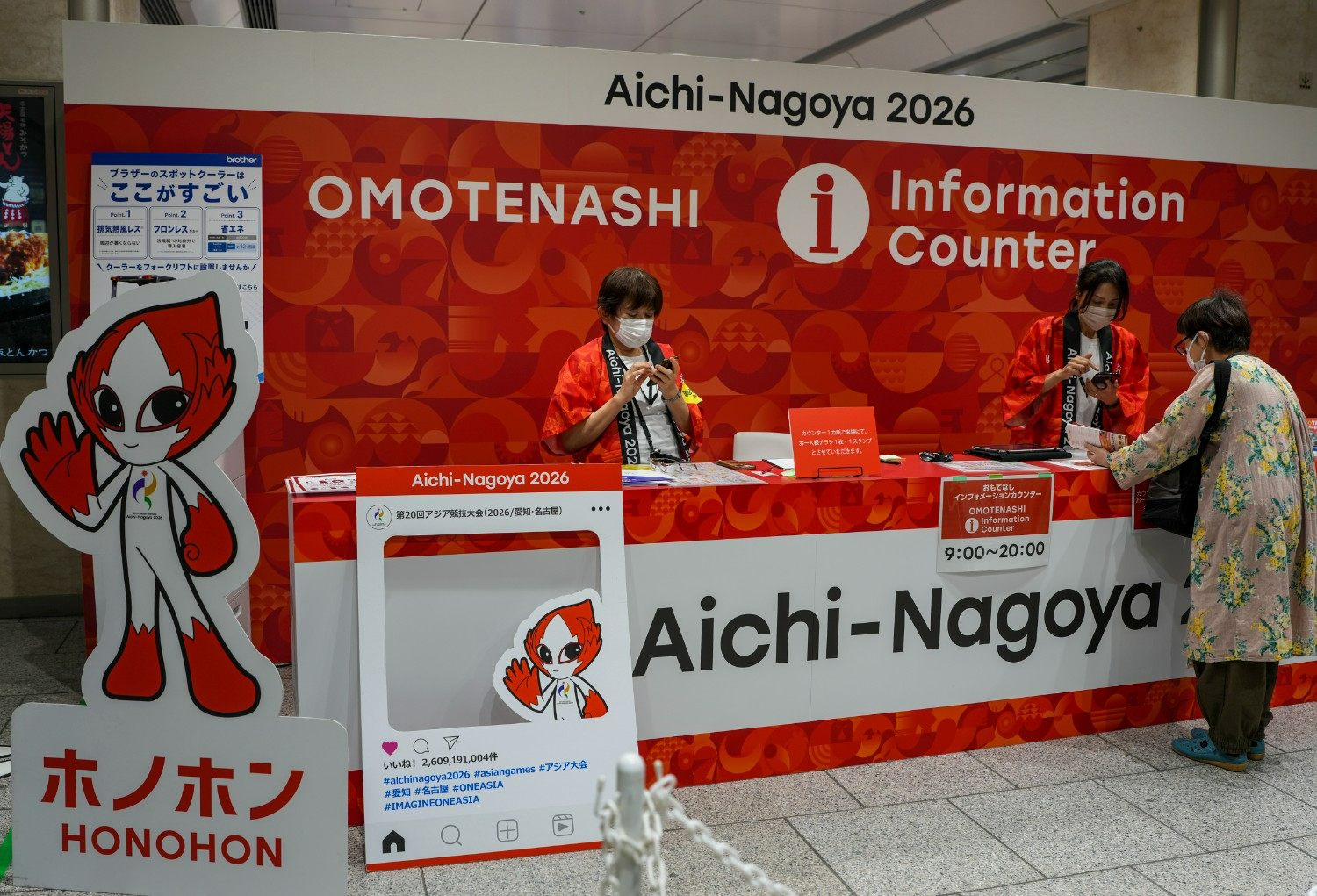
New Delhi, Sep 18 (PTI) As the Asian Games return to Japan for the first time in 32 years, the continent’s biggest multi-sport event carries with it a long history of controversies that have often extended beyond the sporting arena.
The 20th Asian Games in Aichi-Nagoya will be held from September 19 to October 4, bringing together close to 11,000 athletes from across Asia.
But over the decades, the Games have also been caught up in diplomatic disputes, selection rows, disputed decisions and questions over sporting regulations.
PTI takes a look at some of the major controversies that have rocked the Games in the past.
#Perhaps the most politically charged edition came in Jakarta in 1962, when Indonesia refused entry visas to athletes from Israel and Taiwan. The decision drew strong criticism from international sporting bodies and delegations.
Indian sports administrator Guru Dutt Sondhi, then a vice-president of the Asian Games Federation and an International Olympic Committee (IOC) member, emerged as one of the most vocal critics of Indonesia’s stance.
He argued that the event’s status as the Asian Games should be reconsidered in view of the exclusion of two member countries.
Indonesian protesters targeted Sondhi over his remarks, and a mob damaged parts of the Indian embassy in Jakarta. Sondhi left Indonesia before the Games ended. The episode underlined how politics and national interests could intrude into an event intended to bring Asian nations together.
#Four decades later, an administrative error cost Indian wrestler Satish Kumar his chance to compete at the 2002 Busan Asian Games. Kumar was stopped from travelling with the Indian contingent after being wrongly linked to a doping case involving another wrestler of the same name.
A Delhi court, ruling in September 2017, held that it was a case of mistaken identity and awarded Kumar Rs 25 lakh in compensation, finding that the Wrestling Federation of India had failed to exercise due care.
#The 2006 Doha Games produced one of the more difficult episodes in Indian athletics when Santhi Soundarajan was stripped of her women’s 800m silver medal after failing a gender verification test. She was subsequently withdrawn from the remainder of the athletics competition.
The episode triggered wider debate over the ethics and treatment of athletes subjected to such testing.
#At the 2014 Incheon Games, boxer L Sarita Devi became the face of another controversy after losing a contentious women’s lightweight semifinal to South Korea’s Park Jin-a. Sarita refused to accept her bronze medal on the podium and instead placed it around Park’s neck in protest.
The gesture led to a provisional suspension and eventually a one-year ban from the International Boxing Association, while her coach B I Fernandez was handed a two-year ban.
#The 2023 Hangzhou Games brought a different set of controversies, beginning even before the sporting action had fully gathered pace.
Three Indian wushu athletes from Arunachal Pradesh were issued stapled visas by China rather than the standard visas. India protested the move and the athletes did not travel to Hangzhou, adding another chapter to the complicated diplomatic relationship between the two countries.
The wrestling selection process also became contentious after Vinesh Phogat and Bajrang Punia were given direct entries to the Games by the Indian Olympic Association’s ad-hoc committee, exempting them from the selection trials.
Under-20 World champion Antim Panghal and Under-23 Asian medallist Sujeet Kalkal challenged the decision in the Delhi High Court, which declined to interfere with the exemptions.
#Jyothi Yarraji’s women’s 100m hurdles final produced a disputed sequence in 2023. Yarraji was initially disqualified for a false start alongside China’s Wu Yanni. Both athletes were then allowed to compete, with Yarraji finishing third. The Athletics Federation of India lodged a protest over the decision, following which Wu was disqualified under the applicable technical rule, and Yarraji’s bronze was upgraded to silver.
The men’s kabaddi final between India and Iran saw a disputed interpretation of the rules during a raid, leading to repeated changes in the officials’ call, protests from both teams, and a lengthy stoppage during which players sat on the mat. Officials eventually settled the matter in India’s favour, and the team completed a 33-29 win.
As Aichi-Nagoya prepares to welcome Asia’s sporting community, the expectation among administrators and athletes alike will be that the competition itself, rather than the controversies around it, takes centre-stage. PTI
(Except for the headline, this story has not been edited by The Federal staff and is auto-published from a syndicated feed.)