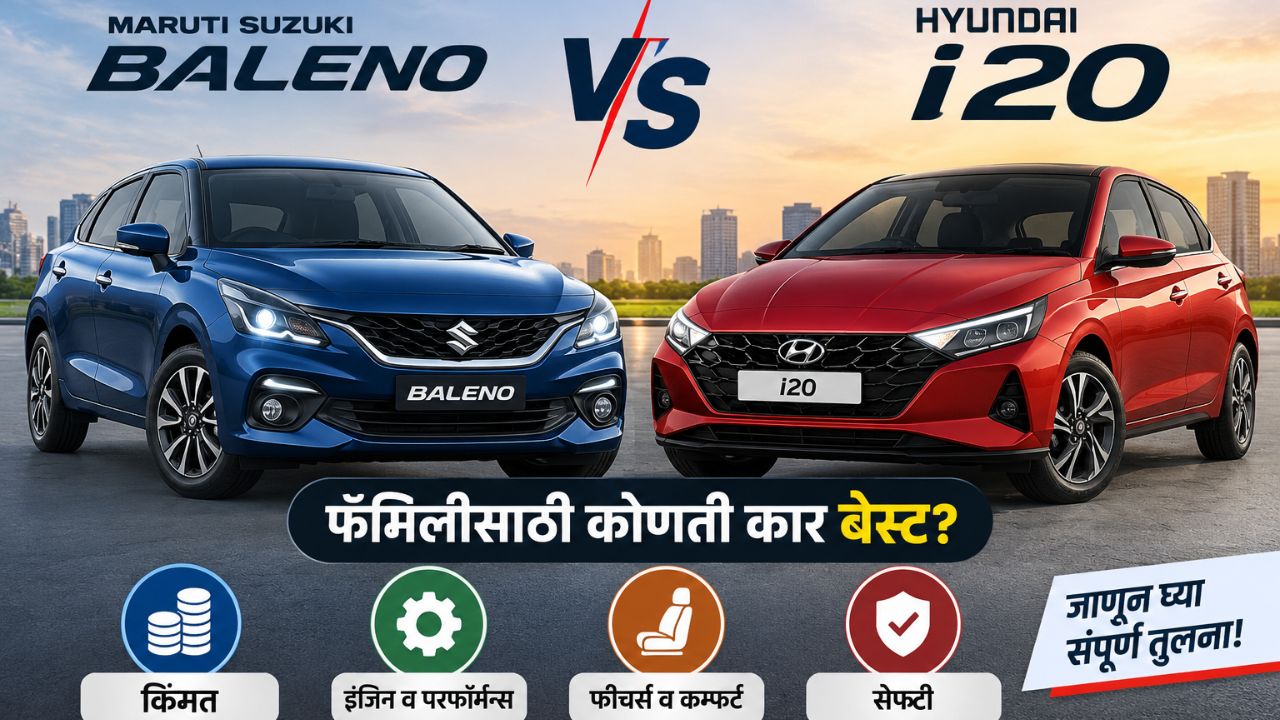
- Maruti Baleno vs Hyundai i20
- Who is heavy in price, features and safety?
- Learn the difference
Maruti Baleno vs Hyundai i20: During long weekends and holidays from the car Traveling with family is a different kind of fun. So family is considered before buying a car. That's why nowadays when buying a car, the car is bought which is comfortable for the family. Currently there is a competition between Baleno or Hyundai i20 which is heavier family car in the market. If you too are confused between these two cars, today let's get to know the detailed information about both these cars…
Maruti Suzuki Baleno and Hyundai i20 are two important options for premium hatchback buyers in the Indian market. 2026 has seen changes in the lineup of both the cars. Hyundai introduced some variants of the i20 in February at more competitive prices, while in September Maruti Suzuki introduced the new Baleno with an updated design and new features.
Kia Carens and Carens Clavis CNG Launch; Priced from ₹12.11 lakh, it will get a 6-speed manual
What is the difference between engines?
The new Baleno is powered by a 1.2-litre Z12E petrol engine. This engine produces 61 kW i.e. around 83 PS of power and 112.4 Nm of torque. It comes with a choice of 5-speed manual and AGS automatic transmission. According to the company's official figures, the manual version returns a mileage of 23.80 km/l, while the AGS version returns 24.77 km/l. On the other hand, the Hyundai i20 gets a 1.2-litre Kappa petrol engine. It comes with 5-speed manual and IVT automatic transmission options.
Strong competition in features
The new Baleno gets a 9-inch SmartPlay Pro+ infotainment system with wireless Apple CarPlay and Android Auto support. Apart from this, features like head-up display, 360-degree camera, wireless smartphone charger and Clarion premium sound system have been provided.
The top variant of the Hyundai i20 gets a 10.25-inch HD touchscreen infotainment and navigation system, Bose 7-speaker premium audio, wireless charger and Bluelink connected features.
Ventilated seats in Baleno, sunroof in i20
One of the key highlights of the new Baleno is the ventilated front seats. The company has provided this facility with leatherette upholstery. This feature can be useful for long journeys in Indian summer. On the other hand, the Hyundai i20 offers a voice-enabled electric sunroof. Hence, the cabin features of both the cars are slightly different.
Baleno gets Level-2 ADAS in safety
new Baleno One of the biggest updates is Level-2 ADAS. The radar and camera based system includes Advanced Emergency Braking, Lane Keep Assist, Lane Departure Prevention, Lane Departure Warning, Adaptive Cruise Control, High Beam Assist, Vehicle Sway Warning and Forward Collision Warning.
The Baleno also gets safety features like six airbags, ESP, ABS-EBD, hill hold control, reverse parking sensors, 3-point seatbelts and TPMS.
The Hyundai i20 comes with six airbags as standard. The higher variants get safety and driving-related features like ESC, Hill Start Assist Control, TPMS and dashcam.
Maruti Suzuki's big milestone! Delivered 10 lakh vehicles from in-plant railway sidings
How much does it cost?
The starting price of the new Maruti Suzuki Baleno in September 2026 is Rs 6.09 lakh ex-showroom. On the other hand, the Hyundai i20 starts at Rs 5.99 lakh ex-showroom and the current range goes up to around Rs 10.63 lakh. Actual ex-showroom as well as on-road pricing may vary depending on variant, city and transmission selected. So it is necessary to check the latest price in your city from the concerned company or dealer before purchasing.
What to choose between Baleno and i20?
Both the cars have many safety and comfort features for family use. Baleno features Level-2 ADAS, ventilated front seats, HUD and 360-degree camera. The i20 gets a larger 10.25-inch screen, Bose 7-speaker audio, electric sunroof and a dashcam on some variants.
So it will be important to compare the budget, the variant chosen, transmission, required safety features, rear seat comfort and local on-road price while making the final choice rather than just looking at the number of features.