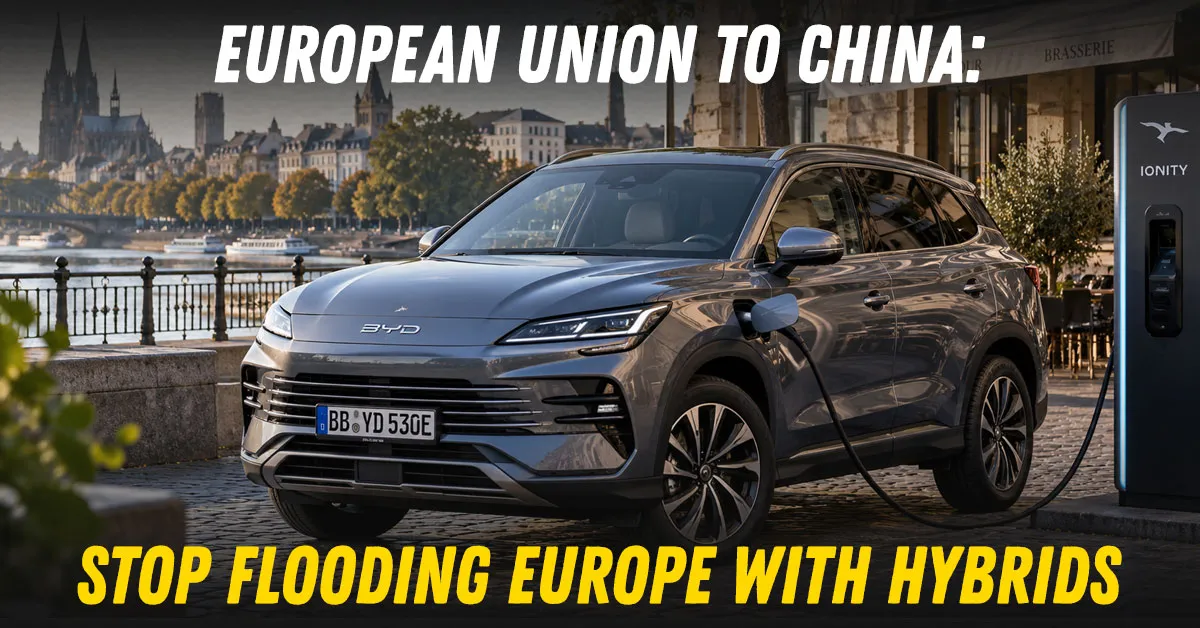
The European Union is reportedly asking China to voluntarily limit hybrid-car exports to Europe, with Brussels prepared to consider further trade measures if a negotiated restriction is not reached. The Financial Times reported that the EU wants Chinese hybrid vehicle sales limited to around 15 percent of the bloc’s market.
Reuters reported the proposal but said it could not independently verify the Financial Times reportwhile the European Union had not immediately commented on the specific request. That distinction matters because no new hybrid tariff or formal import quota has yet been announced.
The issue follows the EU’s 2024 decision to impose additional countervailing duties on battery-electric cars built in China after an anti-subsidy investigation. Those duties sit on top of the normal 10 percent import tariff and vary by manufacturer. The additional rates include 17 percent for BYD, 18.8 percent for Geely and 35.3 percent for SAIC, with different rates for other companies.
Hybrids were not covered by those additional battery-EV duties and generally face the standard 10 percent car import tariff. That created a large difference in the cost of importing a China-made battery EV and a China-made plug-in hybrid.
The product mix changed quickly. The Financial Times reported that EU imports of hybrids from China rose from around 3,800 vehicles in October 2024 to about 50,000 in July 2026, while average import prices also fell. The newspaper said Brussels now wants the Chinese share cut substantially through a voluntary arrangement rather than immediately opening another tariff fight.
European officials have tied the vehicle dispute to a much larger trade imbalance. The EU’s goods trade deficit with China reached 360.6 billion euros in 2025 and widened by a further 9 percent in the first half of 2026.
European Commission President Ursula von der Leyen has said the relationship has reached a tipping point and that the EU will use available trade tools to address what it considers an unsustainable imbalance. The EU argues that excess Chinese industrial capacity is pushing large volumes of products, including vehicles and batteries, into overseas markets.
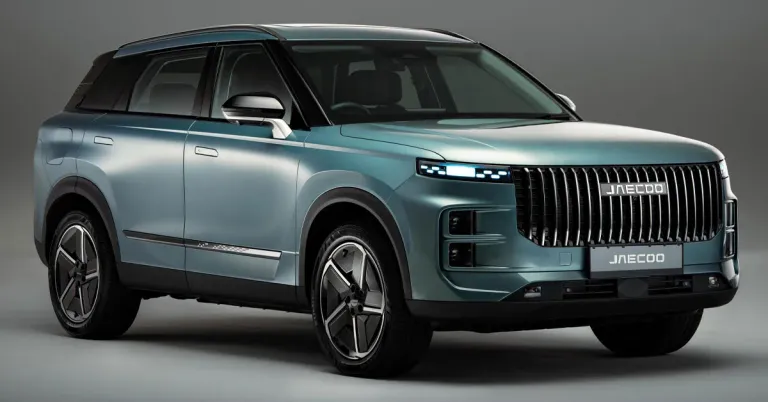
China rejects the overcapacity argument and has characterised such concerns as protectionist. Beijing has also opposed the EU’s existing battery-EV duties.
If the reported voluntary limit is not accepted, the EU could consider extending trade action to hybrids. Germany’s finance minister and vice chancellor has already publicly called for tougher measures, including tariffs on imported plug-in hybrids. Any EU-wide measure, however, would still need to go through the bloc’s legal and political process.
Higher duties would make some China-built hybrids more expensive and could reduce the pricing advantage that helped them gain share. They would also give European manufacturers more protection in a market where plug-in hybrids accounted for 9.8 percent of new EU registrations in the first half of 2026.
Chinese manufacturers have another route around import barriers: build more cars in Europe. BYD has been expanding local production plans, while other Chinese groups are using or acquiring European assembly capacity. That means the trade dispute may ultimately accelerate local manufacturing rather than simply reduce the number of Chinese-brand cars sold in Europe.