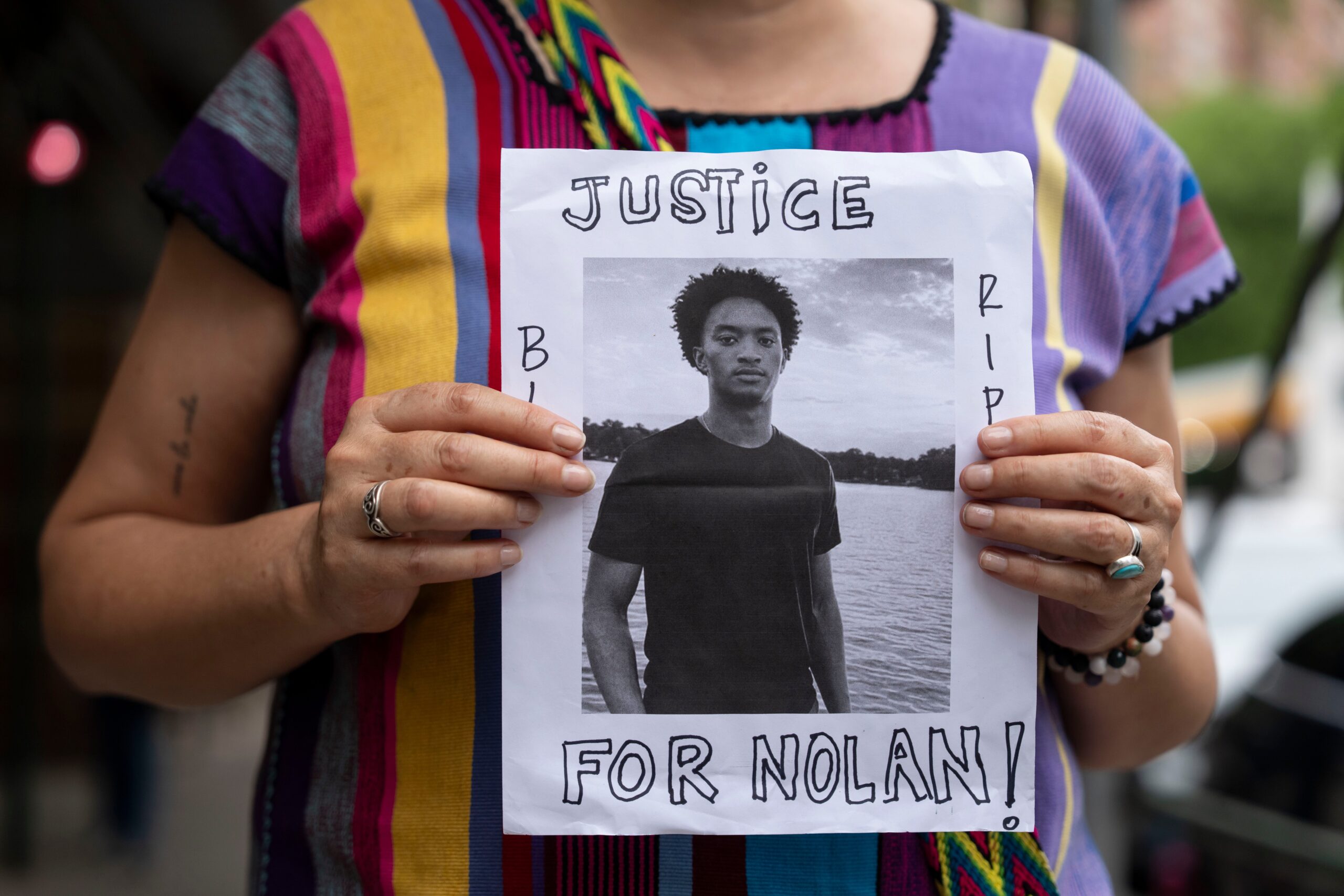
Mississippi Grand Jury Declines Charges in Nolan Wells’ Death/ TezzBuzz/ WASHINGTON/ J. Mansour/ A Mississippi grand jury found insufficient evidence to bring criminal charges in the July death of 18-year-old Nolan Wells. The panel said the circumstances were consistent with drowning, although official and independent autopsies listed his cause and manner of death as undetermined. Wells’ family disputes the conclusion and is requesting an independent Justice Department investigation.
Quick Look
- Wells disappeared during a July 4 gathering on Horn Island.
- His body was discovered on the island two days later.
- The grand jury found no evidence of criminal conduct.
- The panel said the circumstances were consistent with drowning.
- Both autopsies classified the cause and manner of death as undetermined.
- The grand jury issued 132 subpoenas and considered evidence from 43 witnesses.
- Wells’ family says injuries to his head and body remain unexplained.
- Ben Crump requested a federal investigation and release of the complete case file.
- District Attorney Angel Myers McIlrath rejected claims of racial motivation or corruption.
- The case could be presented to another grand jury if credible new evidence emerges.
Deep Look
Grand jury declines to bring charges
A Jackson County grand jury found insufficient evidence to bring criminal charges in the death of Nolan Wells, an 18-year-old Black man whose body was discovered after a Fourth of July boating trip to Horn Island.
District Attorney Angel Myers McIlrath announced the decision Monday night following months of investigation and intense public speculation.
The grand jury found no evidence that anyone traveling to or from the island engaged in criminal conduct connected to Wells’ death.
Death described as consistent with drowning
The panel said the location, condition and position of Wells’ body when it was recovered were “consistent with drowning.”
Both the Mississippi medical examiner’s office and an independent forensic pathologist retained by Wells’ family, however, classified the cause and manner of death as undetermined.
The forensic experts did not exclude accidental drowning, but the grand jury report acknowledged that drowning remained a diagnosis reached by excluding other explanations rather than through definitive medical evidence.
“If credible evidence comes to light in the future that suggests Mr. Wells’ death was non-accidental, this matter should be represented to the Jackson County Grand Jury for further consideration,” the report said.
Panel reviewed extensive evidence
The grand jury issued 132 subpoenas during its examination of the case.
It considered information from 43 witnesses through live testimony, recorded interviews and sworn statements.
The evidence included cellphone records, forensic reports, photographs, videos and GPS data. The panel also reviewed information from an independent investigation conducted on behalf of Wells’ family.
The grand jury’s decision not to indict anyone was unanimous, according to McIlrath.
Family says questions remain unanswered
Wells’ family and its attorneys challenged the grand jury’s conclusions, saying the findings did not explain precisely how he died.
The family’s legal team, which includes civil rights attorney Ben Crump, questioned why authorities were ending the criminal investigation without determining what caused apparent blunt-force injuries to the back of Wells’ head and other parts of his body.
“Today, the State of Mississippi is attempting to close the chapter on Nolan Wells’ death without getting to the truth,” Crump said.
The attorneys renewed their request for the U.S. Department of Justice to conduct an independent investigation.
They also called on McIlrath to release the complete investigative file and the state medical examiner’s full autopsy report.
Case raises concerns rooted in Mississippi history
The case attracted national attention amid concerns about race, transparency and Mississippi’s history of violence and discrimination against Black residents.
Wells was Black, while the other members of the group that traveled with him were white.
During Wells’ funeral, the Rev. Al Sharpton referred to the state’s history, including the lynching of Emmett Till and the assassination of civil rights leader Medgar Evers.
“Mississippi’s history painfully teaches us exactly why families should never be expected to simply accept unanswered questions surrounding the death of a young Black person,” Sharpton said. “Transparency and accountability matter. The truth matters. Nolan’s life mattered.”
Prosecutor rejects allegations of racial motivation
McIlrath defended the investigation in a 15-minute video posted on social media.
She criticized what she characterized as inaccurate and unsupported accounts circulating online. She also said attorneys representing Wells’ family told her office that their investigation had uncovered no evidence of criminal activity.
“What I cannot accept, what I cannot ignore, is that false narratives that Nolan’s death was somehow racially motivated, and that this is a case of another young Black man denied justice by a racist, corrupt system, were perpetuated and allowed to spread. There is not a shred of evidence to support these narratives,” McIlrath said.
The grand jury likewise said it found no credible evidence that Wells’ death resulted from criminal or racially motivated conduct.
Friends’ lawyers welcome decision
Attorneys representing three of Wells’ friends said the grand jury’s findings brought relief to their clients.
The friends had faced widespread and unsubstantiated online accusations alleging their involvement in Wells’ death.
“He said that he felt like he could breathe for the first time,” attorney Tyler Cox said about one of the friends.
“This doesn’t bring Nolan back at all, but this can at least put them on a path where they can finally mourn Nolan now that they’ve been officially cleared of any wrongdoing.”
Wells disappeared during island gathering
Wells traveled with friends to Horn Island for a Fourth of July boating trip and party.
His body was found on the island’s northwestern end on July 6, two days after he was last seen.
Jackson County sheriff’s officials said soon after the discovery that investigators did not initially suspect foul play. That early assessment generated concern about whether authorities would conduct a complete investigation.
McIlrath repeatedly promised that the inquiry would be fair and thorough.
Questions surround why friends left without Wells
Wells’ parents and their attorneys questioned why his friends returned to the mainland without him.
The friends said Wells wanted to remain on the island to speak with a girl. His phone, however, remained aboard the boat that had transported him there.
The boat later began taking on water and was towed part of the way back to the mainland.
Crump and Wells’ parents questioned why an 18-year-old would voluntarily remain on an island without his phone. They also raised concerns about whether messages had been altered and why Wells’ phone and keys were not immediately returned.
Attorneys for the friends maintained that their clients cooperated with investigators.
Grand jury finds travel circumstances were not unusual
The grand jury received a report from experts working for Crump concerning the contents of Wells’ phone.
Although the redacted report did not disclose specific contents, the panel said the family’s experts did not provide anything indicating criminal conduct related to Wells’ death.
The grand jury also concluded that it was neither unusual nor suspicious for people attending the Horn Island gathering to return on boats different from those on which they arrived.
Wells’ phone was not the only device that returned to the mainland without its owner, according to the panel.
Cause of bruising remains unclear
A witness told the grand jury that Wells slipped awkwardly from the side of a boat at approximately 3:30 p.m. on July 4.
The witness said Wells continued socializing and did not appear injured afterward.
The grand jury could not determine whether that incident caused bruising subsequently found on Wells’ body.
The independent autopsy commissioned by the family identified apparent blunt-force injuries to his head and body but did not determine what caused them.
The report did not identify any of those injuries as fatal.
Alcohol testing considered unreliable
Alcohol was detected in fluid taken from Wells’ body, but the independent autopsy said the result was highly unreliable because the sample consisted of decomposition fluid.
Such samples may contain alcohol consumed before death and ethanol produced afterward through microbial fermentation.
The finding therefore could not reliably establish Wells’ blood-alcohol level when he disappeared.
Grand jury acknowledges Wells’ character
The grand jury concluded its report by expressing sympathy for Wells’ family and recognizing the young man’s reputation.
“The evidence received in this matter convinced the Grand Jury of Mr. Wells’ outstanding character,” the panel said.
Although no charges were recommended, the report left open the possibility of presenting the case to another grand jury if credible new evidence indicates that Wells’ death was not accidental.
More on US News