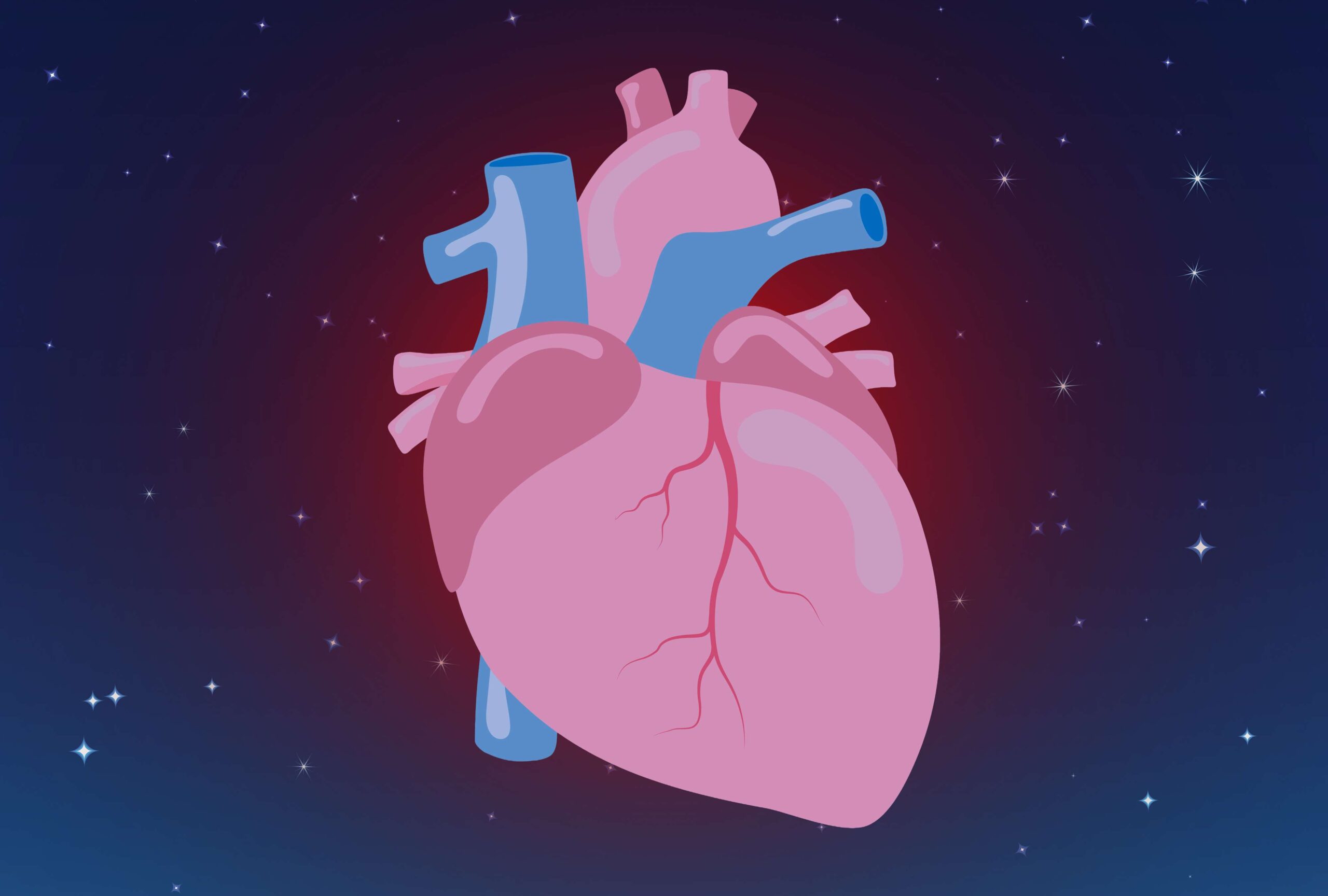
Be sure to turn off the lights—and we do mean *all* of the lights.
Reviewed by Dietitian Jessica Ball, M.S., RD
Key Points
- Nighttime light exposure above 3 lux may lead to heart structure changes, like thickened walls.
- Disrupted sleep from light exposure may partially explain the link.
- Creating a dark sleep environment can help protect heart health and improve sleep quality.
You’ve likely heard that scrolling on your phone before bed isn’t good for sleep. But a new study suggests the light emitted from your phone may be reshaping the structure of your heart and reducing its function.
Published in the European Heart Journalthe research found that nighttime light exposure above 3 lux (not far above what a smartphone screen emits in a dark room) was associated with left ventricular hypertrophy, or an abnormal thickening of the heart’s main pumping chamber.
The study also found a small decline in how well the heart contracts and squeezes. The link between nighttime light exposure and heart issues remained even after adjusting for a variety of lifestyle, health, and environmental factors, and showed a clear dose-response relationship: more nighttime light resulted in more heart structure change. Here’s what that means for your heart health, and what you can do about it.
How Was the Study Conducted?
Researchers at Tulane University analyzed data from 11,071 UK Biobank participants who wore a wrist-based accelerometer with a built-in light sensor for seven consecutive days between 2013 and 2015. The device recorded ambient light levels around the clock, allowing researchers to objectively measure how much light each participant was exposed to during their personal circadian nighttime.
The exposure of interest was nighttime light above 3 lux, a level that prior research has shown is enough to suppress melatonin, the hormone that regulates sleep and helps regulate your body’s internal clock. For context, a fully dark room typically measures less than 1 lux, while a smartphone screen held at arm’s length in a dark room can emit several lux depending on brightness settings.
All study participants were free of cardiovascular disease at baseline. Approximately three years after the accelerometer period, they underwent cardiovascular magnetic resonance (CMR) imaging, which can measure the structure and function of the heart with high precision. Researchers then examined whether nighttime light exposure was associated with any of 24 CMR-based measures of cardiac structure and function across the left ventricle, right ventricle, and left atrium, adjusting for age, sex, BMI, lifestyle factors, health conditions, air pollution and sleep duration.
What Did the Study Find?
Compared to participants with no detectable nighttime light exposure above 3 lux, those with the highest levels displayed a consistent pattern of adverse cardiac remodelling, including:
- The left ventricle (the heart’s main pumping chamber) was 2.4% larger in mass and had 1.5% greater mean wall thickness, a pattern consistent with concentric hypertrophy, where the walls of the heart thicken in response to chronic stress.
- Myocardial contraction fraction (a measure of how efficiently the heart muscle squeezes) was 1.9% lower in the high nighttime light group.
- Multiple measures of myocardial strain (how well the heart muscle recovers after each beat) were impaired, with global circumferential, radial and longitudinal strain indices each roughly 2.7% to 2.9% lower.
- Similar patterns were observed in the right ventricle and left atrium, suggesting the effects weren’t limited to a single chamber.
These are all very small percentages, but all associations showed a linear dose-response relationship, meaning the more nighttime light exposure, the greater likelihood of changes to the heart. Researchers did not find that the effect plateaued at any particular level of exposure.
Additionally, the researchers found that how long participants slept explained a significant portion of the association. Nighttime light suppresses melatonin and can result in shorter sleep, which accounted for roughly 24% to 49% of the relationship between nighttime light exposure and the cardiac changes observed. This suggests the study’s findings are partially caused by disrupted sleep, though a significant portion of the association remained even after accounting for sleep.
Limitations
This was an observational study, so it cannot establish that nighttime light exposure directly causes changes in heart structure or cardiovascular events. The accelerometer-based light measurements captured a single seven-day period and may not represent each participant’s typical long-term light exposure. The study population was mostly older, White adults in the UK, which limits generalizability.
How Does This Apply to Real Life?
Here are some tips for reducing your nighttime light exposure in order to protect your heart health:
- Use blackout curtains or a sleep mask. Streetlights, car headlights and ambient urban glow can cause enough light to impact sleep.
- Turn your phone face-down or move it out of the room at night. Even a phone on standby or charging can emit light that registers above the study’s threshold.
- Switch off or cover indicator lights. Power bars, routers, cable boxes, and other devices with standby LED lights can emit enough light to disrupt sleep.
- Dim your TV or put it on a sleep timer. Falling asleep with the TV on is a common source of nighttime light exposure that’s easy to underestimate.
- If you use a nightlight, consider a red- or amber-wavelength bulb rather than white or blue, as longer wavelengths have less impact on melatonin suppression.
Our Expert Take
A new analysis of more than 11,000 UK Biobank participants found that nighttime light exposure above 3 lux (a level emitted by many common household light sources) was associated with left ventricular hypertrophy, reduced cardiac contractility, and impaired myocardial strain. While the study is observational and causation cannot be established, the findings suggest that a dark sleeping environment may be a significant and overlooked aspect of cardiovascular health.