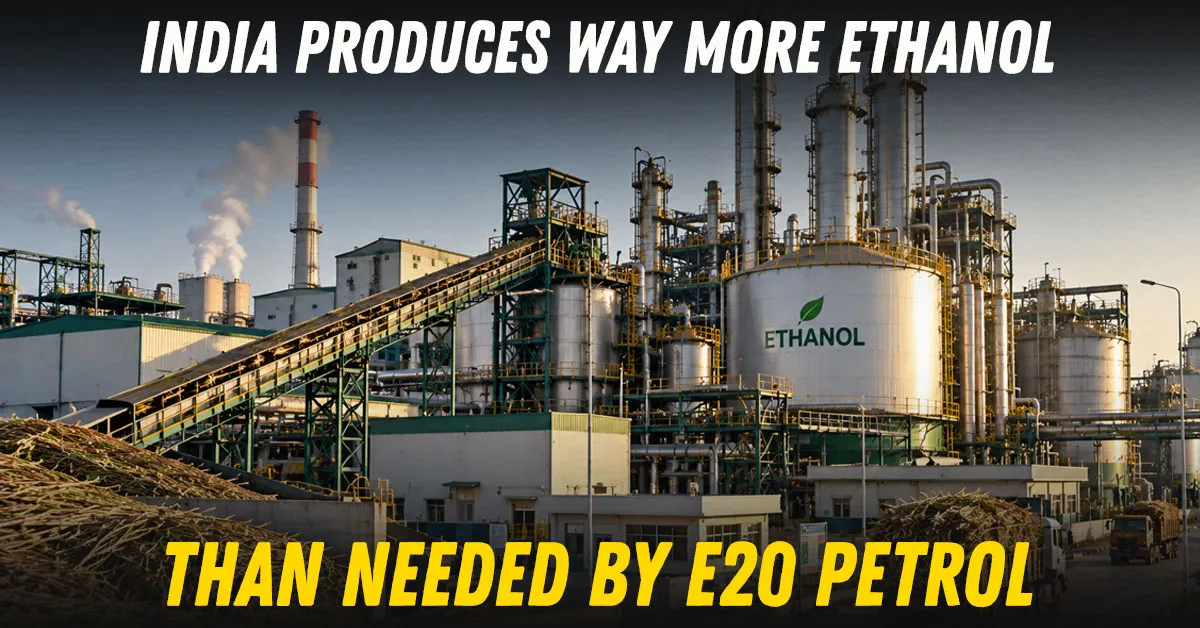
India has built far more ethanol-making capacity than the E20 petrol programme can currently absorb. Installed capacity has reached roughly 20 billion litres a year, while petrol blending at 20 percent needs about 11 billion litres. Other users such as liquor, pharmaceuticals and chemicals consume another 3 to 3.5 billion litres. That leaves close to 7 billion litres of annual capacity without a clear market.
This is an important distinction. The figure does not mean 7 billion litres of finished ethanol are simply sitting unsold in storage. It means distilleries can produce far more than existing buyers are expected to consume. Industry estimates suggest plants are currently running at only around 60 percent utilisation, with utilisation expected to remain in the 65 to 75 percent range over the next few years unless new demand develops. The pressure could rise further because industry estimates indicate another roughly 4 billion litres of capacity may be added during the year.
The rapid build-up was driven by the national push to raise ethanol blending in petrol. Blending has now reached 20 percent, and government data puts total ethanol production capacity at about 20 billion litres. Oil companies have already become the biggest organised buyer, but their requirement cannot keep rising at the same pace once the standard petrol blend is capped at E20.
The government has also said there is no decision to make E25 or E30 the nationwide standard. That matters for motorists because higher mandatory blends cannot simply be used as a quick solution to excess capacity. Vehicle compatibility, emissions certification, fuel economy and consumer acceptance all have to be considered before the base petrol specification changes again.
There is, however, a separate route for flex-fuel vehicles. E85, which contains roughly 80 to 85 percent ethanol, began retailing at 48 public-sector fuel outlets in June. The rollout is planned to expand to 500 outlets by December 2026 and about 5,000 by December 2027. Flex-fuel cars and motorcycles can therefore create additional ethanol demand without forcing the same blend on every petrol vehicle.
Exports are not yet an easy outlet. First-generation ethanol, which makes up most of the current capacity, remains restricted for export. The government has allowed exports of second-generation ethanol under authorisation, but those volumes are still small compared with the surplus capacity now being discussed.
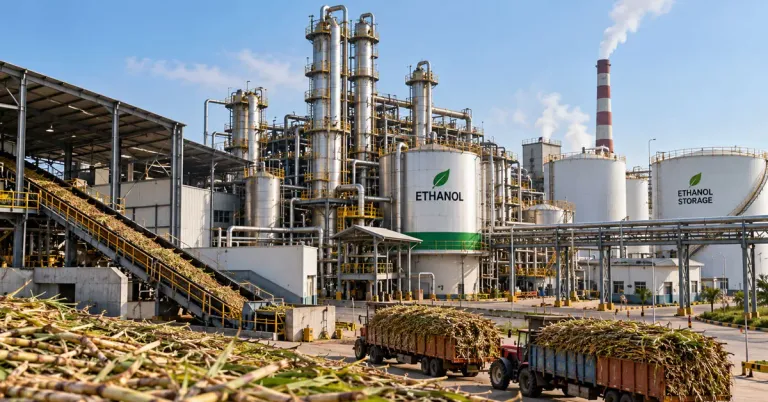
The industry is consequently looking at other uses. One proposal is bio-isobutanol blending with diesel. Diesel consumption is much larger than petrol consumption, so even a small blending percentage could create a sizeable new market. Sustainable aviation fuel is another longer-term opportunity, although converting ethanol or other feedstocks into aviation-grade fuel requires additional processing, investment and certification.
For distillers, low utilisation makes it harder to earn a return on plants built during the expansion phase. For farmers supplying sugarcane, maize and other feedstocks, slower ethanol demand could eventually affect how quickly additional agricultural output is absorbed. Oil companies, meanwhile, have little reason to buy substantially more than the blending programme requires.
For car owners, the immediate takeaway is simpler. The ethanol surplus does not mean E20 is about to be replaced by a higher compulsory blend. The next phase is more likely to depend on flex-fuel vehicles, wider E85 availability, new industrial uses and selective exports.