Under the proposal, nonimmigrant students with F-1 visas would be required to pay $70,000 to a certified institution for on-the-job training, known as Optional Practical Training (OPT), and $30,000 for any additional work training, Reuters reported.
The new rules were meant “to combat fraud, strengthen the integrity of the immigration system, and protect U.S. workers,” according to DHS.
The plan is part of the U.S. President Donald Trump administration’s wider crackdown on foreign visa holders.
For decades, the H-1B program has allowed young engineers and scientists from across the world, especially India and China, to turn years of study at U.S. universities into high-paying jobs and a path to permanent U.S. residency.
|
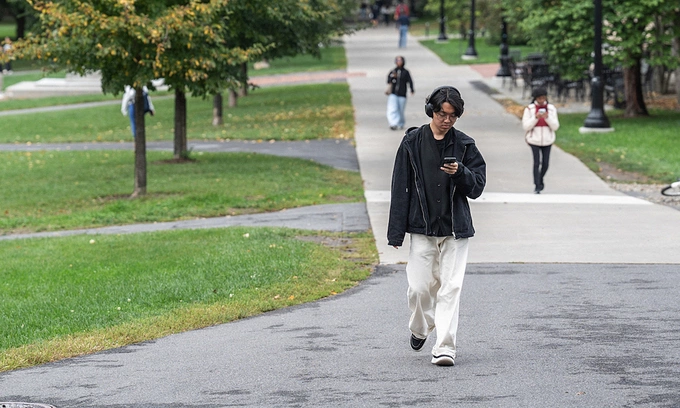
Students walking through campus at Cornell University in Ithaca, New York on October 2, 2026. Photo by AFP |
Leading U.S. tech companies have come to rely heavily on these workers to fill skilled positions.
When he was campaigning in 2024, Trump vowed he would make it easier for foreign students to remain in the country, suggesting they be automatically awarded a Green Card after graduation.
But in defense of its plan, DHS cited a 2020 visa fraud case involving at least 2,693 people, most of them Chinese F-1 students seeking OPT. It noted that one student linked to the operation was subsequently convicted of acting as an unregistered agent of the Chinese government.
Nearly 62,000 Chinese students participated in OPT during the 2024-2025 academic year, according to the Institute of International Education’s Open Doors report. The program permits eligible F-1 visa holders to work in jobs directly related to their field of study.
NAFSA: Association of International Educators criticized the proposal, saying it would increase uncertainty for international students and weaken the U.S. economy.
“International students don’t take opportunities from Americans, they create them,” said Fanta Aw, the association’s executive director and chief executive.
Michael Clemens, an economics professor at Johns Hopkins University and a nonresident senior fellow at the Peterson Institute for International Economics, disputed the administration’s argument.
“No research whatsoever supports the government’s claim that this policy will protect American workers,” he said to the South China Morning Post.
Clemens said U.S.-trained, highly skilled foreign workers increase productivity, benefiting American workers across sectors and skill levels.
He warned that the proposed charges would sharply restrict access to the principal route international graduates use to remain and work in the country and hurt innovation and entrepreneurship.