Republicans Distance Themselves From Trump in Debates as Midterm Pressure Mounts/ TezzBuzz/ WASHINGTON/ J. Mansour/ Republican candidates are avoiding Trump or emphasizing disagreements with him during debates as economic frustration and the Iran war complicate their campaigns. Some have challenged specific policies, while others promote bipartisan records and promise to prioritize their states over presidential loyalty. Democrats are pressing both groups over their past support for Trump as Republicans seek votes beyond his core supporters.
Quick Look
- Changing message: Republican nominees are softening earlier pledges of loyalty to Trump.
- Michigan tariffs: Senate candidate Mike Rogers now explicitly calls for ending the tariff dispute with Canada.
- Iran rhetoric: Rep. Tom Barrett rejected Trump’s comments about possible attacks on American cities.
- Independence claims: Ashley Hinson, Rick Jackson and Mike Lawler emphasized state interests or bipartisan cooperation.
- Electoral challenge: Republicans must motivate their base while winning economically focused independent voters.
- Democratic response: Opponents continue linking Republican candidates to Trump’s policies and record.

Deep Look
Republican Debate Answers Reflect a Shift From Trump Loyalty
Republican candidates who previously embraced President Donald Trump are adjusting their message on debate stages as the midterm elections approach.
Georgia gubernatorial nominee Rick Jackson once promised to be Trump “with a Southern tone.” At a summer rally, he pointed toward the president and declared, “I’m going to be this man’s favorite governor.”
During this week’s debate against Democrat Keisha Lance Bottoms, Jackson discussed Trump only when his opponent raised him. He instead promised to “stand up to anybody.”
Similar shifts are appearing in Republican campaigns for the Senate, House and governorships nationwide. Some candidates avoid discussing Trump, while others openly disagree with parts of his agenda.
The changes, alongside efforts to remove Trump references from campaign websites, reflect voter frustration over inflation, the Iran war and other issues.
Republicans Face Both Turnout and Persuasion Challenges
GOP pollster Paul Shumaker said candidates must address weakening enthusiasm among Republican voters while attracting independents.
“Republicans right now are facing a voter turnout problem” within their party, he said, while also needing to win “unaffiliated voters” focused on the economy.
“You have to have something significant to change this narrative,” Shumaker said.
He argued that reversing the broader political environment would require “a significant victory in Iran” and major economic improvements—developments individual candidates cannot produce during a debate.
Mike Rogers Calls for an End to Canadian Tariffs
Michigan Republican Senate nominee Mike Rogers has taken a clearer position against Trump’s tariffs on Canada.
During Thursday’s debate with Democrat Abdul El-Sayed, Rogers said he had privately urged the White House to reach a trade agreement and end the dispute.
Canada is Michigan’s largest trading partner, as it is for many other Great Lakes and Midwestern states.
Days before the debate, Rogers released an advertisement stating, “We know that Canada is not our enemy. We need to end the tariff war — now.”
That message was more direct than his previous support for Trump’s “America First” economic agenda, when he said tariffs were not a “one-size-fits-all” answer.
Michigan Republican Rep. Tom Barrett had already broken with Trump by supporting a war powers resolution intended to assert congressional authority over military operations in Iran.
During a debate with Democrat Will Lawrence, Barrett also criticized Trump’s remarks Monday in Nebraska about the possibility of Iran attacking San Diego and Los Angeles.
Trump mentioned the cities while arguing that higher gasoline prices were a “small price to pay” for keeping Americans safe through the Iran war.
Democrats criticized the comments, with some interpreting them as an invitation for Iran to attack. The White House said Trump was describing a worst-case scenario he intended to prevent.
Asked whether the remarks were acceptable, Barrett declined to defend them.
“Nope,” he said.
Ashley Hinson Promises Support When It Benefits Iowa
Other Republican candidates have emphasized independence without identifying a specific policy break.
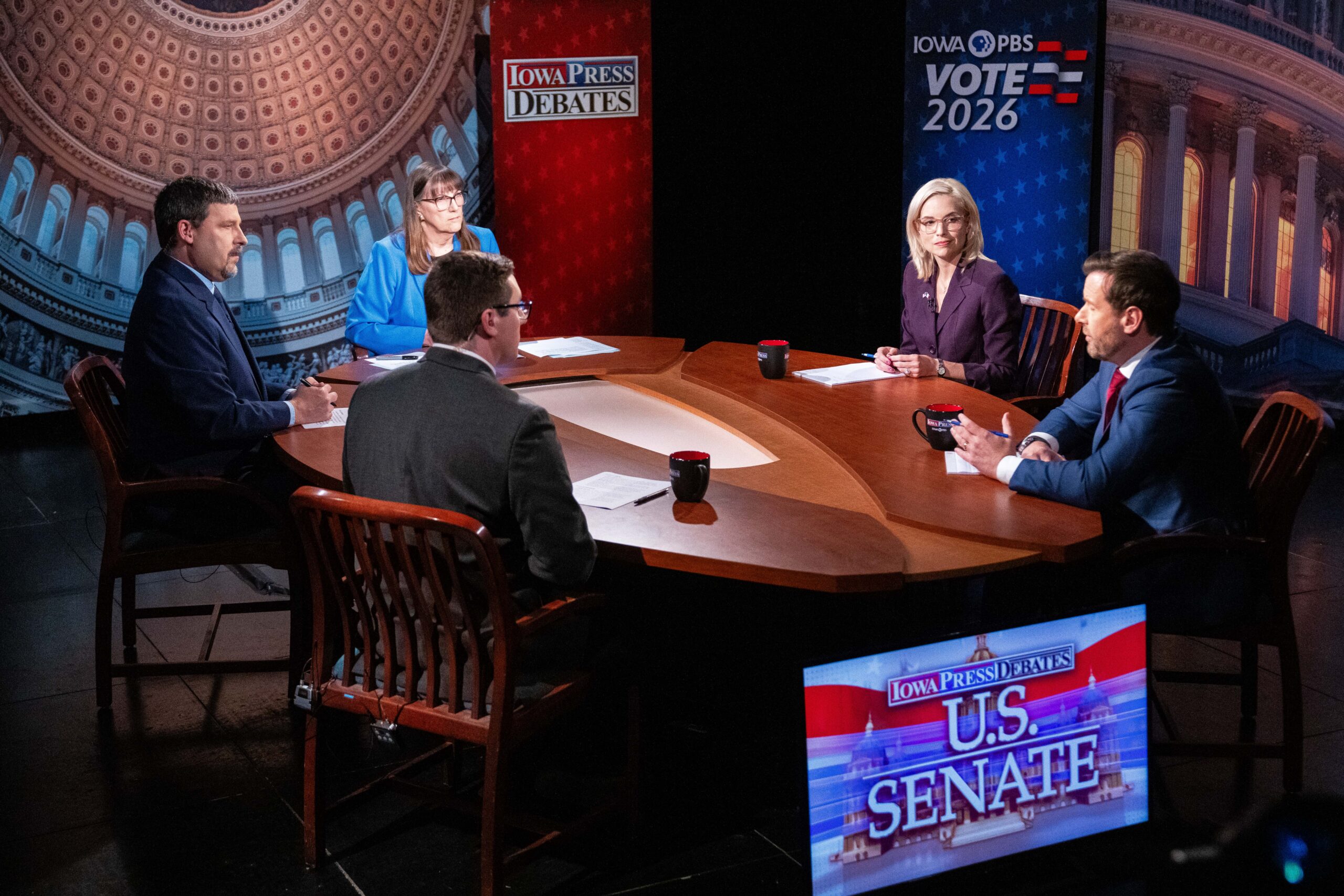
Iowa Rep. Ashley Hinson, running for Senate against Democrat Josh Turek, said during Wednesday’s debate that it would be “really easy” to remain a Trump ally while also working across party lines.
“I’ll be President Donald Trump’s ally when it is important for Iowa, but I will push back on him — he knows this, because I talk to him regularly — on things that are wrong for our state,” Hinson said. “That’s true no matter who’s in the White House. That’s true no matter who is governing and who has the gavel.”
She also highlighted House legislation she worked on that became law under both Trump and President Joe Biden.
Jackson Points to Brian Kemp as a Model
In Georgia, Jackson shifted attention toward outgoing Republican Gov. Brian Kemp as an example of political independence.
Kemp has clashed with Trump, including over the president’s false claims that he won Georgia in the 2020 election.
“I will stand up to anybody, just like Brian Kemp has done,” Jackson said.
The comparison allowed him to emphasize a willingness to challenge the president without detailing a particular disagreement.
Lawler Highlights Work With Democratic Colleague
New York Republican Rep. Mike Lawler emphasized his collaboration with Democratic Rep. Josh Gottheimer of New Jersey.
Discussing legislation they had worked on together, Lawler argued that he could challenge both Trump and his party.
“When I agree with the president I say it. When I disagree with the president, I say it,” he said in his closing remarks.
His Democratic opponent, Cait Conley, repeatedly accused him of always voting with Trump.
“No matter how many times you say 100% of the time,” Lawler responded, “it’s provably false.”
Hinson Avoids Direct Criticism Over Trump’s Payment Promises
Hinson did not directly criticize Trump when asked about Affordable Care Act rebate checks sent to some Americans and his promise of a $5,000 bonus after the elections if Republicans retain both congressional chambers.
She said she “cares very deeply” about preserving Congress’s spending authority and emphasized the need to “live better within our means.”
Her response illustrated the balance candidates are attempting: signaling independence without broadly rejecting the president.
Democrats Continue Pressing Republicans Over Trump
Democratic candidates have challenged both specific Republican policy reversals and more general claims of independence.
When Rogers said the administration “probably” made mistakes in its mass deportation strategy, El-Sayed rejected the qualification.
“He said it was probably not right. I mean, it’s definitely not right,” El-Sayed said. “They killed two people.”
In Georgia, Bottoms contrasted her campaign with Jackson’s earlier promise to become Trump’s favorite governor.
“I’m not running to be his favorite governor,” she said. “I’m running to work on behalf of people like you.”
More on US News