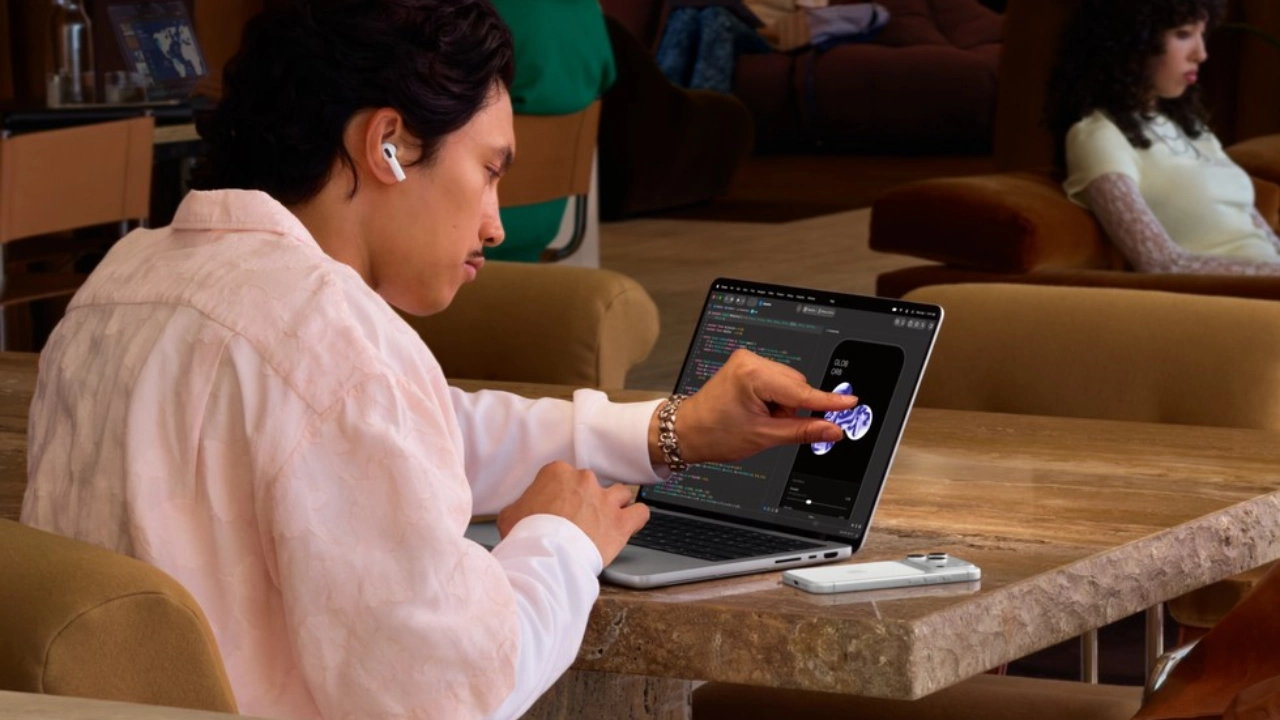
Apple’s October 28 announcement introduces a major redesign of its professional laptop range, combining new display technology with touch input, a lighter chassis, and additional software features. The MacBook Pro with PROLED XDR is available in 14-inch and 16-inch configurations powered by M5 Pro or M5 Max.
The Apple MacBook Pro PROLED XDR starts at ₹349,900 in India. The announcement also creates an unusual buying decision. Apple’s newer M6 chip powers a more affordable 14-inch MacBook Pro, while the more expensive PROLED XDR models use M5 Pro and M5 Max. Buyers should compare full hardware configurations rather than assume a higher chip-generation number automatically makes a laptop better for professional work.
MacBook Pro PRO LED XDR Price in India
Apple lists the new MacBook Pro models at the following starting prices in India:
- 14-inch M5 Pro: ₹3,49,900
- 16-inch M5 Pro: ₹4,09,900
- 14-inch M5 Max: ₹5,49,900
- 16-inch M5 Max: ₹5,89,900
Apple opened pre-orders for the PROLED XDR MacBook Pro on October 28. Its detailed availability section lists November 9, 2026, for deliveries and retail availability, although an earlier paragraph in the same announcement mentions November 6.
Buyers should confirm the delivery date shown by Apple when ordering. The separate 14-inch MacBook Pro with M6 starts at ₹239,900 and is scheduled to become available on November 6. That puts the entry-level PROLED XDR model ₹1.10 lakh above the M6 model.
However, the difference reflects more than just the added touchscreen: the laptops also differ in display technology, processor class, memory configurations, and connectivity.
PROLED XDR Brings Tandem OLED and Touch to Mac
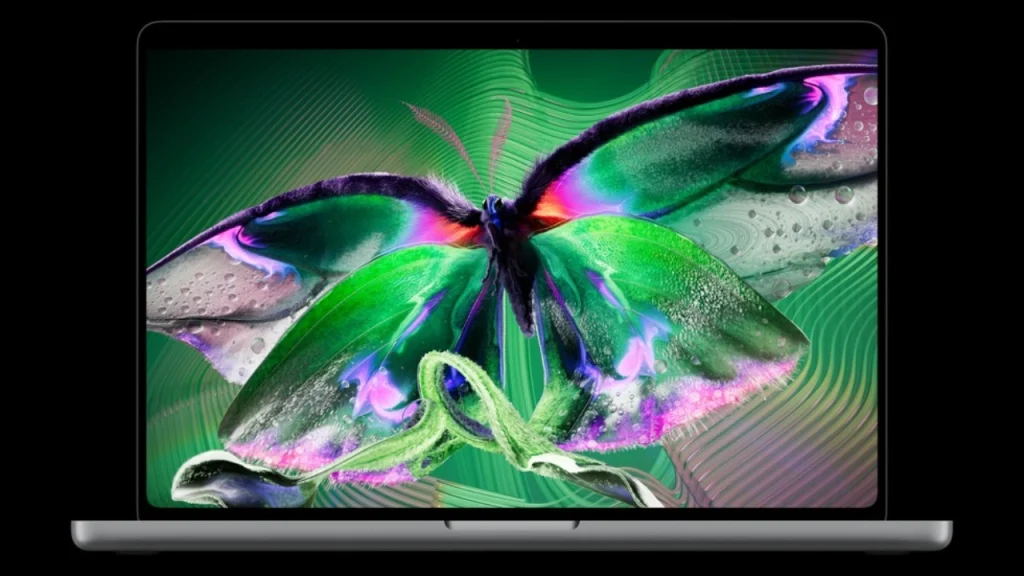
The new display uses tandem OLED technology, with Apple rating it for up to 2,000 nits of peak brightness with HDR content and up to 2,000 nits of peak SDR brightness outdoors. Sustained full-screen brightness is rated at up to 1,000 nits, so don’t interpret the peak figures as continuous full-screen performance under all conditions.
The display also offers a 10,000,000:1 contrast ratio, an adaptive refresh rate of up to 120 Hz, and P3 and Adobe RGB color support, with more than 80% Rec. 2020 coverage. Touch support is the other major change. Users can scroll, zoom, move content, and interact directly with compatible apps while still using the keyboard and trackpad.
Dynamic Island and Other Design Changes
Apple says macOS automatically translates touches into clicks for many existing apps, while updated system gesture APIs allow developers to create more touch-focused experiences. That does not mean every third-party Mac application is already fully optimized for touch. The redesign also brings Dynamic Island to Mac, giving access to Spotlight, Live Activities, and Siri AI.
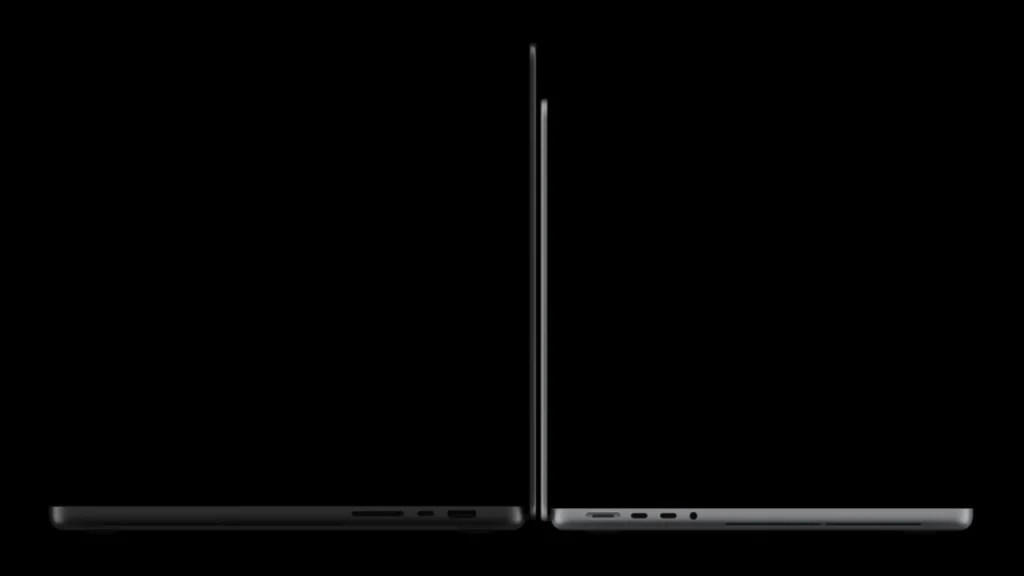
Apple advertises up to 24 hours of video streaming on the 16-inch M5 Pro model. The 14-inch M5 Pro is rated for up to 22 hours, while M5 Max configurations are rated for up to 20 hours on the 14-inch model and 22 hours on the 16-inch model. Actual endurance will vary with workload and usage conditions. The redesigned laptops are thinner and lighter, with configurations supporting up to 128GB of unified memory and 16TB of storage.
Apple MacBook Pro PROLED XDR vs MacBook Pro M6
The PROLED XDR models use Apple’s M5 Pro and M5 Max chips rather than the M6 processor found in the entry-level 14-inch MacBook Pro announced a day earlier. The difference reflects the product tiers: the M6 model targets a broader range of users, while the Pro and Max configurations are designed for demanding professional workloads.
The M6 model features a 12-core CPU and 12-core GPU. By contrast, the new PROLED XDR lineup starts with an M5 Pro configuration featuring a 15-core CPU and 16-core GPU, while higher-end configurations offer M5 Max. The new models also include Thunderbolt 5, compared with Thunderbolt 4 on the M6 model. These specifications alone don’t determine which laptop performs better in every application.
Performance depends on the exact chip configuration, GPU requirements, memory needs, and workload. Buyers should look for independent benchmarks in their primary applications before treating the generation number as a reliable performance ranking.
Who Should Consider the PROLED XDR MacBook Pro?
The new models may appeal to video editors, photographers, colorists, and designers who can use the tandem OLED panel, Adobe RGB support, and professional calibration options. Touch could also help creative applications that support direct interaction with content. The M5 Max configurations may suit demanding graphics and other resource-intensive workflows, depending on the application and configuration.
For students, office users, and buyers who mainly need everyday productivity, the standard M6 model offers a lower entry price and up to 24 hours of Apple-rated battery life. Developers and other professionals should compare memory, graphics performance, external-display requirements, and application-specific benchmarks before paying more for the redesigned model. These are buying considerations based on the announced specifications, not conclusions from hands-on testing. Independent reviews will make the practical value of touch and the new display clearer.
Conclusion
Apple’s MacBook Pro with PROLED XDR brings tandem OLED, touchscreen interaction, and Dynamic Island to its professional laptop range. Its India starting price of ₹349,900 places it well above the M6 MacBook Pro, making the new display and professional hardware central to the buying decision.
For creative professionals who can use the expanded color capabilities and touch controls, the redesign may offer meaningful advantages. Other buyers may find the M6 model sufficient. The most useful comparison will come from independent testing of display performance, touch usability, battery life, and application-specific workloads.