For Ho Mai Phuong, a PhD student at the University of New South Wales, the financial reality of studying in Australia has deteriorated significantly over her eight years in the country. Now living in Sydney, consistently ranked among Australia’s most expensive cities, she acutely feels the squeeze of the current cost-of-living crisis.
Housing costs represent the most significant spike, she noted.
“A two-bedroom apartment in the Sydney suburbs used to cost AU$500-550 (US$349-384) per week, but now it can reach $800-850 per week or more.”
She added that the inflation is inescapable, observing that “almost everything else has gone up, from food to transportation.”
Yen Nhi, a master’s student at Victoria University who has lived in Australia for seven years, has watched her daily expenses multiply.
Dining out has shifted from an accessible convenience to a rare luxury. A standard restaurant meal that once cost around $12 to $15 now easily runs $18 to $25, excluding drinks.
Groceries offer little relief. A $50 supermarket run used to cover several days’ worth of food; today, it barely secures bare essentials like a tray of meat, eggs, milk, and a few vegetables.
Despite the soaring costs, Nhi maintains her financial independence. Since starting her master’s program, she stopped asking her family for help and now fully covers her own living expenses.
To manage rent, utilities, and a modest emergency fund, Nhi took on two part-time retail jobs. Earning an average of $25 an hour, balancing work and survival remains a tightrope walk.
That standard hourly rate barely covers daily essentials, leaving practically nothing for savings, according to Thao Trinh, a second-year student at the University of Sydney.
Trinh considers herself fortunate to live with relatives, saving significantly on rent. Yet, she remains exposed to the broader economic reality through her peers, witnessing the exhausting impact of the ongoing “price storm” sweeping the student community.
“My friends have to move very far from the center to find a place to rent for about $300 per week, bills included. Rooms closer to the city have increased to $400-500 per week,” she explained, adding that even with cheaper rent, her friends still juggle multiple jobs.
|
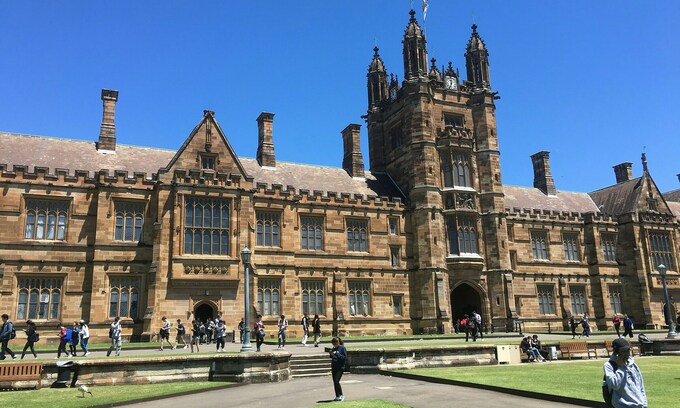
Students are seen at the University of Sydney in 2020. Photo by Unsplash/Ethan Shi |
Students are bearing the brunt of these economic shifts, according to Universities Australia.
A June report from the peak academic body found that since 2021, student rent has surged by roughly 40%. Groceries have risen by 27%, while utility and fuel bills are up 39% and 43%, respectively.
Overall, the cost of maintaining a basic student standard of living has jumped 29%, outpacing economy-wide inflation of 24%, yet student spending has increased by just 21%.
“Despite spending more and reprioritizing their budgets towards essentials such as rent, students have been unable to keep pace with the rising cost of maintaining the standard of living they had in 2021.”
“In other words, students are being squeezed from every direction. They’re cutting back simply to make ends meet and still aren’t keeping pace with rising living costs,” it said.
Adding to the strain, university tuition fees are set to increase by an average of 6.5% this year, marking the highest hike in recent years, according to ICEF Monitor. While 10 universities raised tuition by more than 6% last year, that figure has doubled to 21 schools this year.
A May survey of over 900 students across 41 Australian universities, conducted by University of Wollongong professors, revealed that nearly one-third (32%) face financial hardship. International students are the most severely affected, largely because they are ineligible for the government subsidies and welfare packages available to domestic citizens.
In a July article for the International Education Association of Australia, Charlotte Long, Student Experience Director at the University of Sydney Union, noted that the 2026 international student experience is defined by intersecting global and local pressures.
She listed those pressures as: student visas as instruments of immigration control, rising costs of living, housing vulnerability, employment exploitation, growing awareness of gender-based violence, uncertainty about future employment and career pathways, and persistent segregation from Australian students.
“Taken together, these experiences don’t just create challenges; their combined weight also impacts mental health and wellbeing. Mental health is arguably the defining challenge for international students; not another item in the list above, but rather, the sum of it,” she writes.
Professor Tran Thi Ly of Deakin University said further about the increasing cost’s impact: “Students may have to cut spending on essentials, move into cramped accommodations, or increase their working hours. This impacts their study time and social activities.”
This dynamic is Nhi’s primary concern. Her greatest pressure stems from balancing part-time work with the academic rigor required to maintain her university scholarship.
“Sometimes I’m quite tired because after class I go straight to work, and then go home to do homework. There are times when I want to hang out with friends or just rest, but I have to plan it well in advance,” she said.
Universities offer some direct support to offset these challenges. RMIT provides grocery vouchers and hardship grants of up to $1,000, while Deakin University offers interest-free loans, laptops, and essential item vouchers.
In September, Universities Australia lobbied the government to extend domestic concessions, such as discounted public transit fares, to international students.
In the meantime, students are finding creative ways to stretch their budgets.
Nguyen Lam, a Vietnamese student at Western Sydney University, routinely cooks at home, stretching a $10 portion of supermarket meat across three meals. He drastically limits social outings that typically cost $50 to $80.
Nhi leverages employee discounts at her retail jobs and hunts for clearance items at supermarkets like Coles and Woolworths, or shops at Aldi for heavily discounted short-shelf-life fresh food.
Phuong takes a similar approach, urging friends to maximize student ID discounts at local shops and attend discounted food sales organized by university student unions.
“These are all helpful sources of support that newcomers sometimes don’t know about,” Phuong said. She also meticulously tracks her monthly spending through budgeting apps to adjust for overages quickly.
Both Phuong and Nhi try not to completely sacrifice their life experiences in Australia, setting aside small amounts to socialize and pursue hobbies. For Nhi, financial pressure is an inevitable aspect of studying abroad that forces her to prioritize and organize her workload efficiently.
“Earning money to cover living costs is very important, but I don’t want to trade my health or academic results for it,” Nhi said.