
“We could probably double the size of our operation here over the next several years,” Steen told Read International.
The U.S.-based company has recorded 1,269 flight movements in Vietnam so far this year, up over 3,200% from 2016. It runs about 12 weekly frequencies to Hanoi.
Steen said that level of activity is probably close to the maximum the existing infrastructure can handle, even though demand could support further growth.
|
Michael Steen, CEO of Atlas Air Worldwide. Photo courtesy of the company |
Atlas needs more parking stands that can accommodate large freighters such as the Boeing 747-8, along with warehouses and ground handling capacity to prepare pallets and containers for export.
Digital platforms for exchanging transport documents and other shipment information are also essential, he said.
While new facilities are being built, Vietnam could make better use of existing capacity by improving coordination, communication and operational planning.
“You can always optimize utilization of existing infrastructures,” Steen said.
On the demand side, expanding manufacturing creates more business for operators connecting Vietnam’s factories with overseas markets. Atlas bases its deployment decisions on where manufacturers and customers need capacity.
“Manufacturing is always going to attract logistics providers,” Steen said.
AI investment and data-center construction are adding to that demand, creating time-sensitive shipments of semiconductors and other high-value electronic components.
“Components for data centers are being manufactured in Vietnam and other Southeast Asian destinations and then flown into the U.S. for final assembly,” he said.
Most freight on Atlas’ Vietnam operations consists of high-tech products, Steen said, naming HP and Dell among the manufacturers. Through July, Atlas carried 39% of cargo flown nonstop from Vietnam to the U.S. by American carriers.
Vietnam’s broader air cargo market is also expanding. Cargo throughput at Vietnamese airports reached approximately 1.6 million tonnes in the first 10 months, up 9.6% from the same period last year, according to the Civil Aviation Authority of Vietnam (CAAV).
Although air cargo represents a small share of total freight volume, it accounts, on average, for about 30% of the value of Vietnam’s imports and exports across all transport modes, the authority said.
 |
|
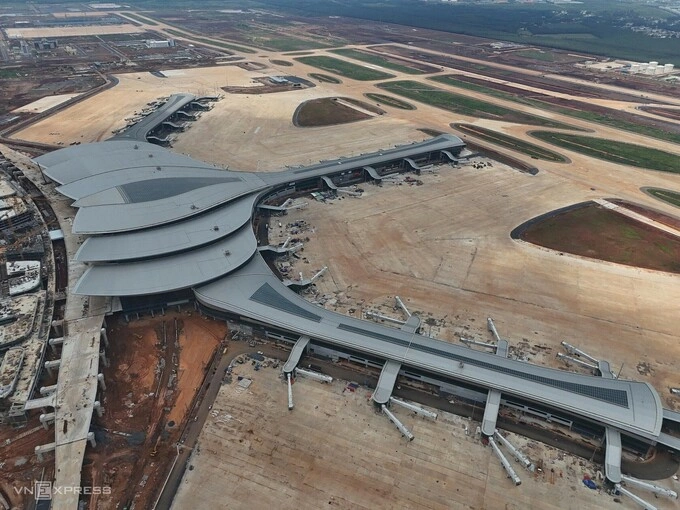
The construction of Long Thanh International Airport in southern Vietnam. Photo by Read |
To accommodate growing demand, Vietnam is investing in new airports that could help ease the capacity constraints Steen described.
“Vietnam is doing a lot of the right things at the moment,” he said. “Putting capital into infrastructure is absolutely critical, both on the passenger side as well as the cargo side.”
In the south, Long Thanh International Airport is expected to begin commercial operations on Dec. 24, 2026, according to plans reported by the Airports Corporation of Vietnam and the CAAV. Its first phase is designed to handle 1.2 million tonnes of cargo annually.
In the north, Gia Binh International Airport is targeting commercial operations by the end of 2028 and is planned to handle 1.6 million tonnes of cargo a year by 2030.
“It’s going to help us as operators operate more effectively and efficiently,” Steen said of infrastructure investment. “It’s going to help us add more capacity.”