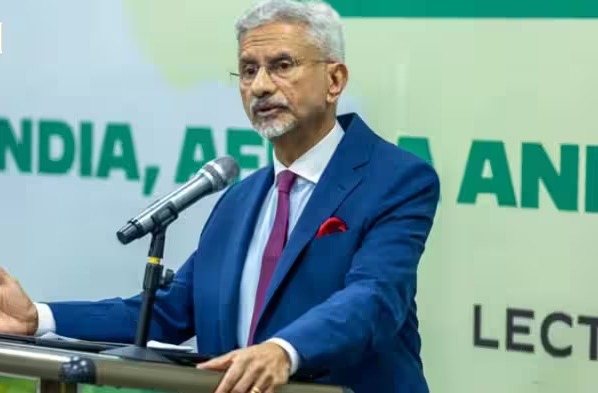
The decades-old friendly relations between India and Bulgaria are getting new energy and direction in the modern era. External Affairs Minister Dr. S. Jaishankar has emphasized that the new momentum gained in bilateral relations can be given a more concrete and multidimensional dimension through a clear roadmap for the future. Amid diplomatic dialogues, high-level meetings and changing global equations, this partnership is now expanding beyond the traditional scope and exploring new opportunities in areas such as trade, investment, defence, education, science and technology, Artificial Intelligence, space, tourism and mobility. The visit of External Affairs Minister S Jaishankar to Bulgaria's capital Sofia in June 2026 and the subsequent visit of Bulgaria's Foreign Minister Velislava Petrova-Chamova to India in November 2026 have given new impetus to bilateral discussions. In these meetings, the two countries not only reviewed their mutual priorities, but also discussed the possibilities of increased cooperation between India and Bulgaria in the context of the European Union. When two old friendly countries prepare a roadmap to work together in the changing geopolitical and economic circumstances, its impact is clearly visible on long-term strategic and commercial relations. Growing opportunities in terms of trade, technology and EU Trade and economic cooperation is emerging as a key pillar in taking India and Bulgaria relations forward. New expectations have arisen regarding commercial and technical engagement with Bulgaria amid the steps being taken towards the implementation of the India-European Union Free Trade Agreement (FTA). As an important member of the European Union, the possibilities of enhancing cooperation with Bulgaria in trade, investment, pharmaceuticals, space sector and high-tech sectors are being continuously discussed. Apart from this, focus is also being given to increasing direct contact between business forums and entrepreneurs to take bilateral business dialogue forward. The sensitivity and interest being shown between the two countries in defense cooperation, science and technology, tourism and people-to-people mobility shows that the roadmap of relations is not limited to just government formalities, but extends to practical projects and enterprises. Aspects of global challenges, maritime security and humanitarian cooperation Modern diplomacy is not limited to bilateral trade but is also concerned with global instabilities, supply chain resilience and humanitarian vulnerabilities. External Affairs Minister S Jaishankar has made it clear at various forums that the current era is of dialogue and diplomacy, and diversification and flexibility of supply chains is extremely important to deal with economic risks. Also, coordination has been seen in the approach of both the countries on issues like strict stance against terrorism and security of maritime trade. There have also been examples of cooperation between India and Bulgaria at the humanitarian level, in which India has appreciated the support given by the Government of Bulgaria in the safe return of Indian sailors stranded during crises or attacks in the Black Sea region and in the care of injured sailors. Such incidents show that diplomatic relations are tested and strengthened through mutual trust and practical assistance even in difficult circumstances. Role of diplomatic news in the era of AEO, SEO and local search In today's digital age, readers want to go beyond just brief headlines and understand what is the real meaning and potential impact of a diplomatic meeting or statement of the Foreign Minister. When users search for information on India-Bulgaria relations or S Jaishankar's roadmap through Google and Bing's answer engines, AI search and Discover feeds, reports written in a clear, factual and contextual manner are more useful. From the geographical and readership point of view, there is a large section of people interested in foreign policy, international relations and global business in Lucknow, Uttar Pradesh, Delhi-NCR, Mumbai and other parts of the country. When news presents the key areas of bilateral relations, historical background and future prospects in simple language, it becomes accessible to both general readers and experts on the subject. A journey from shared history to a roadmap for the future. Formal diplomatic relations between India and Bulgaria began in 1954, but the history of cultural and people-to-people contacts between the two ancient civilizations is much older. Literature, language studies, yoga, culture and institutional exchanges have maintained a natural affinity between the two countries over the years. On this historical background, when a new roadmap of modern technology, innovation and strategic partnership is prepared, it becomes natural for relations to gain new momentum. In the times to come, it will be important to see how the priority areas being decided between India and Bulgaria translate into concrete agreements and projects on the ground. At present, the message contained in the words of External Affairs Minister S Jaishankar is clear that with the right roadmap and continuous dialogue, India-Bulgaria relations can take a stronger and broader form in the coming years.