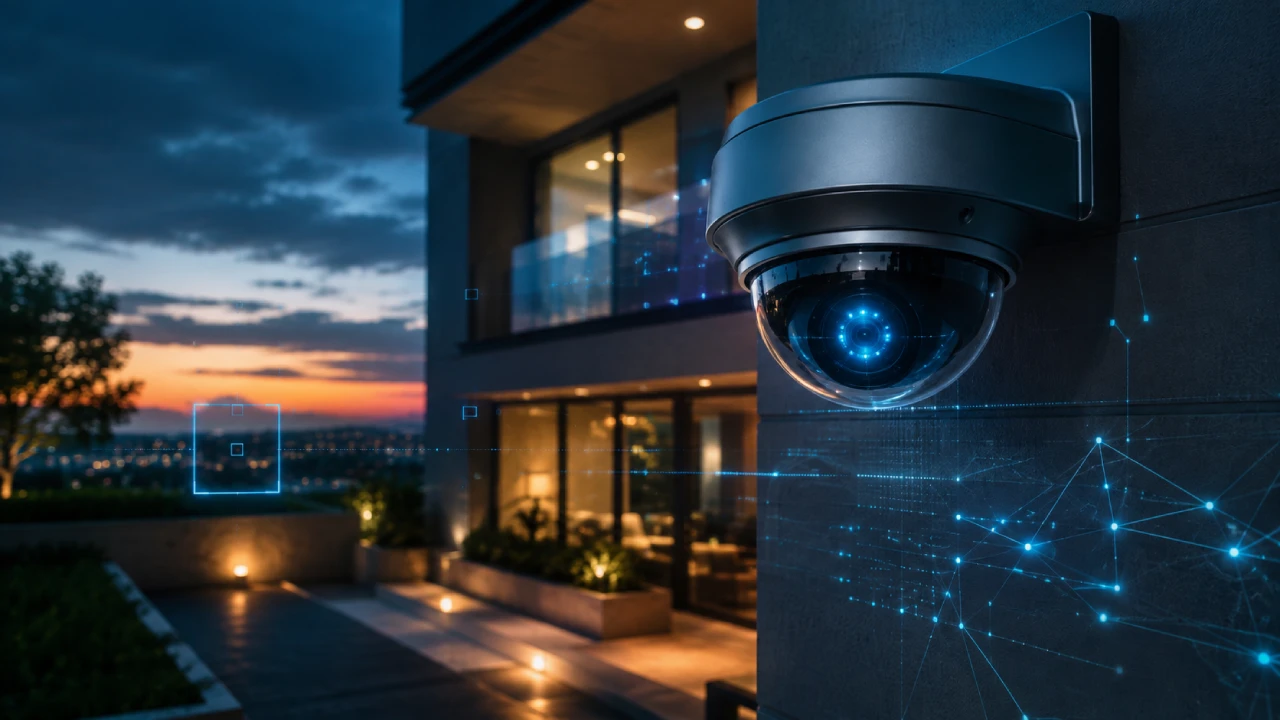
AI security cameras have transformed modern surveillance, enabling visual systems to perform far beyond traditional video recording devices. With these smart setups, the system can recognize people, detect vehicles, tell pets apart from intruders, and push real-time notifications based on observed events. Instead of merely saving video archives, these cameras actively monitor and analyze video streams, allowing faster responses when suspicious activity occurs. Today, deployments span homes, offices, warehouses, hospitals, retail stores, and smart city setups.
How AI Security Cameras Function
AI security cameras represent a distinct category of surveillance devices.
They analyze live video feeds to interpret events in real time. They differ from passive, conventional CCTV systems that continuously record footage without analysis. Instead, AI security cameras process visual input to identify people, actions, or critical events. This filtering delivers relevant alerts rather than a continuous stream of unhelpful notifications. Depending on the model and configuration, AI security cameras can identify:
- People
- Vehicles
- Animals
- Packages
- License plate details
- Unusual motion patterns
- Unauthorized intrusions into restricted zones
Additionally, many modern AI security cameras offer cloud support and mobile applications. Users can view live video or playbacks remotely while receiving instant alerts on smartphones, offering greater convenience than local-only security feeds.
How AI Security Cameras Use Object Recognition
Object recognition serves as a foundational component of modern AI security cameras. Machine learning algorithms and computer vision models train the system to detect and categorize objects across video frames. Rather than triggering on minor visual shifts, the AI distinguishes critical events from harmless background motion. For instance, an AI camera system can:
- Ignore tree branches swaying in the wind
- Identify a delivery worker approaching an entrance
- Detect an unauthorized person entering a restricted area
- Recognize a vehicle entering a parking lot
Intelligent filtering substantially decreases false alarms compared to standard motion detection, which frequently triggers on benign environmental changes.
Real-World Uses of Smart Surveillance
AI security cameras are deployed across numerous sectors to automate visual monitoring.
Home Security
Homeowners position AI security cameras around entry points to track visitors, receive delivery updates, and monitor family members remotely. Real-time visibility provides peace of mind even when occupants are away.
Retail
Retailers deploy AI security cameras to deter theft, analyze customer movement, detect suspicious behavior, and streamline operational management.
Offices
Companies install intelligent cameras to secure entrances, safeguard restricted departments, and improve workplace safety by minimizing blind spots.
Warehouses
Logistics teams rely on AI security cameras to track inventory status, monitor loading docks, protect controlled zones, and enforce safety protocols.
Healthcare
Hospitals utilize AI security cameras to protect patient safety, secure restricted medical areas, and accelerate emergency response times.
Smart Cities
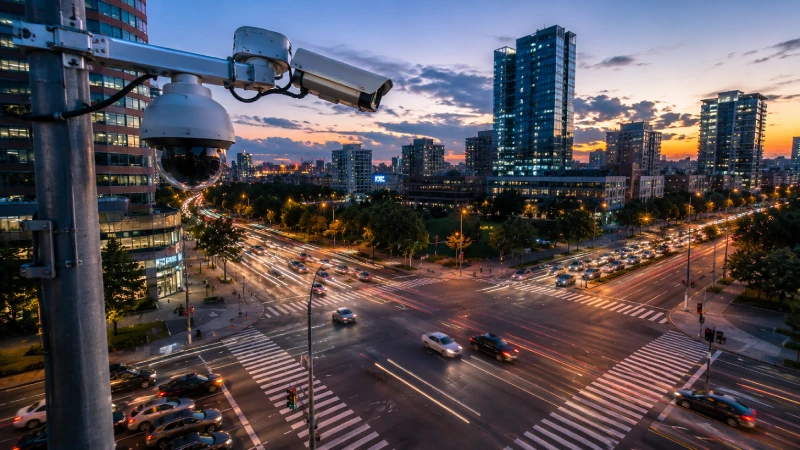
Municipalities integrate AI security cameras to monitor traffic flow, enhance public safety, and manage municipal infrastructure while balancing public privacy concerns.
Benefits of AI Security Cameras
AI security cameras provide proactive defense mechanisms that outperform standard CCTV systems by interpreting scene context rather than just recording video.
Reduced False Alarms
By distinguishing relevant actions from routine background movement, AI security cameras generate fewer unnecessary alerts and minimize user interruptions.
Faster Incident Detection
Real-time video analysis enables immediate threat responses, eliminating the need to review recorded footage after an incident occurs.
Improved Operational Efficiency
Automating routine security monitoring frees security teams to concentrate on urgent, high-priority threats.
Better Evidence Collection
AI indexing allows rapid searches across large video archives to locate specific individuals or events quickly during investigations.
Remote Monitoring
Cloud-connected AI security camera platforms enable administrators to monitor properties remotely from mobile phones, tablets, or computers.
Privacy and Security Risks
Despite their operational advantages, AI security cameras introduce key regulatory and security challenges.
Privacy Concerns
Continuous monitoring can capture individuals without explicit consent, triggering legal and ethical issues depending on regional privacy laws.
Data Protection
Cloud-stored footage requires robust safeguards against unauthorized access, including end-to-end encryption and strict authentication controls.
Algorithm Accuracy
AI systems are not infallible and may misidentify objects or produce false classifications, particularly in low-light or crowded settings.
Cybersecurity Vulnerabilities
Connected cameras remain vulnerable to network exploits if firmware updates are neglected or security configurations remain default.
Best Practices for Responsible Use
Organizations and property owners can mitigate privacy and security risks by adhering to key operational practices:
- Update camera firmware on a regular schedule.
- Enforce strong passwords and enable multi-factor authentication.
- Position cameras carefully to avoid capturing unintended private areas.
- Display surveillance notices where legally required to inform employees and visitors.
- Review regional privacy regulations before deploying AI surveillance technology.
- Conduct routine audits of video storage access permissions.
Adopting these standards allows users to maximize security benefits while respecting individual privacy rights.
Conclusion
AI security cameras represent a significant advancement in physical security, offering automated detection, intelligent filtering, and real-time alerts that conventional CCTV systems cannot provide. While these systems strengthen security across residential, commercial, medical, and municipal environments, operators must address privacy regulations, cybersecurity protections, and responsible deployment policies.