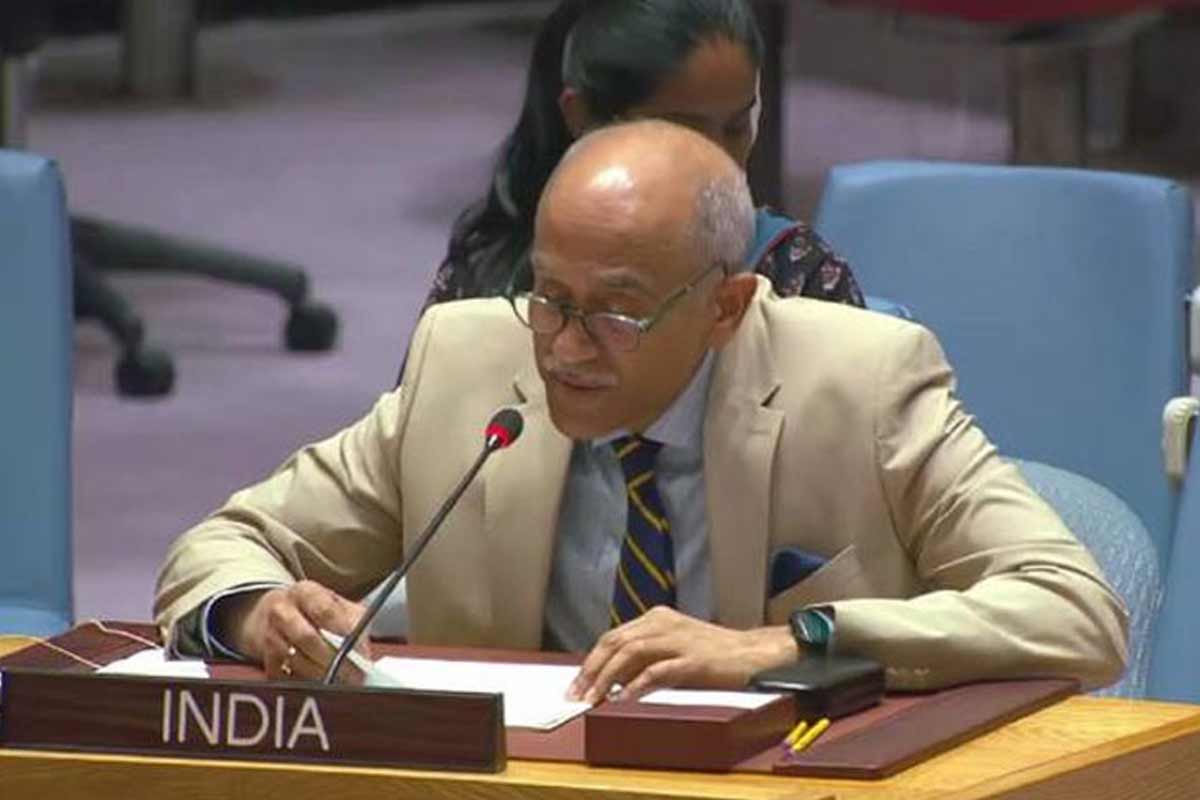
India has joined the demand for comprehensive reforms in the UN Security Council. Ambassador Parvathneni Harish made it clear, “If the United Nations is reformed, all permanent members in the new council must be given equal rights and responsibilities, including veto power.” The proposal to create a new category of separate permanent members without veto power or with limited powers has been strongly opposed by India.
Addressing the United Nations, Harish said, “India's position on the veto power is clear. If the veto power is retained, all permanent members of the reformed council should have the veto power. As long as this power remains, all members of the reformed Security Council should enjoy it.” He believes that if a new category of permanent members is created without a veto, then the countries will become 'second class' members of the United Nations. Said, “There will be no fundamental change in the decision-making process of the Council. Instead, the 5 members will maintain their control in the United Nations.”
Harish said, 'India's position on veto power is clear, if veto power is retained, all permanent members of the reformed council should have veto power.'
Not only that, Harish feels that one should be careful in exercising the veto power. Said, “Veto should be used with moderation, should not be a tool of narrow political interests.” Showing a mirror to the United Nations, India said, “So far 200 resolutions have been tabled in the UN Security Council, which have been vetoed 331 times. This incident has undoubtedly damaged the credibility of the Council.”
It should be noted that India has been demanding radical changes in the United Nations for a long time. As has been repeatedly said, the 15-member council created in 1945 does not reflect the reality of the 21st century, and India deserves permanent membership. Meanwhile, out of 15 members of the United Nations Security Council, only 5 countries are permanent members. They are China, France, Russia, America and Britain. The temporary members elected in the remaining 10 constituencies serve for a two-year term. India has repeatedly demanded an increase in the number of members of the Security Council, both permanent and non-permanent. According to Delhi, the reform initiative by increasing temporary members alone will fail practically.