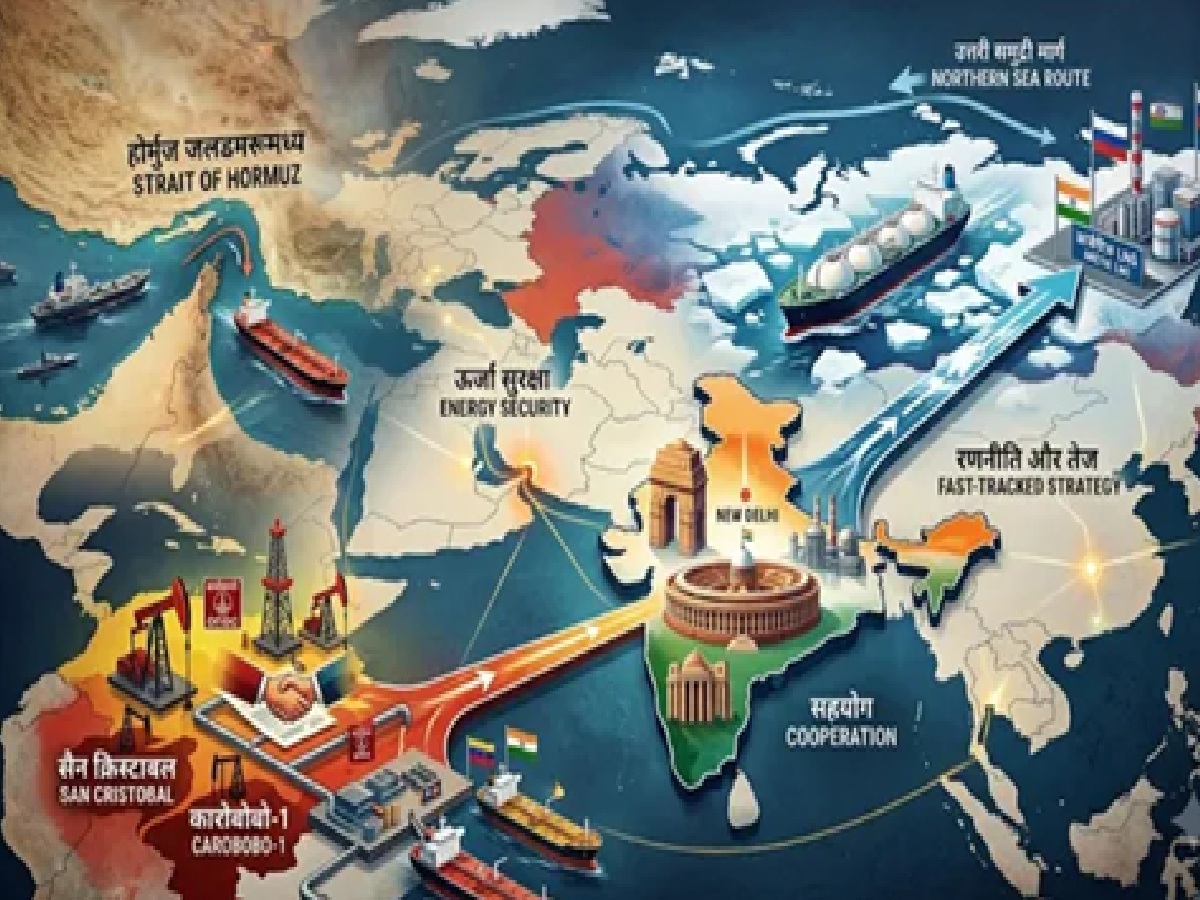
Amid rising tensions in international geopolitics and a looming crisis in the strategic Strait of Hormuz in West Asia, India has developed a comprehensive and foolproof “Plan B” for its energy security. To address any potential disruption or risk to oil and gas supplies from Gulf countries, India has significantly accelerated its diplomatic and commercial strategies. Under this initiative, India is preparing to import liquefied natural gas (LNG) from Russia’s frigid Arctic region, while simultaneously taking over the direct operation of oil blocks in Venezuela, a Latin American country. This masterstroke by India is expected to completely alleviate the potential for future fuel supply crises.
India’s focus on Russia’s Arctic region and the Northern Sea Route
India’s strategic and energy partnership with Russia is steadily reaching new heights. Recently, Russian Deputy Foreign Minister Andrei Rudenko made a major revelation, stating that India is showing keen interest in developing oil and gas in Russia’s remote and energy-rich Arctic region, as well as in expanding cooperation along the crucial Northern Sea Route. A comprehensive cooperation program has already been finalized between the two countries until 2029. This Russian Arctic route is poised to be a safe and convenient alternative source of LNG and crude oil imports for India in the future, reducing dependence on traditional sea routes from Gulf countries.
ONGC’s major agreement with Venezuela and the operation of oil blocks
In addition to Russia, India has also made a significant diplomatic move on the Venezuelan front. Under Venezuela’s new and flexible legal provisions, India’s state-owned company, ONGC Videsh Limited, is set to take direct operational control of the crucial San Cristobal and Carabobo-1 oil blocks. Until now, India had only been able to obtain limited crude oil from Venezuela, primarily to recover old dividends stuck in the past. However, under the new rules, ONGC has been granted complete freedom to directly operate the oil wells and produce crude oil regularly, avoiding the legal risk of US sanctions. This will provide an unprecedented boost to India’s energy independence.