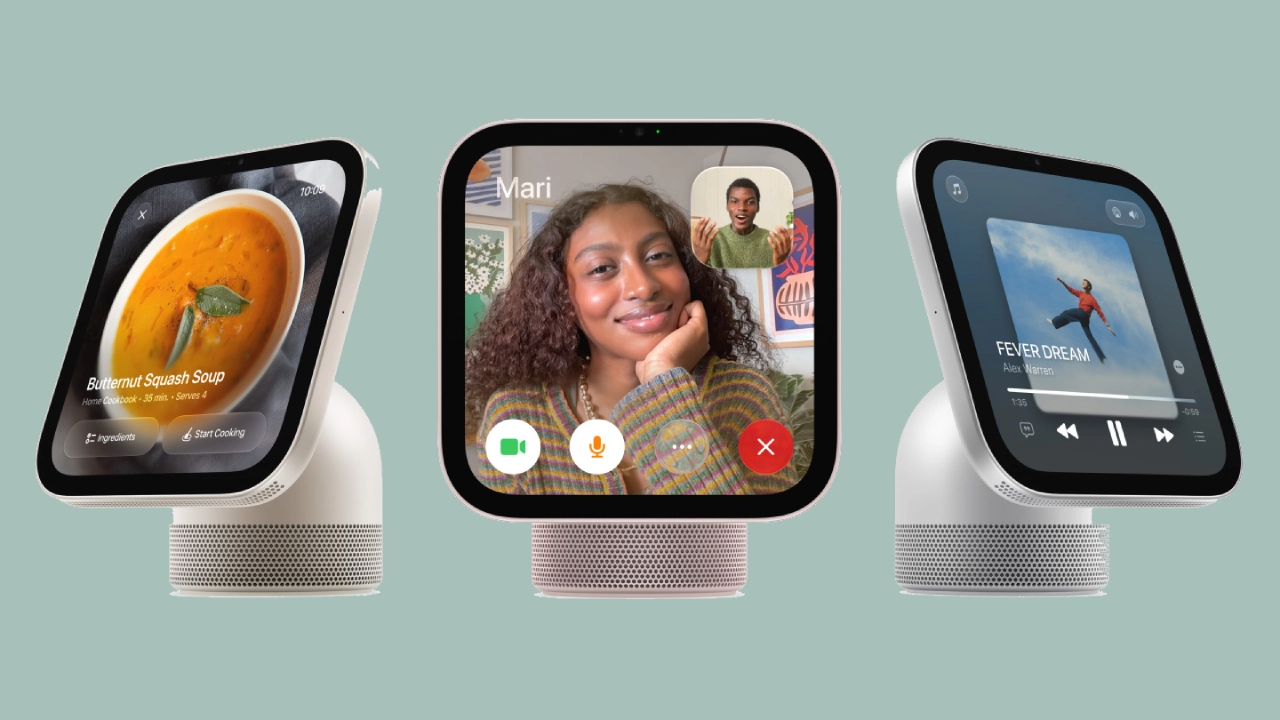
The wait is almost over. Apple HomeView arrives in India on November 13 at ₹39,900, but the bigger question is whether your home actually needs another Apple screen. Apple announced HomeView on October 13, and Indian buyers can pre-order it now.
Apple HomeView Is More Than a Smart Display
At ₹39,900, HomeView sits in an unusual position. It is not designed as a general-purpose iPad replacement, but it combines a dedicated home interface with entertainment, FaceTime, Siri AI and smart-home controls.
The core hardware is substantial:
| Feature | Apple HomeView |
| Display | 7-inch Liquid Retina, 1088 × 1088 pixels, 220 ppi |
| Brightness | 500 nits maximum, 0.3 nits minimum |
| Chip | Apple A18 |
| Camera | 12MP Center Stage, ƒ/2.4 |
| Tabletop audio | Two custom full-range drivers, down-firing woofer and dual force-cancelling passive radiators |
| Wall-mounted audio | Two custom full-range drivers with computational audio tuned for on-wall placement |
| Microphones | Four-microphone far-field Siri system |
| Sensors | Ambient light, temperature and humidity, accelerometer |
| Profiles | Recognises up to six people |
| Designs | Tabletop and wall-mounted |
The two models therefore should not be treated as acoustically identical. The tabletop version gets the larger speaker system with a dedicated woofer and passive radiators, while the wall-mounted version uses two full-range drivers designed specifically for on-wall placement. Both support Spatial Audio and computational audio. Apple’s official HomeView India product page and technical specifications provide the complete hardware breakdown.
The Real Catch Is the Apple Ecosystem
HomeView requires an iPhone running iOS 27.2 or later or an iPad running iPadOS 27.2 or later, plus Wi-Fi internet access. The device recognises up to six users, but that does not mean six completely independent accounts are stored on HomeView. A full personalised experience requires an Apple Account, a compatible iPhone or iPad and membership in the shared Home.
More importantly, Apple says personal content such as Messages and Calendar can be accessed when the paired iPhone or iPad is connected to the same Wi-Fi network, has been recently unlocked and HomeView recognises the user by face. That makes HomeView less independent than its dedicated-screen design might initially suggest.
Siri AI also needs to be split into two layers. Built-in Siri AI on HomeView can answer general questions and control the home, while more personalized capabilities such as taking action across apps and using personal context—require a paired Apple Intelligence-enabled iPhone or iPad.
Apple says Siri AI is initially available in English on HomeView and is currently in beta. Certain server-based Apple Intelligence features, including Siri AI, are subject to daily usage limits, with expanded access planned for a future fee.
HomeView also isn’t an iPad replacement. Its built-in app selection is narrower, while some additional apps are provided through iPhone and third-party audio/video app support is more limited than the broader iPadOS ecosystem.
Smart-Home Control Could Justify the Price
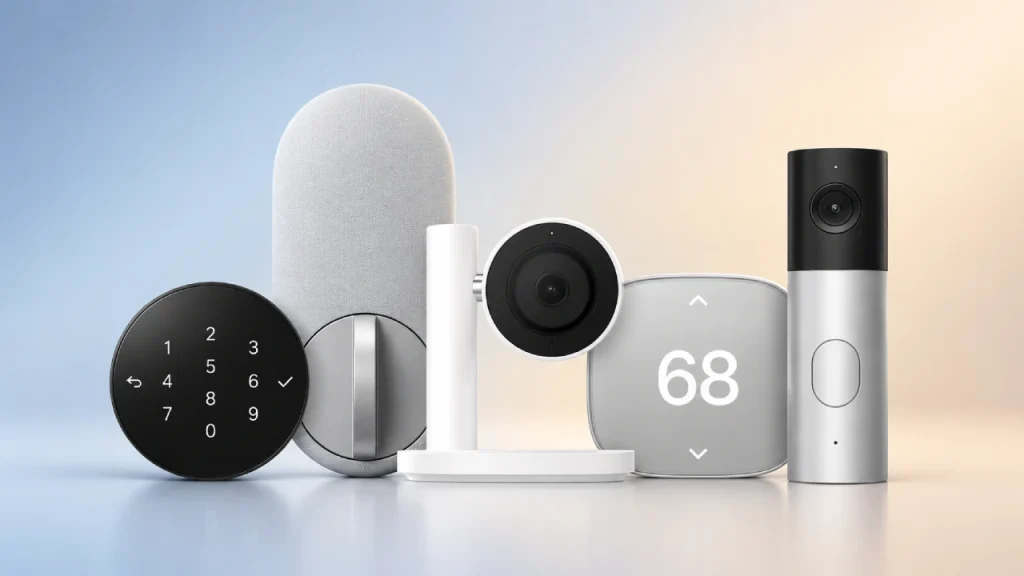
HomeView’s strongest reason to exist is the Apple Home ecosystem. The device can control compatible HomeKit and Matter accessories, show camera feeds and manage scenes and automations. Its Home Camera face can display up to nine video feeds simultaneously.
However, advanced camera intelligence can introduce an ongoing subscription cost. Apple says features such as video summaries and natural-language search for HomeKit Secure Video recordings require an eligible iCloud+ plan and setup using an Apple Intelligence-enabled iPhone or iPad. Some intelligent camera-recognition features also depend on compatible Apple Intelligence hardware.
In India, iCloud+ currently starts at ₹75 per month for 50GB, including HomeKit Secure Video support for one camera. The 200GB plan supports up to five cameras, while 2TB and higher plans support unlimited cameras. That means buyers considering HomeView as a serious security dashboard should account for subscription requirements alongside the hardware.
Apple’s new Home Collection is another consideration. Apple says the collection begins in December, with select accessories arriving in early 2027, but its announced availability is limited to the U.S., UK and Canada. There is no confirmed Indian launch date for the Home Collection.
Wall Mounting Can Push the Cost Higher
This is where the ₹39,900 headline price needs careful reading.The wall-mounted HomeView cannot operate without a compatible mount and power solution. Apple lists three Schneider Home options:
| Mount | Listed India price | Setup |
| Setup Power Mount USB-C Wall Connector |
₹6,900 | DIY; requires compatible 20W+ USB-C power adapter sold separately |
| Power Mount AC Wired | ₹8,900 | Hardwired; qualified electrician required |
| Power Mount PoE Wired | ₹14,900 | Power and network over Ethernet; planned for early 2027 |
Apple’s store currently shows the AC Wired and PoE Wired options as unavailable to order, so listed pricing should not be confused with immediate availability. The USB-C Wall Connector is the simplest option. It costs ₹6,900, but its required power adapter is sold separately and must be at least 20W. That means the wall-mounted setup starts at ₹46,800 before the additional power-adapter cost.
The AC Wired version costs ₹8,900 and requires line-voltage electrical installation by a qualified electrician, adding a potential installation charge. Schneider confirms that the mount is designed for professional wiring. The Schneider Home Power Mount range provides detailed installation information for all three options.
This makes the tabletop version considerably more flexible for renters or buyers who do not want electrical work. The wall-mounted model makes more sense when permanent placement and a cleaner installation are priorities.
What Do You Gain Over an iPad, HomePod or iPhone?
An existing iPad can already provide a screen for Home controls, entertainment, FaceTime and other apps. An iPhone can handle personal tasks and remote smart-home control, while a HomePod can provide hands-free Siri and audio. HomeView’s proposition is different: it puts a persistent home interface, camera feeds, household profiles, Siri and smart-home controls in one dedicated location.
That can be useful for a family that wants a shared dashboard rather than constantly passing around a personal device. But buyers who already have an iPad mounted or positioned in a convenient place may find the dedicated hardware harder to justify. The same applies to HomePod owners. HomeView adds a display, camera and visual Home interface, but its value depends on whether those additions solve a real household need.
Is Apple HomeView Worth ₹39,900?
- Buy it if: your household already uses several Apple devices, you actively use Apple Home or compatible Matter accessories, and you want a dedicated screen for household control, FaceTime, music and Siri.
- Consider the tabletop model if: placement flexibility matters, you rent your home or you want to avoid additional mounting and electrical costs.
- Consider wall mounting if: you want HomeView permanently positioned in an entryway, hallway or another central location and are comfortable budgeting for the required mount, power solution and installation.
- Skip it for now if: you mainly want a general-purpose tablet, need broad third-party apps, or your smart-home setup sits largely outside Apple’s ecosystem.
- There is also one major unknown: real-world performance. Audio quality, Siri responsiveness, camera behavior, and everyday usability have not yet been independently evaluated, so a definitive hands-on verdict should wait until the device reaches buyers.
When Will Apple HomeView Be Available in India?
- Apple says HomeView and HomeView (Wall Mounted) will become available in India on November 13, 2026. Pre-orders are already open through Apple’s Indian store.
Does the Wall-Mounted HomeView Include Everything Needed to Install It?
- No. Apple states that the wall-mounted model requires a compatible wall mount, USB-C cable and power adapter, all sold separately. The USB-C mount requires a compatible adapter of at least 20W, while hardwired options require the appropriate installation.
Can HomeView Work Without an iPhone or iPad?
- Basic functions remain available to guests and unrecognised users, including smart-home controls, weather, timers and music. But a full personalised experience requires an Apple Account and compatible iPhone or iPad.
Does Siri AI on HomeView Work Independently?
- HomeView has built-in Siri AI for general questions and smart-home tasks. Personalised capabilities require a paired Apple Intelligence-enabled iPhone or iPad. Siri AI is initially available in English and is currently in beta, with usage limits applying to certain server-based Apple Intelligence features.
Does HomeView Need an iCloud+ Subscription?
- Not for basic HomeView operation. However, advanced HomeKit Secure Video features such as video summaries and natural-language camera search require an eligible iCloud+ subscription, and some Apple Intelligence camera features have additional compatible-device requirements.
The Verdict for Indian Buyers
At ₹39,900, Apple HomeView makes the most sense as a dedicated Apple household hub, not as an iPad alternative. The tabletop model offers the simpler entry point, while wall mounting demands extra hardware, power and potentially installation costs. For Indian buyers, the real decision is whether those ecosystem benefits justify the added commitment.