Army Blows Up Bomb Chemicals in Iowa Amid Toxic Dust Concerns/ NEWSLOOKS/ WASHINGTON/ Jehan Mansour/ The Army detonated the nation’s entire lead azide stockpile Wednesday morning at an ammunition plant in Middletown, Iowa. EPA monitors around the plant reported no airborne lead during the first 15 minutes, with further testing planned. The operation followed evacuation guidance, school closures and a legal challenge over potential lead contamination.

Iowa Army Detonation: Quick Look
- The Army destroyed approximately five tons of degraded lead azide stored in 68 barrels.
- Two loud booms were heard around 9 a.m. Central time Wednesday.
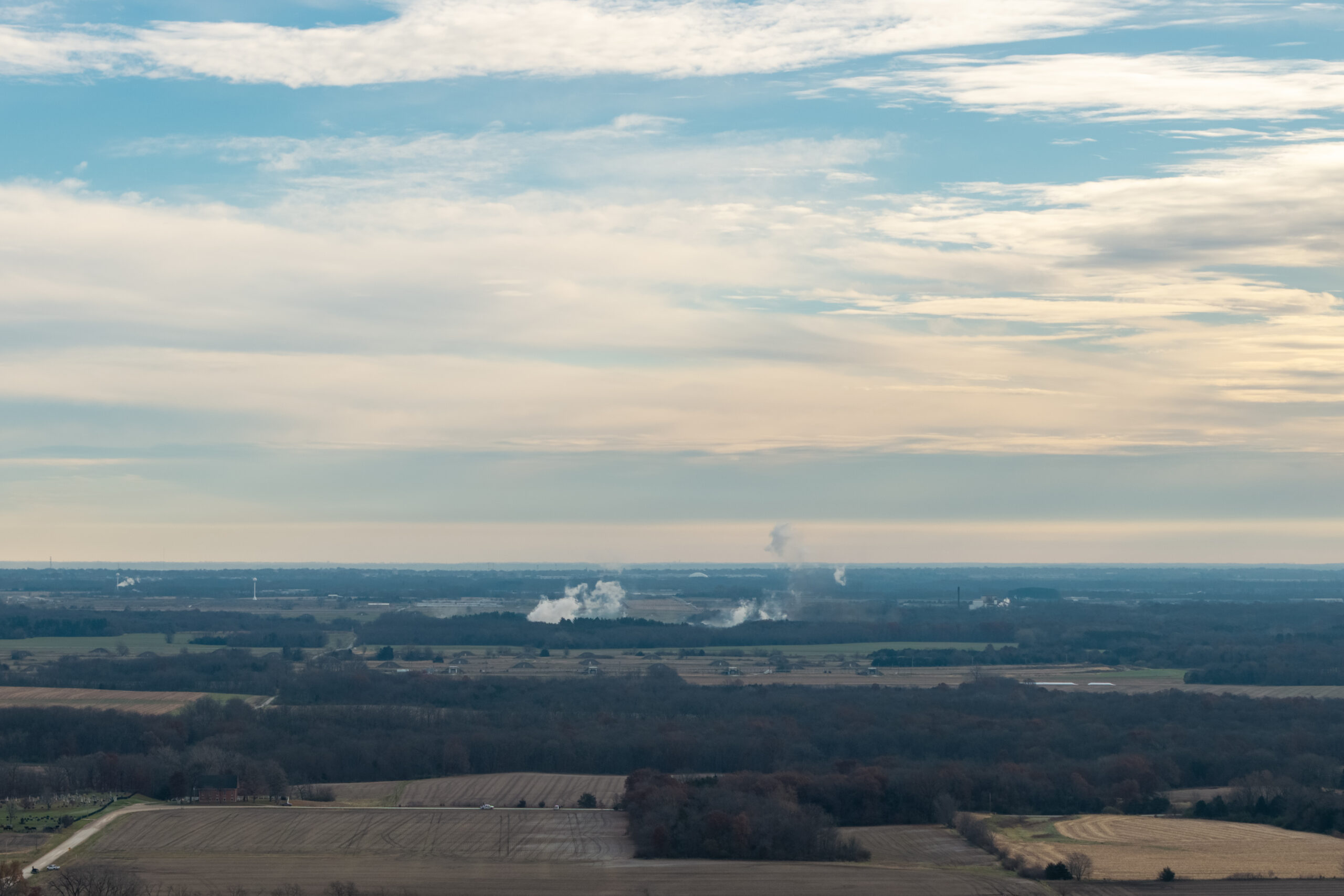
- Video showed two white plumes rising before quickly dissipating.
- EPA monitors reported no airborne lead during the first 15 minutes after the blast.
- Those initial readings do not establish the full environmental outcome.
- Officials had encouraged residents within five miles to evacuate.
- Protective measures included two-story barriers, gels, foams and a plan to use more than 100,000 gallons of water.
- A federal appeals court cleared the operation Monday.
- Residents remain concerned about possible effects on homes, farms and water.


Iowa Army Detonation: Deep Look
Army Destroys Unstable Stockpile at Middletown Plant
MIDDLETOWN, Iowa — The U.S. Army detonated the nation’s entire stockpile of lead azide Wednesday morning, destroying approximately five tons of deteriorating bomb-making material after warning that colder temperatures increased the risk of an uncontrolled explosion.
Journalists heard two loud booms around 9 a.m. Central time at the Iowa Army Ammunition Plant. Video recorded several miles away showed two white plumes rolling above the site before quickly dissipating.
The operation ended weeks of preparation and uncertainty over when the Army would destroy the 68 barrels. It also began a period of environmental monitoring intended to assess whether lead dust escaped into surrounding communities.
Initial EPA Monitors Report No Airborne Lead
The Environmental Protection Agency said monitors around the ammunition plant reported no lead in the air during the first 15 minutes after the detonation.
The agency said testing would take place during and after the operation to check lead levels. The early readings provided an initial snapshot rather than a complete assessment of potential contamination.
President Donald Trump welcomed the preliminary reports, writing on social media that the “Army’s mitigation efforts have far exceeded expectations.”
Before the blast, residents had raised concerns about possible effects on drinking water, farmland, animals and their homes.
Residents Prepare as Schools and Businesses Close
Officials encouraged people living within five miles of the plant to evacuate to reduce potential exposure to airborne lead.
Schools that had not already closed for Thanksgiving canceled classes. A nearby gas station posted a notice saying it would reopen once conditions were safe.
Some residents sealed windows and doors. Others stopped beside a road upwind from the plant to watch the explosion despite warnings to remain indoors.
Officials expected winds to carry any plume southwest toward Missouri and away from Burlington, a Mississippi River city with just under 25,000 residents.
That direction still left hundreds of homes and farms potentially in the path of lead-containing dust.
Weather and Additional Safeguards Delayed Operation
The Army originally scheduled the detonation for the previous Friday but changed the date three times amid public objections and efforts to improve safety precautions.
Court documents said the delays allowed more time to prepare protective measures and wait for favorable winds.
The forecast around Wednesday’s blast called for a gentle breeze toward the southwest and temperatures near freezing. Officials had identified falling temperatures as a reason the unstable material could not remain in storage indefinitely.
“Inaction is no longer an option,” said Maj. Gen. Eric Shirley, who led the operation.
Acting Army Secretary Adam Telle also sought to reassure residents that the public should not panic.
Barriers and Dust-Suppression Materials Surround Bunkers
The Army installed additional “blast barriers” around the bunkers holding the stockpile.
Concrete and sand barriers rose two stories high. An Army video showed the storage area surrounded by an earth berm and sand-filled blocks.
Ballistic gels and foams were intended to absorb lead dust. The Army also planned to use more than 100,000 gallons of water to suppress the plume.
Those measures were designed to limit contamination while allowing officials to eliminate material they considered too dangerous to handle through other disposal methods.
Stockpile Had Been Stored in Iowa Since 2009
The lead azide was moved to the Iowa plant from military bases across the country in 2009according to Robert Cekada, director of the Bureau of Alcohol, Tobacco, Firearms and Explosives.
The chemicals, used in munitions production, were stored in barrels in case the military needed them again.
During an inspection in March, workers discovered that the material had partially crystallized. Officials said that deterioration made it sensitive to friction and cold, creating a risk of spontaneous detonation.
The Army assembled experts to evaluate disposal methods. They concluded that alternatives, including thermal treatment and chemical neutralization, were less safe than a controlled explosion.
Environmental organizations sued to halt the operation, but a federal appeals court ruling Monday allowed it to proceed.
The court found that the EPA had adequately incorporated safeguards to minimize the dispersal of lead dust.
Residents nevertheless expressed both concern and resignation. Some questioned the timing immediately before Thanksgivingwhile acknowledging that the deteriorating stockpile required action.
“I don’t think lead danger goes away any time soon,” said West Burlington resident Lucy Giehl. “It seems someone might have thought about all of this a little sooner before it came to this.”
With the blast completed, continued testing will be central to assessing its environmental consequences.
More on US News