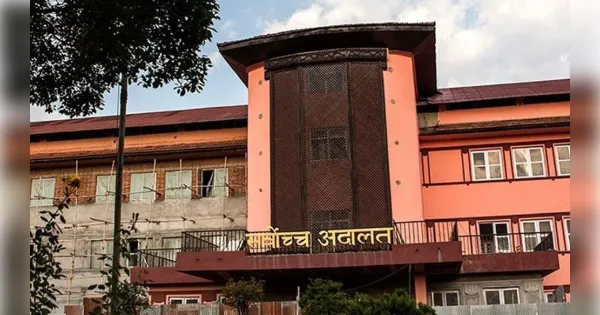
Kathmandu. Nepal Bar Association has warned of bench boycott in protest against the decision of Chief Justice of Nepal’s Supreme Court (Supreme Court) Dr. Manoj Kumar Sharma to include junior judges in the constitutional bench by bypassing senior judges.
The Bar Association has drawn the attention of Chief Justice Manoj Sharma, demanding to maintain uniformity by including senior judges as per the tradition in the formation of the Constitutional Bench.
Nepal Bar Association has sent an attention letter to Chief Justice Sharma and suggested to adopt one of two procedures for the constitutional session.
The Bar has suggested selecting four judges of the constitutional bench on the basis of seniority. If this is not possible, then a demand has been made to select the judges included in the roster of judges for the Constitutional Bench through the Gola process.
The Supreme Court administration has ordered to send about six writ petitions related to the Assets Investigation Commission to the constitutional bench.
After these petitions were presented in the Constitutional Court, the Chief Justice decided to hear them by constituting a constitutional bench comprising four junior judges and the Bar has reacted to it.
Bar President Vijay Mishra had indicated that if the Supreme Court administration did not change its decision then he would not be forced to go for arguments in these cases. However, the date of hearing of these cases has not been decided yet.
Article 137 of the Constitution of Nepal provides for the formation of a Constitutional Court under the chairmanship of the Chief Justice. Under this, the Chief Justice selects four other judges on the recommendation of the Justice Council.
The bar says that it had verbally put forth its demands earlier, but no decision was taken on it. The Bar has raised objections several times regarding the formation of the Constitutional Court.
The Bar has said in its attention letter that it is more serious and saddened by the news of cases pending in other sittings being sent to the constitutional bench on the basis of administrative decision without the consent of the parties concerned and without discussion in the concerned bench.
The Bar says that selection of judges on the basis of the nature of cases may raise questions about the impartiality of the bench.
Whenever any kind of decision or order comes from such a bench, various types of apprehensions and questions arise. Therefore, its credibility should be established by setting clear criteria for the selection of the Ijalas.
The Bar has demanded to immediately convene a full meeting of the Supreme Court and seriously discuss it and formulate a policy for bench formation on the basis of seniority. The Bar has a clear stand that if selection of judges on the basis of seniority is not possible then judges should be selected through the Gola process.
The Bar has also sent a copy of the letter to all the judges of the Supreme Court and has expressed its objection to sending the cases pending in other benches to the Constitutional Court through administrative decision. The Bar has described this as contrary to established tradition.
The Bar has said in its statement that such actions which are contrary to the established belief, practice and tradition can create a serious crisis on the dignity, reputation and public trust of the judiciary. He has already drawn attention to this matter.
Bar President Mishra has issued a statement saying that if the Chief Justice does not change his decision on the formation of a constitutional bench, then no lawyer associated with the bar will participate in the debate in the hearing of any issue in such a bench.