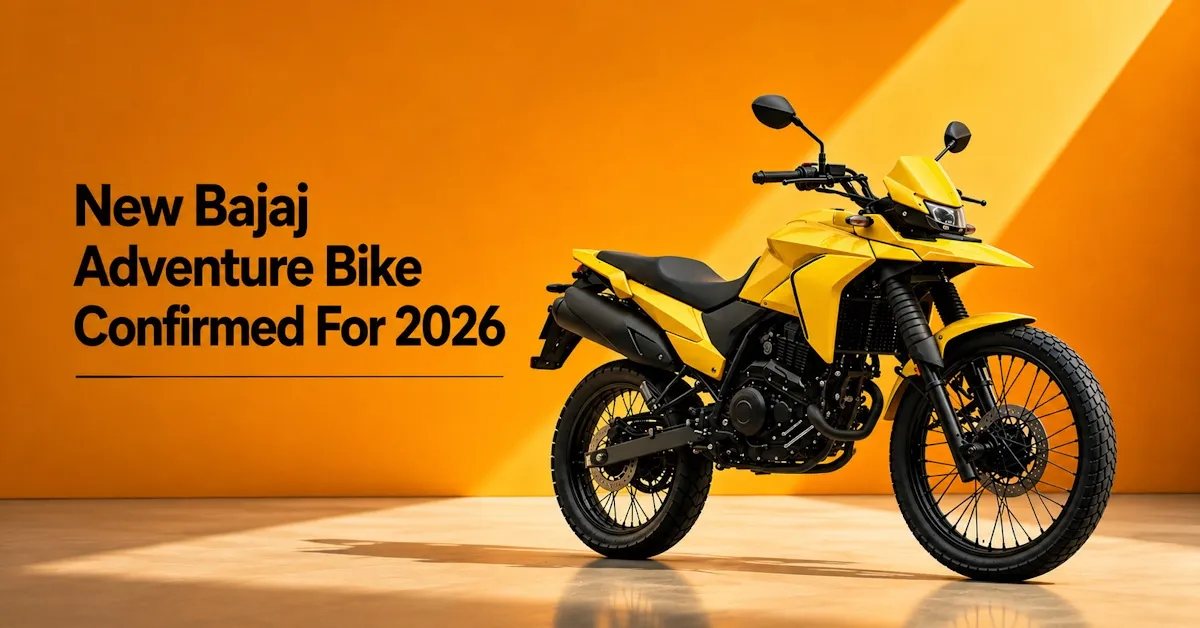
Bajaj is preparing to put its own badge on a purpose-built adventure motorcycle again, roughly three decades after the SX Enduro disappeared from the market. The company’s Brazil operation has confirmed that a new on-road/off-road motorcycle will arrive there before the end of 2026, while test bikes have already been seen running in India.
For Bajaj, that makes this more than another Pulsar spin-off. The last comparable motorcycle carrying the Bajaj name was the SX Enduro, launched in 1995. The later Pulsar AS200 does not really fit the same description. It was essentially a semi-faired road-going derivative of the Pulsar 200NS rather than a motorcycle developed around trail and off-road use.
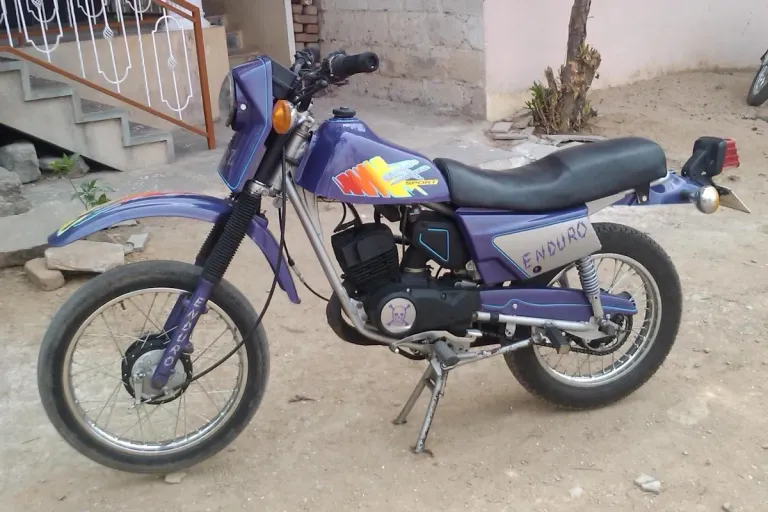
The SX Enduro came from a very different era. It used the 99.7cc two-stroke engine from the Kawasaki-Bajaj KB100 family, with the motor tuned to favour low-end response. Period specifications put output at roughly 11 bhp.
Its high front mudguard, dual-purpose tyres and stripped-back styling gave it the look of a small dirt bike, although much of the underlying chassis and suspension came from the KB100. It never became a major seller, and Bajaj did not follow it with another dedicated adventure or dual-purpose model carrying its own badge.
That gap is striking because Bajaj has since accumulated considerable experience in this category through KTM. It manufactures KTM motorcycles in India and currently produces machines such as the 250 Adventure, 390 Adventure and 390 Enduro R. But the upcoming motorcycle is expected to sit below those products and chase a much more accessible price point.
Bajaj has not released the new bike’s engine specifications. Test mules, however, point towards a relatively simple, lightweight machine rather than a high-performance 350cc or 400cc ADV.
The strongest possibility is the 249cc single-cylinder air/oil-cooled engine used in the Pulsar N250. In that motorcycle, it produces 24.5 PS and 21.5 Nm and is paired with a five-speed gearbox. Bajaj could alter gearing and engine calibration for stronger low-speed response if it uses this motor, but that remains unconfirmed.
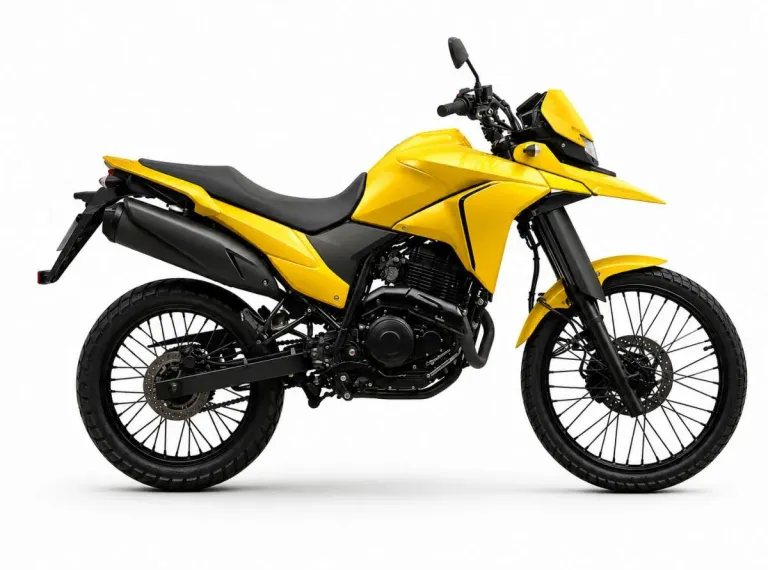
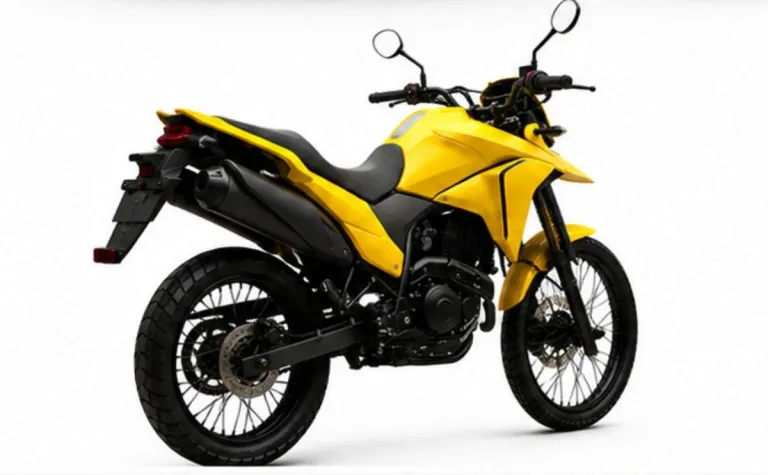
The test bike itself gives away more. It has a tall front beak, fork gaiters, an upswept exhaust, a long single-piece seat and wire-spoke wheels. The wheel combination appears to be 19 inches at the front and 17 inches at the rear. Long-travel conventional telescopic forks and a rear monoshock are visible, along with disc brakes at both ends. Switchable ABS is also expected because it is useful when riding on loose surfaces.
The overall package looks closer to an everyday dual-purpose motorcycle than a rally-style machine.
Bajaj has confirmed the trail motorcycle for Brazil in 2026, with company officials indicating an arrival before Christmas. An India launch is expected, although Bajaj has not announced an official date here yet. The ‘Trekker’ name has also been trademarked, but there is no confirmation that it will be used on the production bike.
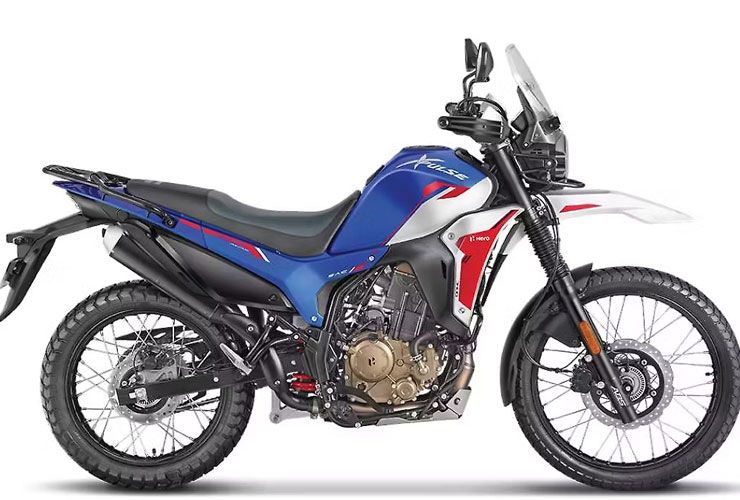
Depending on final specification, an ex-showroom price of roughly Rs 1.5 lakh to Rs 2 lakh looks realistic. That would place it in the same broad shopping zone as the Hero Xpulse 210 and below larger, more touring-focused machines such as the Suzuki V-Strom SX and Yezdi Adventure.