
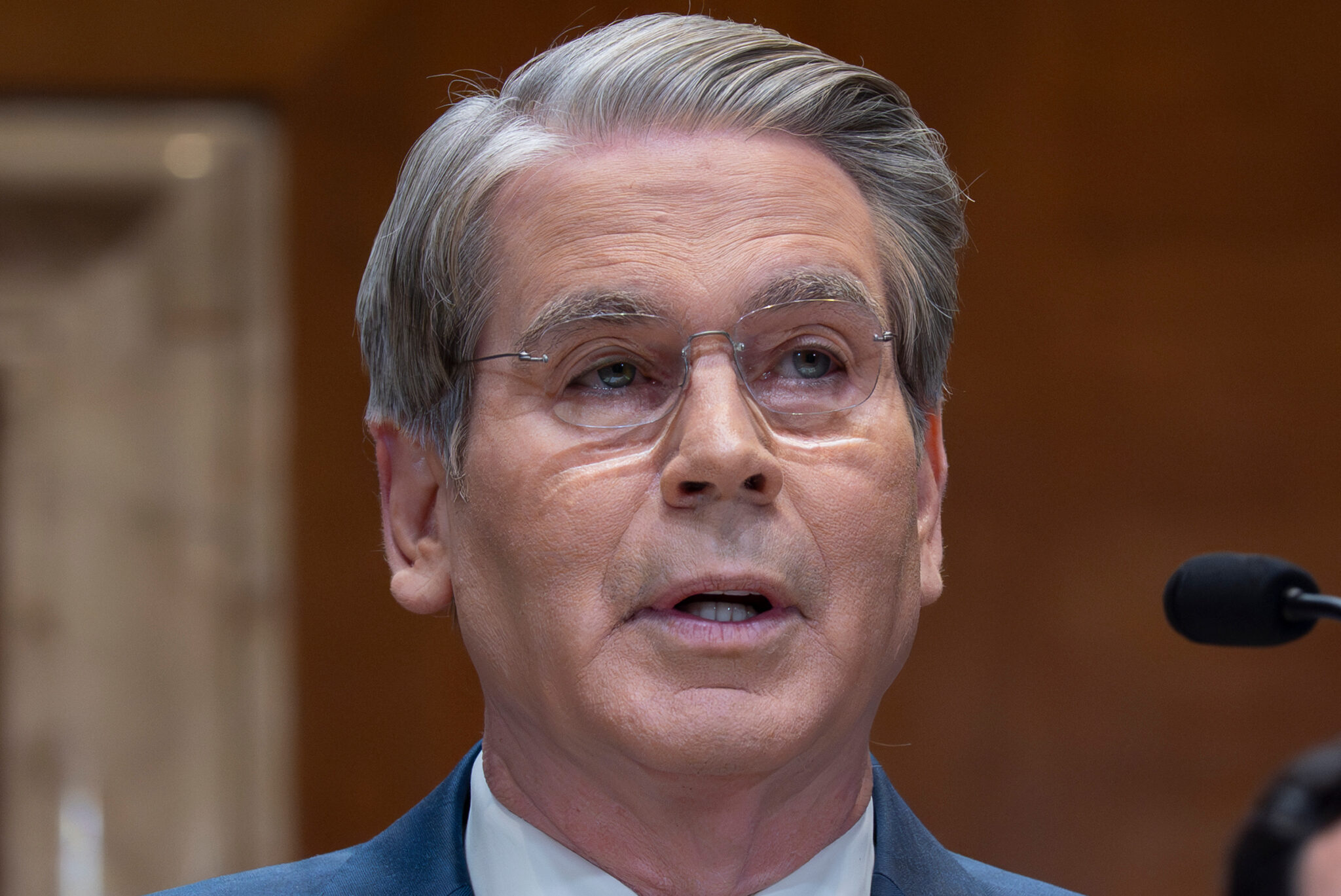

Bessent Says US Ends Iranian, Russian Oil Waivers as Blockade Tightens/ TezzBuzz/ WASHINGTON/ J. Mansour/ Morning Edition/ Treasury Secretary Scott Bessent said Friday the U.S. will not renew oil waivers for either Iran or Russia, signaling tougher enforcement of sanctions during the ongoing Iran conflict. Bessent said Iranian oil exports are effectively blocked under the current U.S. naval blockade, while Russian oil waivers granted earlier this year are expected to expire without another extension. The move comes as global energy markets remain volatile due to the Strait of Hormuz crisis and continued U.S.-Iran tensions.
- Treasury will not renew Iran oil waivers
- Russian oil waiver extensions are also unlikely
- Bessent says “there’s no oil coming out” of Iran
- U.S. blockade continues to choke Iranian exports
- Officials warn Iran may soon be forced to shut production
- Russian waiver was originally issued in March
- Global oil markets remain tense over Hormuz disruptions
US Refuses to Renew Iranian Oil Waivers
WASHINGTON — Treasury Secretary Scott Bessent said Friday that the United States will not renew sanctions waivers allowing Iranian oil sales, making clear that the Trump administration is tightening economic pressure on Tehran during the ongoing regional conflict.
Speaking to The Associated Press, Bessent said any new waiver for Iranian oil currently at sea is completely off the table.
“Not the Iranians,” Bessent said.
“We have the blockade, and there’s no oil coming out.”
His comments reinforce the administration’s strategy of combining diplomacy with maximum economic pressure as talks with Iran continue through Pakistani mediation.
The White House has insisted that sanctions and the naval blockade will remain in place until Tehran agrees to meaningful and verifiable restrictions on its nuclear program.
Iran Faces Risk of Production Shutdowns
Bessent warned that the economic impact on Iran could deepen within days.
He said that because exports have effectively stopped, Iranian producers may soon be forced to reduce or halt oil production entirely.
“And we think in the next two, three days, they’re going to have to start shuttering production, which will be very bad for their wells,” Bessent said.
Shutting oil wells can create serious long-term damage, making it difficult and expensive to restart production later.
That threat adds major pressure on Iran’s already fragile economy, which depends heavily on energy exports for government revenue and foreign currency.
The administration believes this financial strain could push Tehran toward a broader diplomatic agreement.
Russian Oil Waivers Also Nearing an End
Bessent also said the U.S. does not plan to renew a separate waiver allowing purchases of Russian oil and petroleum products that are already at sea.
That waiver had originally been issued in March to prevent severe disruptions in global energy markets after crude prices surged above $100 per barrel.
At the time, the goal was to stabilize supply and avoid major price shocks for vulnerable countries.
Although Treasury briefly renewed the waiver after Bessent initially suggested it would expirehe now says another extension is unlikely.
“I wouldn’t imagine that we’d have another extension,” Bessent said.
“I think the Russian oil on the water has been largely sucked up.”
That suggests the administration believes the temporary supply risk has largely passed.
Why Treasury Changed Its Position
Bessent explained that the earlier decision to extend Russian oil waivers came after urgent appeals from poorer nations during the recent World Bank and International Monetary Fund meetings.
He said more than 10 vulnerable countries approached him directly asking for help.
“More than 10 of the most vulnerable and poorest countries came to me and said, ‘Can you help?’” Bessent said.
“It was for those vulnerable and poor countries.”
That temporary relief was designed to prevent energy shortages and economic damage in nations heavily dependent on imported fuel.
But now, with much of that oil already delivered or absorbed into the market, Treasury sees less reason to continue the exception.
Strait of Hormuz Crisis Still Driving Markets
The decision comes as global energy markets remain highly unstable because of the war involving Iran, Israel, and the United States.
The closure and disruption of the Strait of Hormuz has created major supply concerns for oil traders around the world.
The narrow waterway handles roughly one-fifth of the world’s traded oil, making it one of the most important shipping lanes in global energy markets.
Even limited disruptions can send prices sharply higher.
The U.S. naval blockade and Iranian restrictions on tanker traffic have kept pressure on global supply chains and contributed to sharp swings in Brent crude prices throughout the week.
Investors continue watching every diplomatic development for signs of whether supply could normalize.
Blockade Remains Central to Trump Strategy
President Donald Trump has made the blockade one of the most aggressive tools of his Iran strategy.
Defense Secretary Pete Hegseth said Friday the blockade has now gone “global,” with U.S. forces seizing additional Iranian-linked vessels in the Indo-Pacific.
The Pentagon says 34 Iranian ships have now been prevented from exiting the Strait of Hormuz.
Trump has repeatedly said he is in no rush for a peace deal and warned Iran that economic collapse will continue if it refuses to abandon its nuclear ambitions.
Treasury’s refusal to renew oil waivers fits directly into that pressure campaign.
Rather than offering sanctions relief, the administration is signaling that financial pain will increase unless Tehran changes course.
Energy Prices and Inflation Remain a Concern
While the White House believes tougher sanctions strengthen its negotiating positionhigher oil prices remain a political risk at home.
Gas prices and fuel costs have already risen sharply, contributing to inflation concerns for American consumers.
Oil price spikes also increase transportation costs, food prices, and business expenses across the economy.
That creates political pressure for the administration ahead of the midterm elections, especially as voters remain sensitive to the cost of living.
Bessent’s earlier waiver extension for Russian oil showed that the White House is willing to make limited adjustments when global market stability is at risk.
But Friday’s message was much firmer.
For Iran, there will be no new relief.
Economic Pressure Before Diplomatic Breakthrough
At the same time Bessent delivered his remarks, White House officials confirmed that special envoy Steve Witkoff and Jared Kushner are heading to Pakistan for new talks involving Iranian representatives.
The administration says it has seen “some progress” from Tehran but still wants a unified proposal on nuclear restrictions.
That means diplomacy and economic warfare are happening at the same time.
The message from Washington is clear: talks are welcome, but sanctions relief will not come first.
Iran must make concessions before financial pressure eases.
For now, the blockade stays, the waivers expire, and the global oil market remains on edge.
More on US News
Comments are closed.