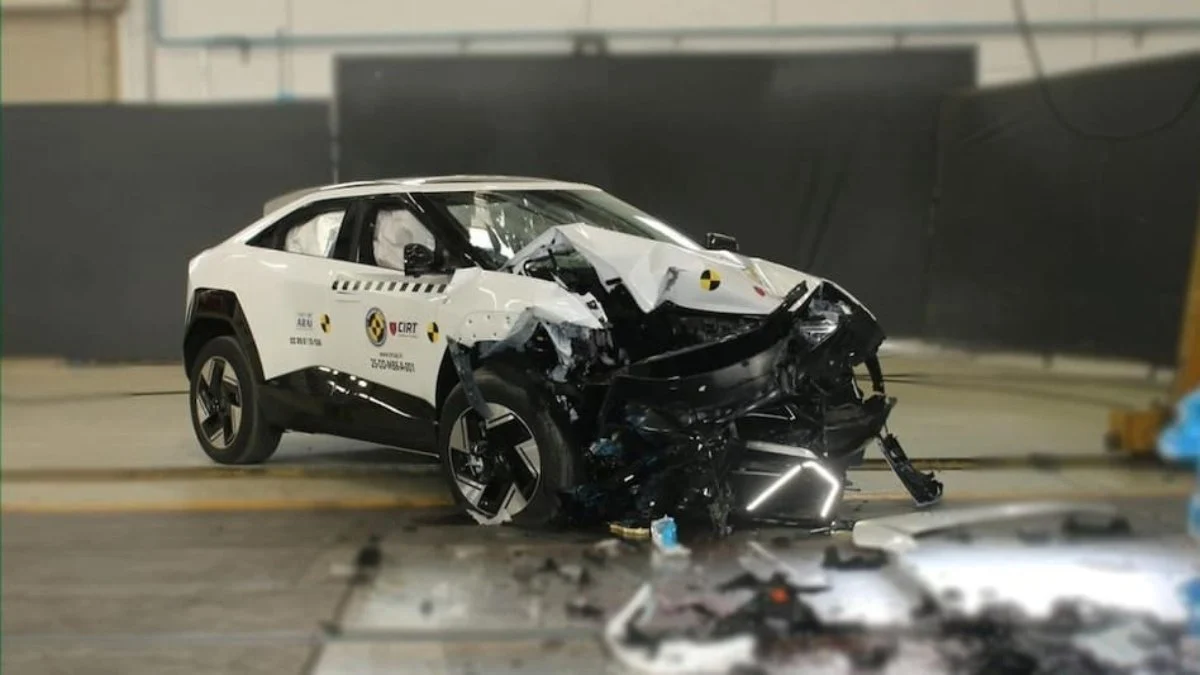
Automobile Desk: A big change can be seen in the Indian automobile market regarding the safety of vehicles. The Union Ministry of Road Transport and Highways is planning to implement the new and strict version 2.0 of India NCAP (New Car Assessment Program) from October 2027. The direct objective of this new framework is to bring the loss of life and property in accidents on Indian roads to the minimum level and to bring the cars manufactured in the country at par with global safety standards.
In the current system, the safety of the passengers sitting inside the car at the time of an accident is mainly considered. However, the scope of protection in the new Bharat NCAP 2.0 will not be limited only to the time of crash. Under the new rules, vehicles will be tested on four major pillars like accident prevention technology, safety during collision, protection of other people walking on the road and response of the car immediately after the accident.
Vehicles will undergo 5 stringent crash tests instead of 3
After the implementation of the new rules, vehicle manufacturers will have to undergo 5 different crash tests. Till now mainly three tests are conducted to decide the star rating. The new system will include offset frontal impact at a speed of 64 km/h, full-width rigid barrier at 50 km/h, lateral impact at 50 km/h, pole side impact at a speed of 32 km/h and rear impact at a speed of 50 km/h. These detailed tests will provide an accurate picture of the car's body structure and metal strength.
Accident prevention technologies will get a place
Now cars will not only measure the amount of damage caused at the time of a collision, but will also measure how capable the vehicle is of avoiding an accident. Bharat NCAP 2.0 will rigorously evaluate active safety technologies like Advanced Driver Assistance Systems (ADAS), Automatic Emergency Braking, Lane Departure Warning and Blind Spot Monitoring. If a vehicle's sensor system warns the driver of danger in time or prevents a collision by applying the brakes itself, the car will be given extra points.
Emphasis on safety of pedestrians and two-wheeler riders
In road accidents, not only car riders but also a large number of pedestrians, cyclists and two-wheeler riders are affected. Keeping this in mind, Vulnerable Road User Protection has been included in the new framework. Under this, the design of bumpers, bonnets and windshields of vehicles will be examined so that the risk of serious injury to the head and body in case of a car colliding with a person can be minimized.
Rescue support will be available immediately after the accident
The first minutes after an accident are considered extremely critical for any injured person. The post-crash response system will also be tested under Bharat NCAP 2.0. In this, it will be seen whether the doors of the car automatically unlock as soon as the crash occurs and whether the fuel supply stops or not. Along with this, technologies like Automatic Emergency Call System will be tested, which transmits the exact location of the vehicle to the rescue team immediately after the accident.
After these proposed changes from October 2027, vehicle companies will have to work afresh on safety designing, while car buyers will get a chance to understand the safety capability of vehicles in more transparency and detail.