
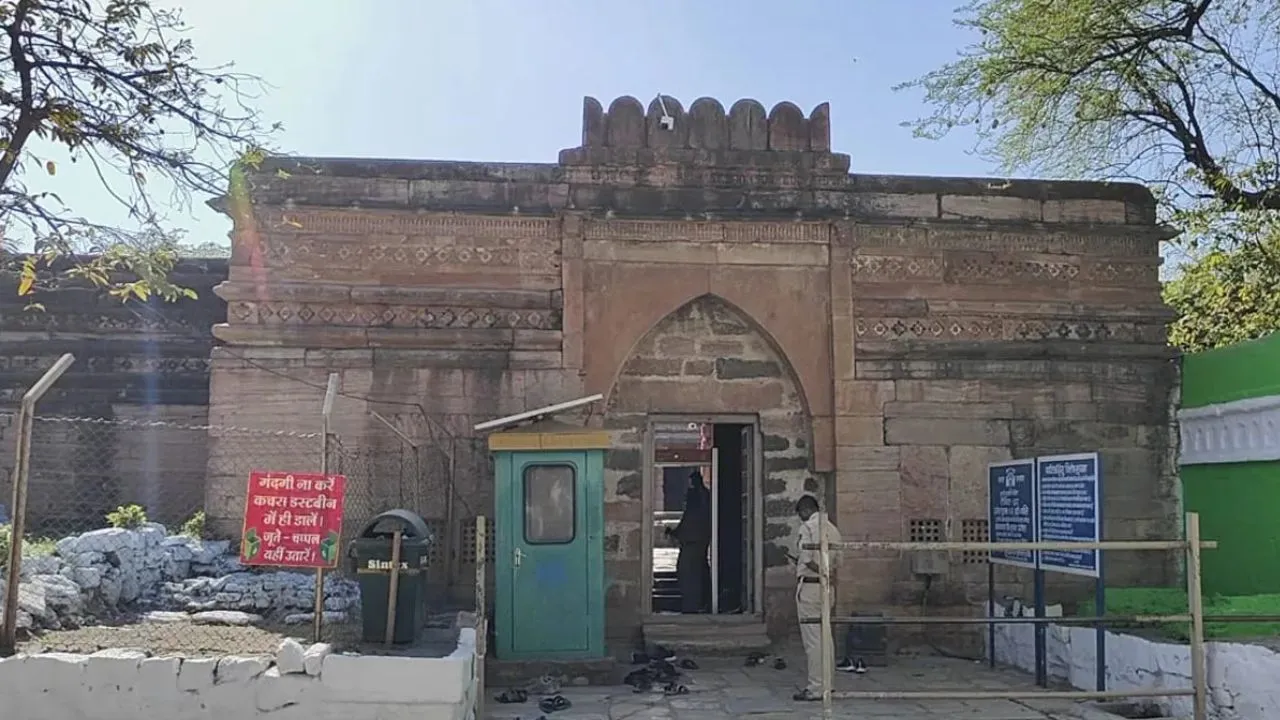
Bhojshala controversy: Supreme Court told Madhya Pradesh government to give Muslims alternative places for namaz

Bhojshala Supreme Court Hearing: In the historical Bhojshala-Kamal Maula complex dispute located in Dhar, the Supreme Court has given relief to the Muslim side and agreed to hear their petitions. However, the court refused to allow namaz inside the Bhojshala premises for the time being. Along with this, the Madhya Pradesh government has been instructed to make arrangements in some open space adjacent to the campus for offering Namaz between 1 pm to 3 pm on Friday.
A bench of Chief Justice Surya Kant, Justice Joymalya Bagchi and Justice V. Mohan issued notices on the petitions challenging the May 15, 2026 judgment of the Madhya Pradesh High Court. In its decision, the High Court had considered the Bhojshala-Kamal Maula complex as the temple of Mother Saraswati and had banned offering Namaz in the complex.
Denial of interim stay on HC order
At present, the Supreme Court has refused to impose any interim stay on the High Court order. This means that the system implemented after the decision of the High Court will continue for the time being. However, the court has sought responses from all parties and directed to list the matter for final hearing. Indications have been given that a detailed hearing may be held after about three weeks.
Religious system changed over the years
During the hearing, senior advocate Huzefa Ahmadi, on behalf of the Muslim side, argued that the religious system that has been going on for years has completely changed due to the decision of the High Court. He said that for a long time the Muslim community used to offer namaz on Friday, while the Hindu side was allowed to offer prayers on Tuesday. He also raised questions on the survey report of ASI and the conclusions given on its basis.
Government records of Namaz available
Senior advocate Abhishek Manu Singhvi, also representing the Muslim side, said that the High Court’s decision is contrary to the spirit of the Places of Worship (Special Provisions) Act, 1991. He argued that there were numerous government records supporting the practice of offering namaz on campus and the long-standing practice should not be changed. At the same time, Solicitor General Tushar Mehta, on behalf of the Central Government, told the court that after the High Court’s decision, the administration has handled the situation peacefully and no law and order problem has arisen anywhere.
Read this also: Datia by-election: BJP’s star campaigners are full of outside faces, Congress bets on local leaders
Supreme Court gave instructions to ASI
Meanwhile, the Supreme Court also directed the Archaeological Survey of India (ASI) that no structural changes will be made in the Bhojshala complex without the prior permission of the court. Now the final legal battle in this much discussed case will take place in the Supreme Court, where further decision will be taken on the basis of ASI report, historical documents and arguments of both the parties.

Comments are closed.