
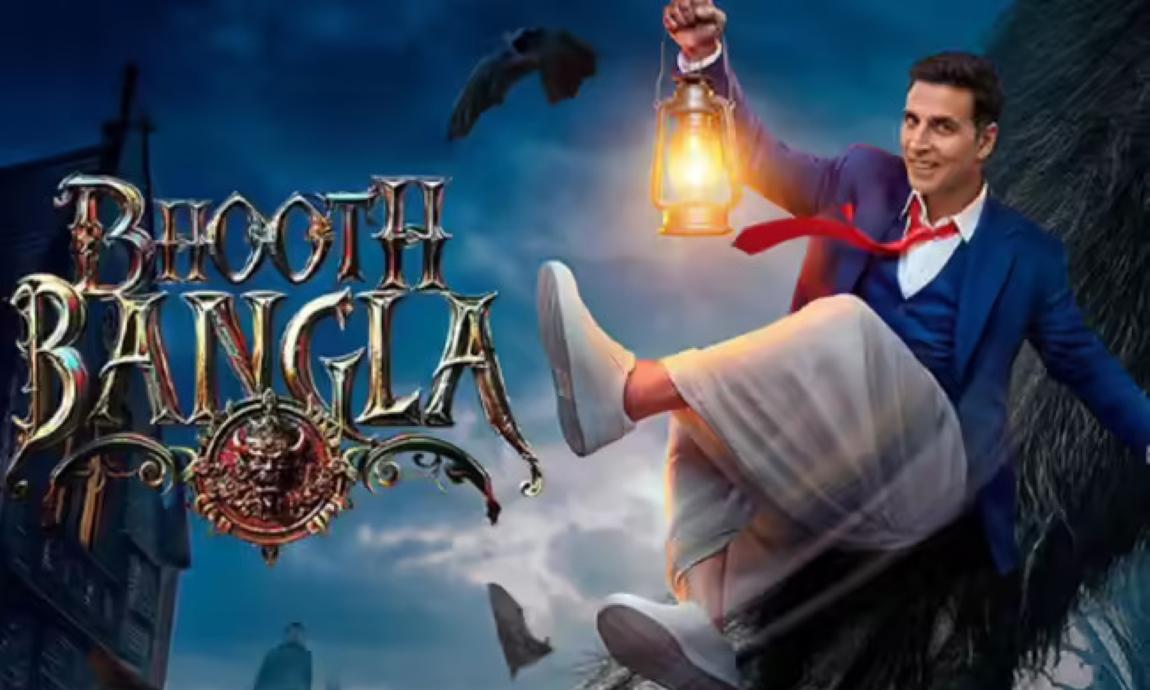
Bhooth Bangla review: Priyadarshan’s empty shell of film that neither spooks nor thrills

Certain things work better together. Like fries and ketchup, budget and production, deadlines and writers. Like Priyadarshan and Akshay Kumar. Creativity thrives in collaborations but even in the crowded space, some elevate only in unison. The filmmaker-actor duo have had an extensive partnership (they have done six films till last year) and though each is a different shade of chaotic comedy, most enjoy an afterlife in pop culture with more intensity than many of their counterparts. Yet Bhooth Bangla, their latest, is astonishingly dull, not just in comparison but even in isolation.
This sounds almost improbable because there has been a pattern. The best ones (Hera Pheri 2000, Bhool Bhulaiyaa2007) spawned sequels and those subpar (De Dana Dan2009) continue surviving even if through scenes. In comparison. Bhooth Bangla occupies a strange position of being neither a classic in whole nor campy in fragments — a horror comedy that has no comedy to prop up the horror and no horror to brace the comedy. Priyadarshan’s film marks a curious instance of vanishing from memory even as it unfolds.
Priyadarshan’s most unfunny outing yet
Written by Rohan Shankar, Abilash Nair and the filmmaker himself, Bhooth Bangla is set in Mangalpur, a nondescript place notorious for one thing: brides in that area go missing on wedding day. People are scared and in acceptance. But the peace is upended when Arjun Acharya (Kumar) arrives there on the promise of inheritance and on looking at the palace, that was also bequeathed to him from his dead grandfather, he decides to host the wedding of his sister (Mithila Palkar).
Also read: Asha Bhosle obit: The unstoppable voice of Hindi playback singing that refused to be typecast
What could have been a simple premise is turned on its head in execution. Priyadarshan takes this and muddles it with implications of black magic, vampires and rats (both shortchanged on their screentime) and mythical lores that get dense by the minute. These could have perhaps worked if there was enough lightness to offset them. But Bhooth Bangla is Priyadarshan’s most unfunny outing yet, that painfully reverse-engineers legacy to encash on a trend.
Take, for instance, how the film brings together familiar faces like Paresh Rawal, Rajpal Yadav, Tabu, along with Kumar to the proceedings. Or that most of Bhooth Bangla, much like Bhool Bhulaiyaais set in a derelict mahal, ripe with rumours and superstition. But the film is also too attuned to the fact that it arrives at a time when the genre of comedy is full to the brim. This desire to cater to an audience and pander to the fans lends it a shapeless identity.
An empty shell of a film
Things get only worse with the sparse jokes it runs on: Rawal, playing a greedy wedding planner, almost always has his bottom on fire. Yadav is his nephew, who is almost always caught in situations where an onlooker finds him making obscene gestures. And then there is Kumar, running about slapping people and being slapped, chasing vampires and being chased by them.
Also read: Guruvayoor Ambalanadayil review: A Priyadarshan-style comedy that misses the mark
But he is also the only person who tries. Once one gets over him calling Jisshu Sengupta “papa” (Sengupta is 49, Kumar is 58), it becomes easy to see how hard Kumar works to resuscitate limp lines. In many ways, a Priyadarshan set is his natural habitat and he goes above and beyond to evoke laughter. The punchline, however, never arrives. What comes though is a dreadful second half, equal parts baffling and trite. This is also where the wheels go completely off, revealing an empty shell of a film that could have been directed by a tree if the credits did not mention it otherwise.
Bhooth Bangla is an unfortunate addition to the filmmaker-actor collaboration, a rare misfire that asserts its presence through its absence. There are many lessons here. Like the pitfalls of franchise-filmmaking (Bhooth Bangla plays out like Priyadarshan’s sequel to Bhool Bhulaiyaa), an instance of jokes flying higher than ghosts and neither of them landing as they should. But more crucially it serves as a reminder that sometimes collaborations undermine and not exalt creativity.

Comments are closed.