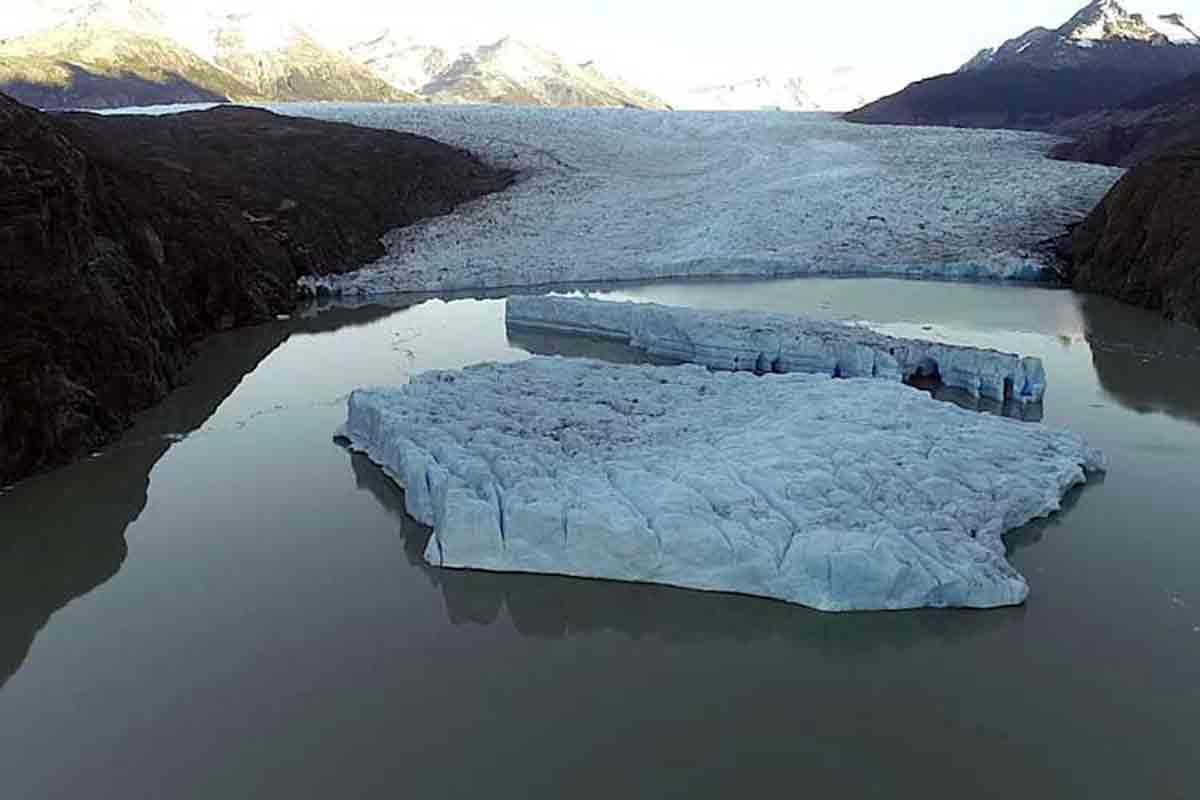
'Bhutan National Center for Hydrology and Meteorology' succeeds in lowering the water level of a glacial lake experimentally by 'siphoning' method. Experts believe this breakthrough is a major step towards averting the risk of the devastating Harpa volcano breaking the artificial dam of the glacial lake. Bhutan National Center for Hydrology and Meteorology has informed about this in a circular on Tuesday. According to the release, after a month of preparation, the 'Pilot Siphon Technology' was successfully tested at the country's Thorthormi glacial lake on Monday, October 12 at 4:30 pm. The test at Lunana, more than 4,400 meters above sea level, is a major step in Bhutan's ongoing efforts to reduce the risk of the devastating Harpa volcano by breaching the dam of the glacial lake. But what is the siphoning method?
Geography researcher and principal of Chopra College Madhusudan Karmakar said that siphon is such a cylindrical device. By means of which fluid is transferred from higher reservoirs to lower ones under the influence of atmospheric pressure without using pumps or external power. It is basically a 'U' shaped bent tube. The siphon works entirely on atmospheric pressure. “Bhutan's extraordinary success will show India and Nepal how to protect themselves from the disaster of glacial lakes,” he said.
According to the 'Bhutan National Center for Hydrology and Meteorology', one of Bhutan's 17 dangerous glacial lakes is Tharotharmi Lake, Pho Chu and Punatsangchu. These pose threats to settlements, critical infrastructure and biodiversity in the downstream areas of the river basin. Siphon technology is used to deal with the situation. For this NCHM High Density Polyethylene Siphon Pipeline has been installed. It is designed to lower the water level while leaving the artificial dam of the surrounding fragile moraine intact. The preliminary examination was started in October-November last year last year with financial support from the World Bank. After preliminary tests, it has been possible to bring down the water of Thorathormi lake in September-October this year by the initiative of Bhutan government. A technical team from the 'Bhutan National Center for Hydrology and Meteorology' in Lunana worked for more than a month under hazardous weather conditions and achieved significant success.