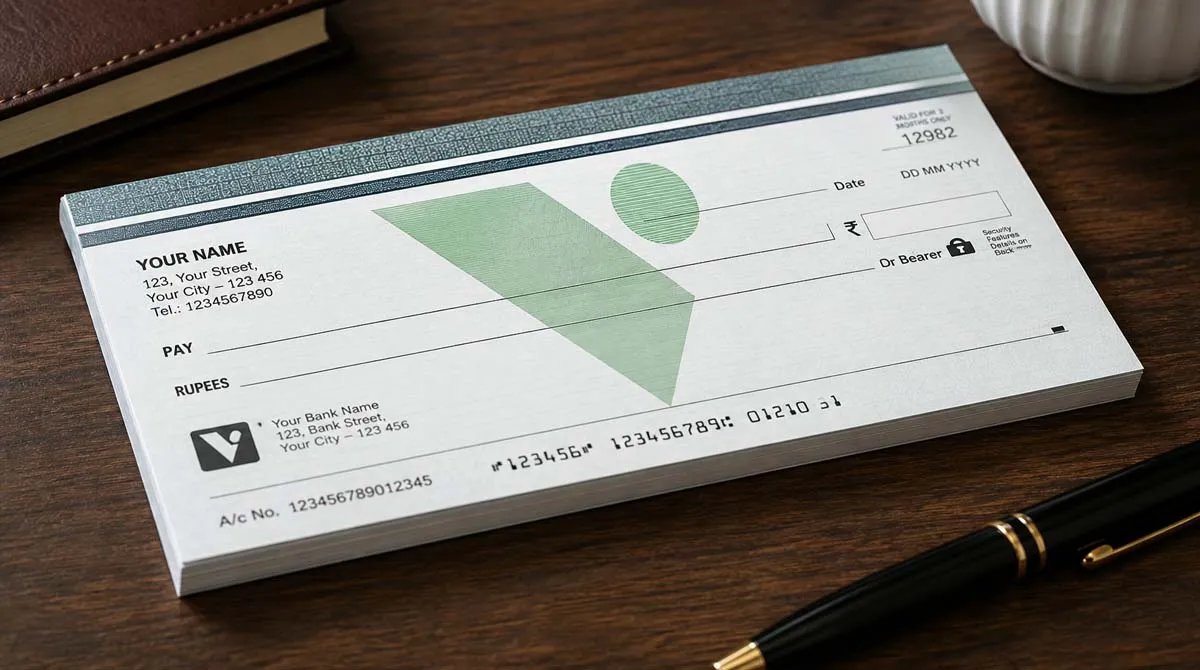
With the aim of making the country's banking process more secure, modern and faster, Alpha-Numeric Code has been made mandatory on checkbooks from January 1, 2027. Under the new instructions of the Reserve Bank of India (RBI), customers have been given time till December 31, 2026 to replace their old check books. Keeping this deadline in mind, many major banks have started the process of issuing checkbooks with new technology, while other banks are also going to implement it soon.
Old checks worth more than Rs 50 thousand will not be valid after December 31
The leading public sector Bank of India has officially informed its customers regarding the implementation of the new rules. According to the bank, after December 31, 2026, any check amounting to Rs 50 thousand or more, which does not have an alpha-numeric code, will not be accepted.
The bank has advised its account holders to apply for a new check book in time to avoid any interruption in payment in future. On the same lines, other public and private sector banks are also continuously sending information to their customers through e-mail, SMS and banking apps about getting checkbooks with new security codes.
How much will be the fee for a new check book?
The charges for issuing new alpha-numeric check books will depend on different banks and account types of customers.
For example, in Bank of India, a check book of 25 pages is provided free of cost to the savings account holders every year. After this free limit is exhausted, the customer will have to pay a charge of Rs 5 for each additional check leaf. Similarly, in other banks also minimum charges have been fixed as per their own policies.
Why was the rule changed and how will clearing be faster?
The main objective of the Reserve Bank of India is to make the check clearing system faster, transparent and safer from cyber threats than before. Now with the implementation of Check Truncation System (CTS) and Continuous Clearing system, the hassle of sending physical paper checks from one city to another or to the original paying branch has been eliminated.
Check truncation is actually a digital version of the clearing system, which scans physical paper checks and converts them into electronic images. This digital image is immediately sent to the paying bank, reducing the time taken for check clearing to just a few hours instead of days.
What is alpha-numeric code and its benefits?
- Mixed alphanumeric security code: In alpha-numeric codes, English letters and mathematical numbers are used together.
- Enhanced Security: Due to this special code, it becomes very easy and accurate for the bank's system to verify the authenticity and authenticity of the cheque.
- Control on fraud: Financial risks and frauds like overwriting on cheques, tampering with data or withdrawing money from the bank by making fake checks are completely eliminated.