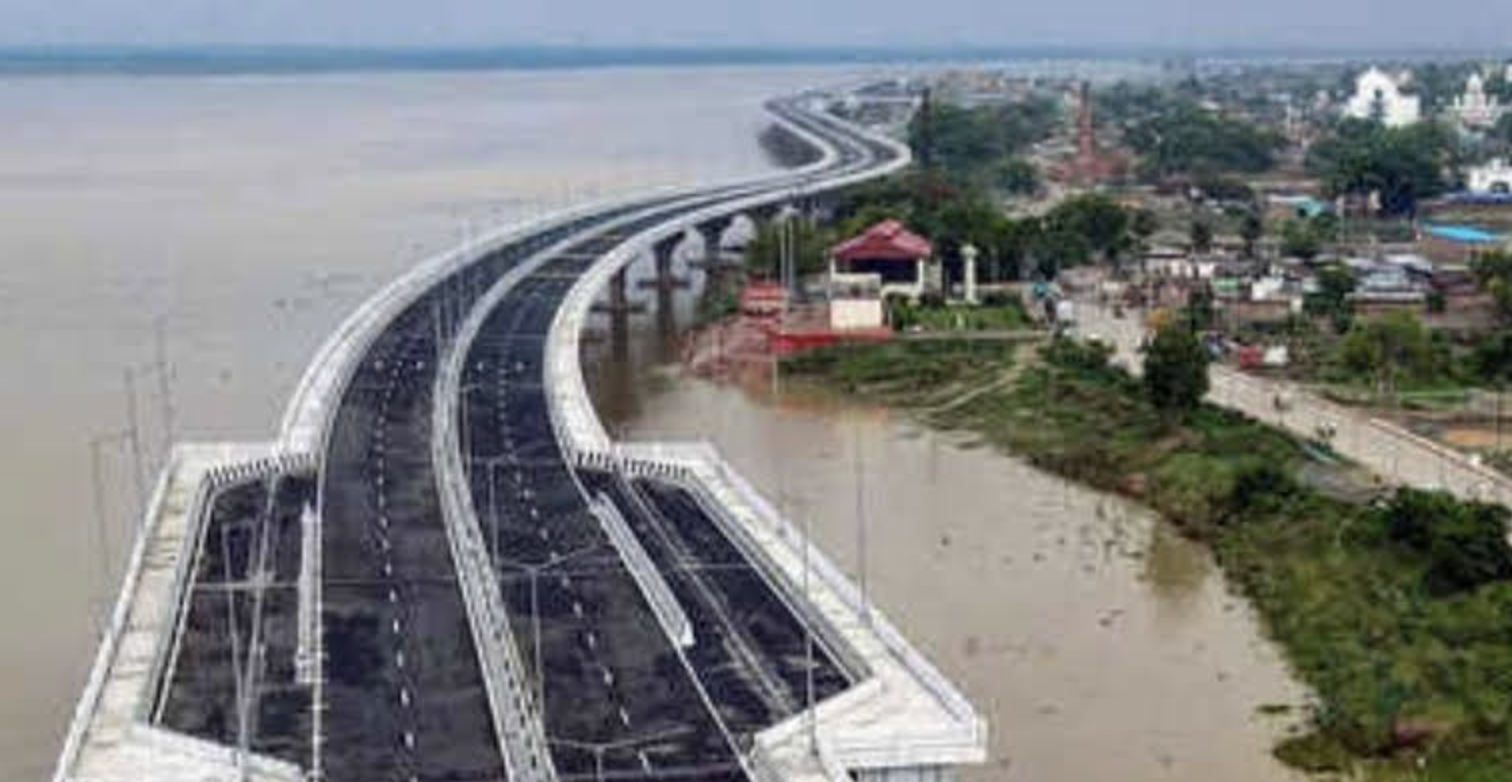
Bihar Announces A Mega Infrastructure Project
Bihar Chief Minister Samrat Choudhary has announced an ambitious plan to develop a 126-kilometre Marine Drive along the Gangawith an estimated investment of ₹70,000 crore.
The announcement was made during the concluding ceremony of a Rojgar Mela in Patna, where the Chief Minister said the project would strengthen infrastructure, create employment and open new opportunities across multiple sectors.
The project is being positioned as a major step towards transforming Bihar’s connectivity and economic landscape.
126-Km Corridor To Run Along The Ganga
The proposed Marine Drive will create a long road corridor alongside the Ganga, expanding the concept of Patna’s existing riverfront road network to a much larger scale.
The project is expected to improve connectivity between different parts of Bihar while providing an alternative route for road traffic.
The government also sees the corridor as an opportunity to support urban development and economic activity along the river.
₹70,000 Crore Investment Planned
The proposed investment of ₹70,000 crore makes this one of Bihar’s largest infrastructure proposals.
The funding is expected to involve both the government and private sector.
A project of this scale could generate demand across construction, engineering, transport, logistics, real estate and supporting industries.
The government believes the investment could therefore have an impact well beyond the construction of the road itself.
Project Could Create Large-Scale Employment
Employment generation is one of the major objectives behind the announcement.
Construction of a 126-kilometre infrastructure corridor would require workers across multiple areas, including civil construction, engineering, transportation, project management and supporting services.
Once the corridor becomes operational, additional employment could emerge through businesses, commercial developments, tourism activities and services established around the new infrastructure.
This could provide another economic boost to the state.
Connectivity Could Improve Across Bihar
Bihar’s geography and dependence on river crossings have historically made connectivity an important infrastructure challenge.
A major road corridor along the Ganga could improve movement between cities and districts on either side of the river.
Better connectivity can reduce travel times, improve access to markets and make transportation of goods more efficient.
For businesses, this could potentially lower logistics costs and make new locations more attractive for investment.
Marine Drive Could Boost Tourism
The project could also have a tourism dimension.
Riverfront roads have the potential to become more than transportation corridors when combined with parks, public spaces, ghats and commercial areas.
Bihar already has significant cultural and religious tourism potential around the Ganga.
A larger riverfront infrastructure network could help develop these locations and encourage visitors to spend more time in the region.
Patna’s Ganga Path Provides The Inspiration
The announcement builds on the success and popularity of Patna’s J.P. Ganga Path, popularly known as Patna’s Marine Drive.
The existing riverfront road has become an important urban connectivity route as well as a prominent attraction in the city.
The proposed 126-kilometre expansion would take the concept far beyond Patna’s existing riverfront corridor.
Instead of a city-level project, it could become a major regional infrastructure network.
Private Investment Could Play A Major Role
The proposed ₹70,000 crore investment is significant enough to require substantial financial resources.
Private-sector participation could therefore become an important component of the project.
Bringing private capital into infrastructure can help accelerate development while creating opportunities for businesses involved in construction, transport, commercial development and services.
However, the exact funding structure and implementation model will determine how quickly the project can move from announcement to construction.
New Business Opportunities Could Emerge
Large infrastructure projects often create secondary economic activity around them.
Warehouses, hotels, restaurants, retail outlets, transport services and commercial centres can emerge around improved roads and connectivity.
The proposed Marine Drive could therefore change the economic profile of several areas along its route.
Land around major connectivity corridors can also become more attractive for industrial and commercial development, although such development would need proper planning.
Bihar Wants More Investment
The Marine Drive proposal comes as Bihar seeks to attract greater industrial investment and accelerate economic development.
Improved infrastructure is critical for achieving that objective.
Businesses typically look for reliable roads, transport networks, electricity, connectivity and access to markets before committing to major investments.
A large riverfront road network could strengthen Bihar’s infrastructure proposition and make movement of people and goods easier.
The Project Could Reduce Traffic Pressure
Another potential benefit is traffic decongestion.
As cities expand, existing roads often struggle to accommodate increasing volumes of private vehicles, commercial traffic and public transport.
An additional high-capacity corridor can provide alternative routes and distribute traffic more efficiently.
For urban areas located along the Ganga, the proposed Marine Drive could therefore become an important bypass and connectivity route.
Real Estate Could Also Get A Boost
Infrastructure development often influences surrounding property markets.
Improved roads can make previously less accessible areas easier to reach, potentially increasing demand for residential and commercial development.
If the Marine Drive is implemented with supporting urban infrastructure, new growth centres could emerge along the corridor.
However, such expansion would require careful planning to prevent unplanned construction and pressure on existing public services.
The Challenge Will Be Execution
Announcing a ₹70,000 crore infrastructure project is only the first step.
The bigger challenge will be land acquisition, environmental clearances, financing, detailed project planning and construction.
A corridor stretching 126 kilometres will pass through multiple areas, making coordination between government agencies particularly important.
The project’s eventual impact will depend heavily on how effectively these challenges are addressed.
A Long-Term Infrastructure Bet
The proposed Marine Drive represents a long-term bet on Bihar’s economic transformation.
If completed successfully, it could improve connectivity, support tourism, attract investment and create employment across multiple sectors.
It could also encourage development beyond Patna by creating new economic activity along the Ganga corridor.
For a state seeking faster economic growth, infrastructure of this scale could become an important foundation.
Bihar’s Ganga Could Become An Economic Corridor
The project is ultimately about more than building a road beside a river.
The government wants the Ganga corridor to become a driver of connectivity, investment, employment and urban development.
With a proposed investment of ₹70,000 crore and a planned length of 126 kilometres, the scale is enormous.
The next challenge will be converting the ambitious announcement into a detailed, financially viable and executable project.
If that happens, Bihar’s Ganga riverfront could emerge as one of the state’s most important infrastructure corridors in the coming years.
Summary
Bihar Chief Minister Samrat Choudhary has announced a ₹70,000 crore plan to develop a 126-kilometre Marine Drive along the Ganga. The project aims to improve connectivity, generate employment, attract investment and promote tourism. Inspired by Patna’s J.P. Ganga Path, the proposed corridor could support construction, logistics, business and real estate development. Its success will depend on financing, planning, land acquisition, approvals and effective execution.
Image Source