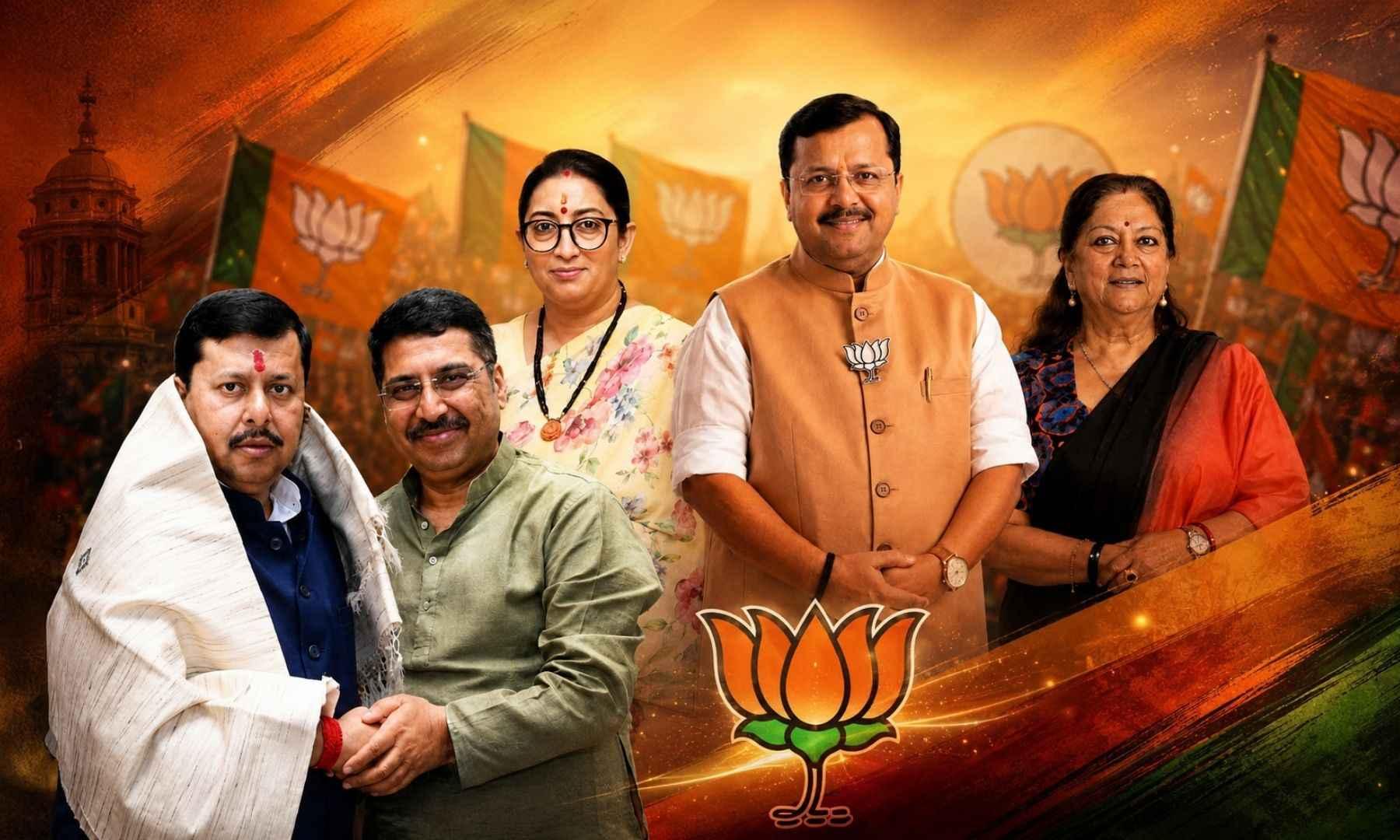
The BJP’s latest organisational rejig comes at a time when Gen Z mobilisation is forcing political parties to rethink how they communicate with young voters. At the centre of attention is the replacement of Amit Malviya, who had been at the helm of the BJP’s social media operations for more than a decade, in what political observers see as a possible attempt to refresh the party’s digital messaging ahead of crucial elections.
Also read: Why Nitin Nabin’s rejig of BJP national team is a fascinating exercise in chicanery
Malviya has been replaced by Deepak Mhaskey, reportedly a close aide of BJP national president Nitin Nabin. The broader digital team, however, remains largely intact, with Preeti Gandhi, Shivanand Dwivedi, Alok Bhatt and Arun Yadav retaining their positions. The rejig has raised questions about whether the BJP is seeking a change in its communication style rather than a complete overhaul of its digital machinery.
Communication strategy
Senior journalist Vivek Deshpande said the BJP’s social media strategy required significant course correction. “The BJP could no longer rely on the same style of digital communication it had used over the past decade,” he said during The Federal’s Capital Beat show. He suggested that the rise of youth activism had forced the party to rethink how it engages with younger voters and presents its ideological positions.
Commenting on Mhaskey’s appointment, he said the challenge for the new social media team was not merely organisational but also ideological and communicative. “The BJP would need to present its ideological positions in a more acceptable and relatable manner if it hoped to reconnect with younger voters,” he added.
‘Shaped by political decisions’
Deshpande said that youth-led movements had exposed weaknesses in the BJP’s communication model. He said younger audiences were increasingly resistant to aggressive political messaging and online trolling, making it necessary for the party to adopt a different tone.
Also read: Big shake-up ahead? How Modi plans to reset his third term
However, political commentator T K Rajalakshmi argued that the removal of Amit Malviya should not be viewed solely as an individual failure. She suggested that the BJP’s communication strategy had been shaped by broader political decisions and that responsibility could not rest with a single leader.
The ‘new team’ also raises questions over a stronger role for the Rashtriya Swayamsevak Sangh (RSS) in shaping the BJP’s future direction. Meanwhile, senior journalist and author Sunita Aron argued that the BJP’s organisational changes were primarily driven by electoral considerations, especially with an eye on Uttar Pradesh.
According to Deshpande, the reshuffle appeared to result from an understanding between the BJP and the RSS about the party’s future direction and electoral strategy.
Smriti Irani’s return
Aron also highlighted the prominence given to Smriti Irani, who remains a significant political figure because of her association with Amethi and her ability to communicate effectively in public.
Reflecting Aron’s views, Rajalakshmi acknowledged Irani’s effectiveness as a public speaker and suggested that the BJP saw her as an important figure in communicating with women voters and younger audiences.
Also read: BJP appoints state party in-charges; Vinod Tawde assigned UP
At the same time, she pointed out that Irani’s past tenure as Union education minister would continue to attract scrutiny.
Can the rejig deliver?
With the reshuffle raising more questions than answers, the real test for the BJP will be whether the changes translate into a more effective political and digital outreach.
As the party looks ahead to crucial elections, observers say its ability to adapt its messaging, connect with younger voters and balance organisational priorities with electoral strategy will determine whether the new team can deliver the reset it is expected to bring.