

64
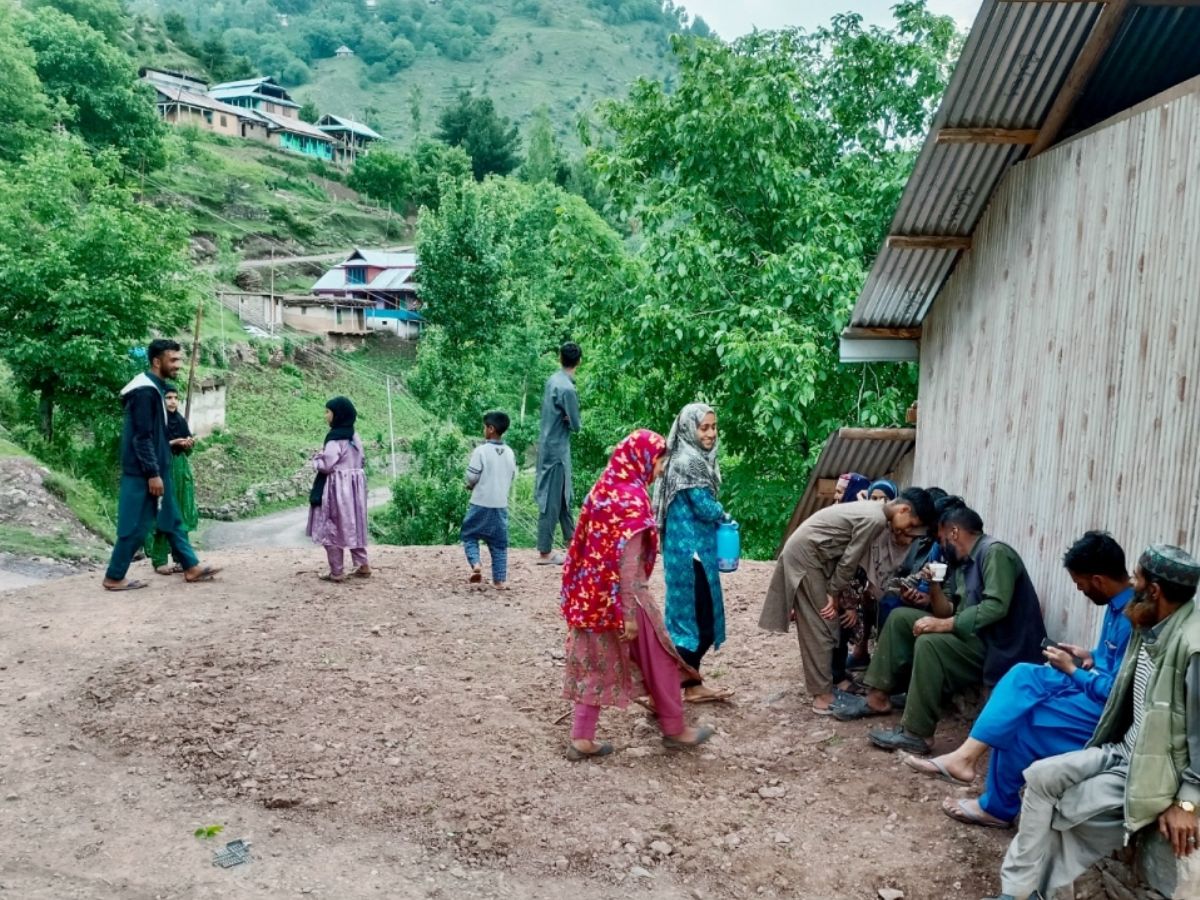
In a poignant reminder of the human cost of division, a funeral in the border village of Keran in north Kashmir turned into a rare moment of cross-Line of Control (LoC) connection, as grieving relatives gathered on both sides for a final farewell.
The emotional scene unfolded along the banks of the Kishanganga River, which flows through the Keran sector of Kupwara district, physically separating families divided for decades. Known as the Neelum River across the LoC, it became the only link between loved ones mourning from afar.
The deceased, Liyaqat Ali Khan, a revenue official posted in Ganderbal, died after suffering a cardiac arrest while on duty. He had been undergoing treatment at the Sher-iKashmir Institute of Medical Sciences in Srinagar for four days before he passed away.
As his body reached his native village, news of his death had already spread across the divide. Relatives living on the other side of the LoC, many of whom had been following updates about his health on social media, gathered along the opposite bank of the river to bid him goodbye.
In a deeply moving gesture, the coffin was brought close to the river’s edge, allowing mourners across the border to catch a final glimpse. Heart-wrenching scenes followed, as cries and prayers echoed across the water, momentarily bridging a boundary that has long kept families apart.
Residents described the atmosphere as overwhelming, with emotions running high on both sides. “They stood there, watching from across, wailing and calling out — it was a moment none of us will forget,” a local said.
Community members noted that several of Khan’s close relatives, including siblings, had moved across the LoC during the upheaval of the Partition of India, when Jammu & Kashmir and what is now Pakistan-administered Kashmir were separated, leaving countless families permanently divided overnight. Keran, like many villages along the LoC, continues to bear the legacy of that separation, where borders run not just through land, but through families and relationships. Efforts over the years to reconnect such divided families have seen limited success. The launch of the Srinagar–Muzaffarabad bus service in 2005 provided a brief window of contact, while cross-LoC trade routes introduced in 2008 also fostered some interaction before being suspended in 2019.
The broader relationship between India and Pakistan continues to remain fragile, shaped by decades of conflict, mistrust, and periodic escalations along the LoC. In recent times, tensions have again come into focus following security developments such as Operation Sindoor, reflecting the persistent volatility in the region. While ceasefire agreements have brought relative calm at intervals, the underlying political and territorial disputes remain unresolved, limiting sustained people-to-people contact.
For families like Khan’s, these geopolitical realities translate into deeply personal losses — moments that can never be fully shared.
For a brief moment on the banks of a river in Keran, however, politics and boundaries faded into the background. What remained were voices of grief, carried across the waters, as a family separated by history came together to say one last goodbye.

Comments are closed.