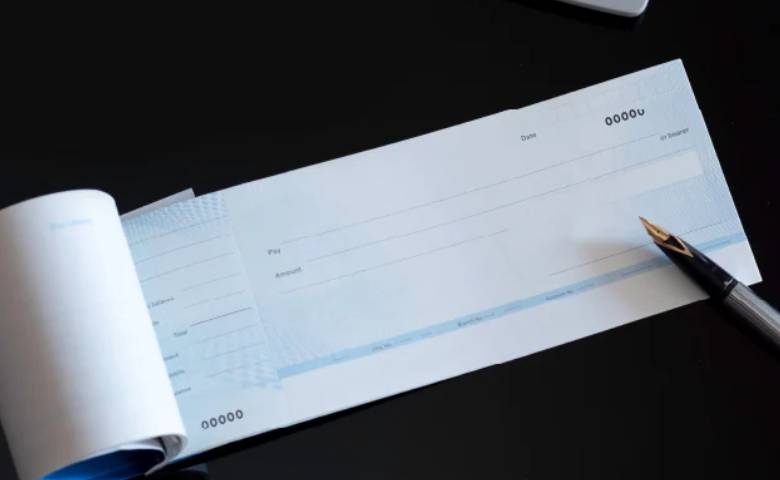
Business News : If you use check book for bank transactions, this news is very important for you. A message has been circulating on social media and WhatsApp for the past few days. It claims that from January 1, 2027, check book rules will change in the country. After December 31, 2026, the existing checkbook will be discontinued, and customers will need to purchase a checkbook with new security features.
The viral message also claims that the new checkbook will have a special alpha-numeric code, a new MICR number and UV protection features. Further, it claims that old check books of more than Rs.50,000 will not be accepted.
These claims raised concerns among bank customers
These claims have raised concerns among bank customers. Now, the Reserve Bank of India (RBI) has come forward and confirmed the veracity of these reports. The central bank has clarified that no such new check book rules are currently being implemented. Let's understand in simple terms, what is the whole story, what RBI has said and what will happen to your existing checkbook in 2027.
Will checkbook rules change from January 1, 2027?
The simple answer to this question is no. The RBI has rejected claims doing the rounds on social media that checkbooks with new security features will be implemented from January 1, 2027. On November 7, 2026, the Central Bank clarified on its official social media account that no decision has been taken to change the existing check books used under the Check Truncation System (CTS). RBI termed the viral message as factually incorrect and misleading. It has also appealed to people to rely only on official RBI communications for information regarding banking regulations.
What claims were being made on social media?
In fact, a message was being widely shared on WhatsApp and other social media platforms. It claimed that the existing CTS checkbook would become invalid after December 31, 2026. The viral message mentioned several changes in the new checkbook.
Viral claim: RBI's view
No such rule has been promulgated regarding closure of old check books after December 31, 2026.
The claim that new check book will be mandatory from January 1, 2027 is false and misleading.
No new mandatory rule has been promulgated regarding the need for a new alpha-numeric code.
No such change has been announced regarding the requirement of a new MICR number.
A check book with UV protection feature is mandatory.
No new RBI rule has been announced regarding claims that old check books above Rs 50,000 will not be accepted.
So, if you currently have a bank checkbook, there is no need to change it just based on this viral message.
What exactly is CTS and how does check clearing take place?
The RBI statement mentions the CTS, or Check Truncation System. This is important to understand. Earlier, when a customer deposited a cheque, it had to be physically sent from one bank to another. This process was time consuming. However, now, instead of sending a physical copy of the check through CTS, its electronic image and related information is sent to the concerned bank. This speeds up the check clearing process and reduces the need to physically travel the check from one place to another.
Are there any plans to enhance checkbook security in the future?
It is important to understand an important point here. The RBI has currently refused to make the new checkbook mandatory. However, this does not mean that the central bank cannot consider improving check security and design in the future. RBI's Payment Vision 2028 includes a review of check design and security features. This aims to bring uniformity to checking security standards and reduce the risk of fraud. No new checkbook implementation date or mandatory new features have been announced based on this prospective review. This means that there may be changes regarding check security in the future, but the claim that a new checkbook will become mandatory from January 1, 2027 is not true.
Will banks not accept old checks above Rs.50,000?
This part of the viral message is also causing considerable confusion. It claimed that old checks above Rs 50,000 will not be accepted after January 1, 2027. However, RBI has not announced any such new limit. This means, based on the new said rule, the old check cannot be invalidated because the amount is more than Rs.50,000. However, other existing rules regarding sufficient account balance, signature matching, check validation and banking procedures for check payment will remain in effect.
Should customers apply for a new check book now?
No. After RBI's clarification, customers need not apply for a new check book just based on a viral message. If your existing checkbook has pages left and is useful, you can continue to use it under normal banking rules. A new check book is required only if the pages of your existing check book are worn out, lost, or actual official direction is received from the bank.
How to avoid fraudulent banking messages?
Nowadays cyber criminals are targeting people by sending fake messages to banks and RBI. These messages often force people to take immediate action. For example, you may get a message saying that your old checkbook is about to be closed and you should apply for a new checkbook by clicking on the link provided. Be careful in such cases. Not every message sent using RBI or bank name is correct. To confirm any banking updates, check the RBI website.